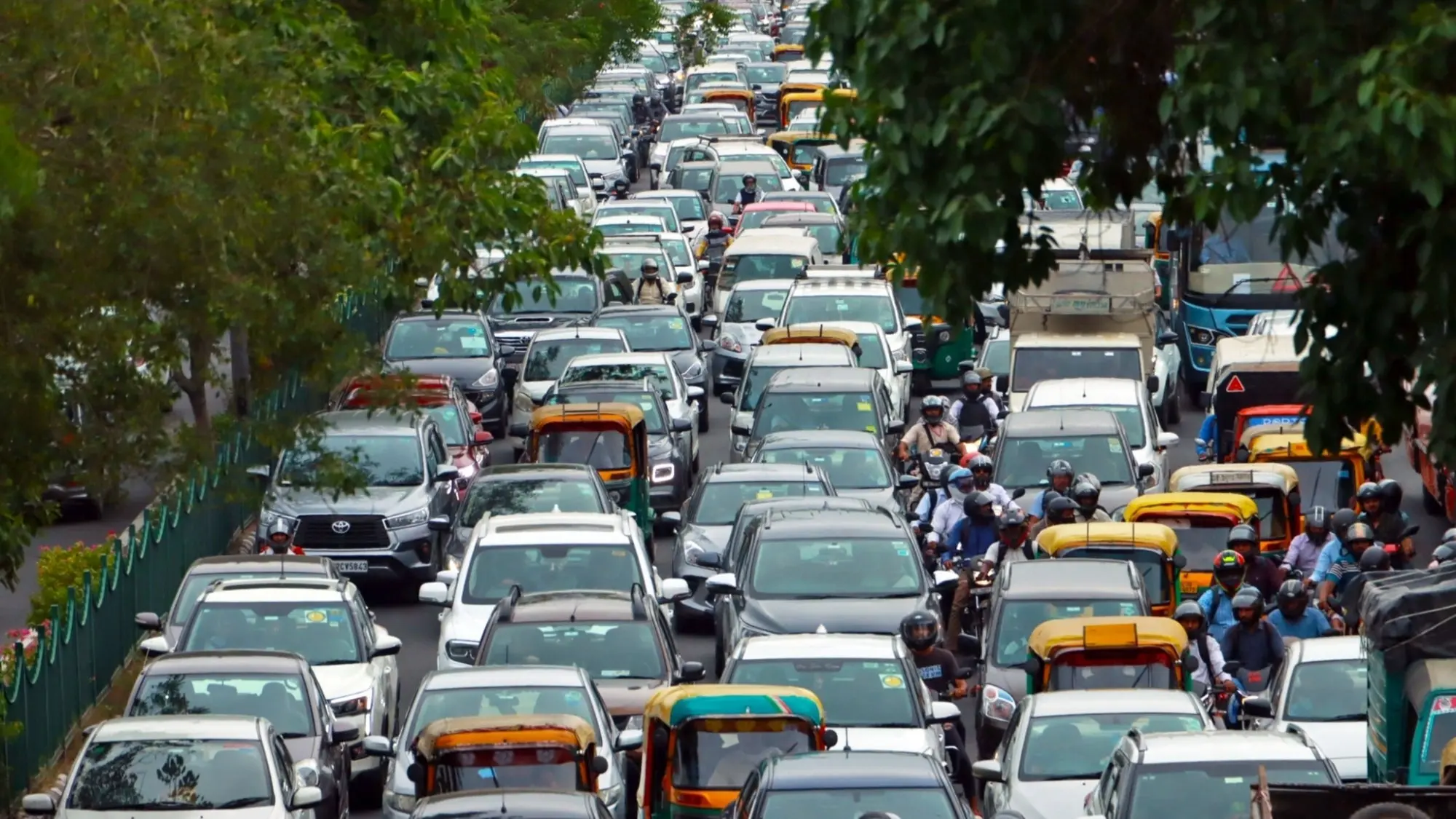
Ahmedabad’s traffic enforcement data for 2025 has exposed the scale of unsafe road behaviour in one of India’s fastest-growing cities, with residents collectively paying more than ₹260 crore in penalties over the year. The figures, compiled by city traffic authorities, underline how everyday mobility choices are increasingly colliding with public safety, infrastructure capacity and the cost of urban governance.
With an estimated population of around 7.6 million, enforcement records indicate that a substantial share of the city’s residents were penalised at least once for traffic violations during the year. On an average day, over 11,000 challans were issued, reflecting both heightened enforcement and persistent non-compliance. Urban planners say the data offers a rare lens into how cities manage behavioural risk as vehicle ownership continues to rise faster than road capacity. The largest share of penalties came from riders failing to wear helmets, which alone accounted for more than half of the total fine value. This pattern suggests that despite judicial interventions and repeated awareness campaigns, basic road safety norms remain poorly internalised. Traffic officials attribute the sharp rise in helmet-related violations partly to stricter monitoring and automated enforcement, but acknowledge that enforcement alone has limits without parallel behavioural change.
Wrong-side driving and illegal parking also emerged as major contributors to the overall fine collection. Both offences point to systemic stresses in Ahmedabad’s transport network, where limited street space is shared by private vehicles, public transport, informal parking and pedestrians. Mobility experts note that such violations are often symptoms of design gaps narrow carriageways, missing service lanes and insufficient parking management rather than isolated acts of indiscipline. One of the most striking shifts in 2025 was the surge in cases involving underage drivers. Enforcement data shows a dramatic rise compared to the previous year, raising concerns about household-level compliance and the role of two-wheelers as the default mode of mobility for students. Safety analysts warn that this trend carries long-term social costs, including higher accident risk and strain on emergency services.
Interestingly, some categories such as driving without a licence or jumping traffic signals showed a decline, suggesting that targeted enforcement campaigns can influence specific behaviours. However, the overall picture remains mixed. The average fine per violation stood at just over ₹650, a figure that urban economists say may not be a strong enough deterrent for repeat offenders in a growing middle-income city. The scale of fine collection has also triggered debate over priorities in urban spending. The total penalties collected exceeded the sanctioned cost of certain mid-sized civic infrastructure projects, highlighting the financial dimension of traffic enforcement.
However, experts caution against viewing fines as revenue streams. “The real metric of success is fewer violations, not higher collections,” said an urban transport specialist. As Ahmedabad plans for denser growth and climate-resilient mobility, the data reinforces the need for a more integrated approach combining street design, public transport investment, road safety education and consistent enforcement. Without structural changes, rising penalties may continue to signal deeper cracks in how the city moves.
Ahmedabad traffic fines reveal deeper road safety gaps