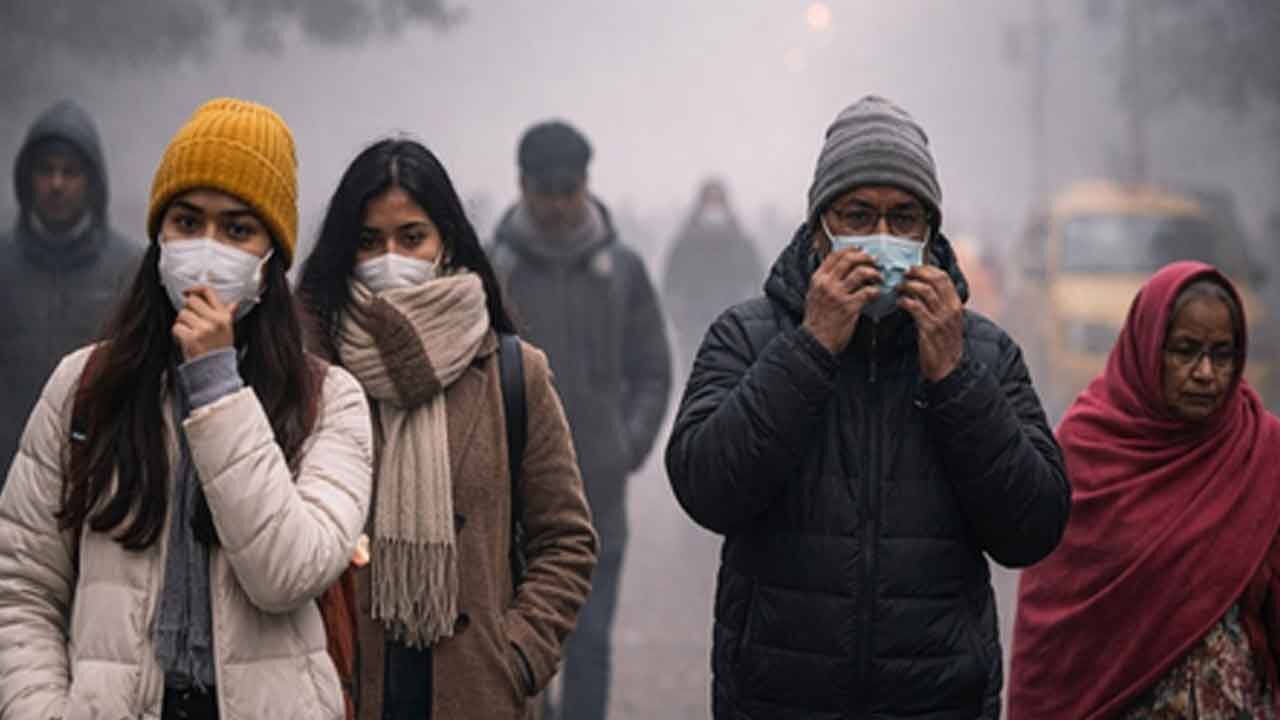
Kolkata’s air quality slipped deeper into unhealthy territory this week as winter conditions tightened their grip on the city, pushing several monitoring locations into “poor” and “very poor” categories. The deterioration highlights how seasonal weather patterns, combined with everyday urban activity, continue to challenge eastern India’s climate resilience and public health preparedness.
Data from the city’s air monitoring network showed that most locations recorded degraded air quality through the day, with conditions worsening by evening. Areas in the southern and central parts of Kolkata were among those most affected, reflecting how dense residential zones and traffic-heavy corridors respond sharply to winter pollution build-up. Only one monitoring station remained in the “moderate” range, underscoring the citywide spread of the problem.
Medical professionals have advised residents to limit prolonged outdoor activity, particularly early mornings and evenings when pollution levels tend to peak. For vulnerable groups including children, older adults and those with respiratory or cardiac conditions extended exposure can aggravate breathing difficulties, reduce lung function and increase the risk of seasonal illness. Even air classified as “moderate” can trigger discomfort for sensitive individuals during winter. Environmental experts point to a convergence of factors behind the decline. Winter temperatures reduce vertical air movement, allowing pollutants to accumulate close to the ground. Lower wind speeds further limit dispersion, creating what scientists describe as a near-surface pollution trap. When routine urban activities such as construction work, vehicular movement and small-scale waste burning add fresh emissions, air quality can deteriorate rapidly.
Seasonal behaviour also plays a role. The use of open fires for warmth during colder nights, though often informal and dispersed, adds particulate matter to an already stressed atmosphere. While these emissions may appear minor individually, their cumulative impact becomes significant under winter inversion conditions, when pollutants remain suspended at breathing level. From an urban planning perspective, the episode highlights the need for winter-specific air quality management strategies. Unlike summer or monsoon months, when natural dispersion mechanisms offer partial relief, cold-season pollution requires tighter controls on local emission sources. Experts note that cities like Kolkata, with high density and mixed land use, are especially vulnerable during this period.
The economic implications are equally relevant. Poor air quality can reduce outdoor productivity, disrupt informal livelihoods and increase healthcare costs, particularly for lower-income households with limited access to preventive care. For a city positioning itself as a growing commercial and cultural hub, repeated winter pollution episodes pose long-term competitiveness and liveability concerns. Looking ahead, urban analysts suggest that short-term advisories must be paired with structural measures better enforcement against waste burning, dust management at construction sites and improved last-mile public transport to reduce dependence on private vehicles. As winter progresses, sustained monitoring and coordinated civic response will be critical to prevent further deterioration and protect residents’ health while longer-term clean-air investments take shape.
Kolkata winter smog strains public health systems