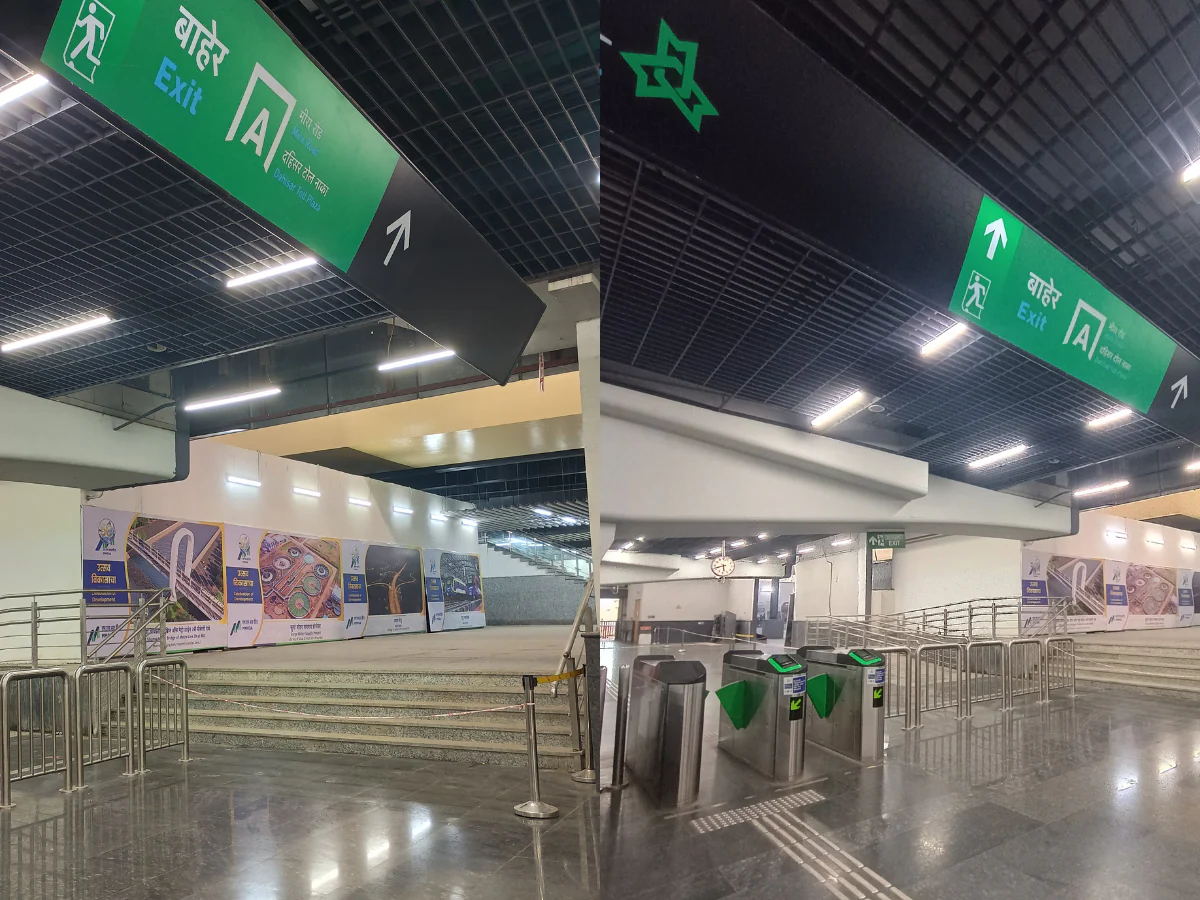
Mumbai’s expanding metro network has crossed a structural milestone with the activation of the Dahisar East Metro interchange, enabling seamless movement between multiple lines without exiting the paid area. Located in the city’s northern suburbs, the facility marks a first for Mumbai’s urban rail system and significantly alters how commuters from Dahisar, Mira Bhayandar and adjoining regions access employment hubs across the metropolitan area.
The Dahisar East Metro interchange links the east–west and north–south metro corridors, integrating operational sections of Lines 2A and 7 with the initial stretch of Line 9. For daily commuters, the change is less about novelty and more about predictability—shorter transfer times, fewer queues, and a smoother travel experience across lines that were earlier fragmented by station exits and security checks. Urban transport planners say the interchange represents a shift towards network-based metro planning rather than isolated corridors. By allowing passengers to change lines within the paid zone, the system reduces dwell times and crowding at concourse levels, a critical concern on heavily used suburban routes. Officials involved in the project indicate the facility has been designed to accommodate future passenger volumes as additional metro extensions come online.
The immediate impact is visible in commute durations. Travel between the Mira Road belt and Andheri’s commercial districts, which often exceeded 90 minutes by road or suburban rail, can now be completed in under an hour using connected metro services. This time compression is expected to encourage a sustained shift from private vehicles to mass transit, easing pressure on arterial roads such as the Western Express Highway and surrounding toll corridors. From a sustainability perspective, the Dahisar East Metro interchange plays a strategic role. Transport analysts note that interchanges are essential for maximising ridership on metro networks, ensuring that investments in elevated and underground lines translate into meaningful reductions in carbon emissions. By making rail-based travel more intuitive and less time-consuming, the system supports Mumbai’s broader climate and air quality objectives.
The opening also carries economic implications beyond mobility. Improved access to northern suburbs is likely to reshape real estate demand in areas such as Mira Bhayandar and peripheral Dahisar, where affordability has historically driven population growth but connectivity lagged. Market experts expect better integration with the metro network to support decentralised commercial development, reducing the concentration of jobs in southern and central business districts. While the current phase connects only part of the extended corridor, transport authorities have indicated that additional sections of Line 9 and other planned lines will further strengthen cross-regional movement. Once future links to airport-bound and orbital metro routes are completed, the interchange is expected to serve as a critical node in an increasingly interconnected metropolitan grid.
As Mumbai continues to invest heavily in rail-based mobility, the Dahisar East Metro interchange offers a glimpse into how thoughtful infrastructure design—focused on convenience, integration and scale—can improve daily urban life while laying the foundation for more resilient, low-emission cities.
Mira Road To Andheri Commute Cut To 40 Minutes By Mumbai Metro