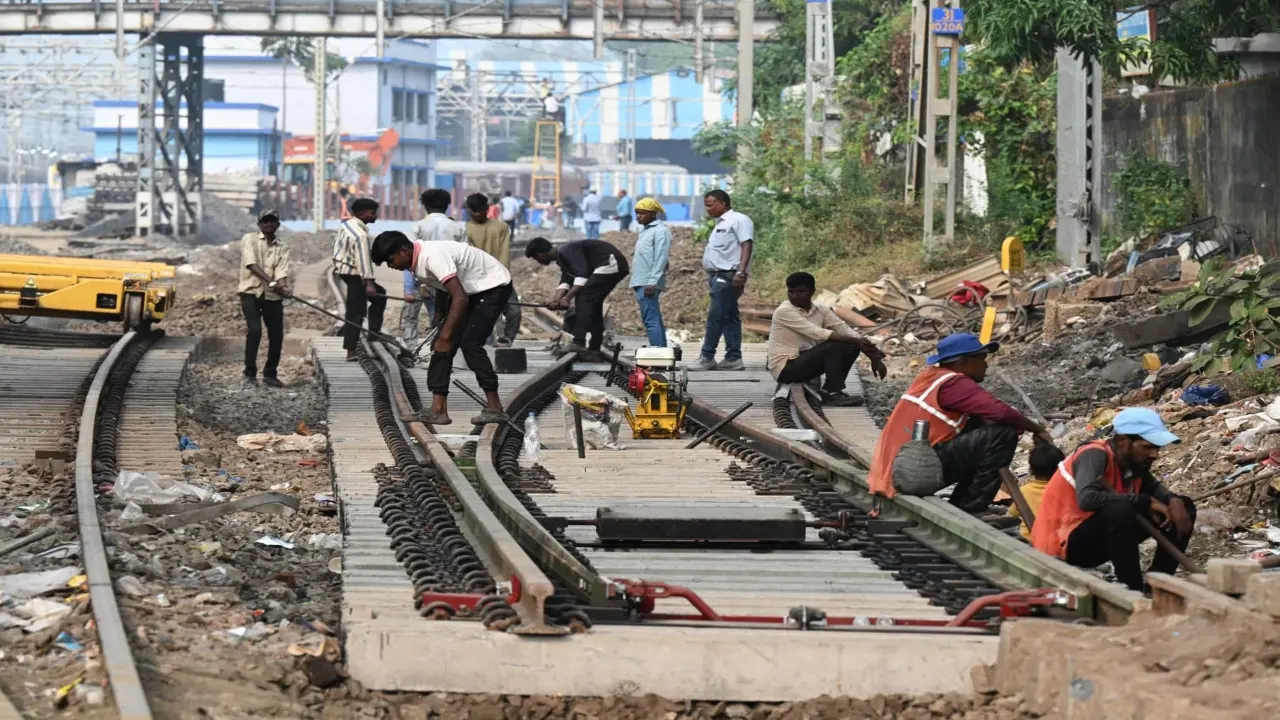
Mumbai’s suburban rail network is entering a critical transition phase as Western Railway advances capacity expansion works on the Kandivali–Borivali corridor, one of the busiest rail stretches in the country. A prolonged infrastructure block linked to the construction of an additional rail line is reshaping night-time operations and temporarily altering both suburban and long-distance travel patterns. While disruptive in the short term, the intervention highlights the complex trade-offs involved in upgrading mass transit systems within dense, carbon-intensive megacities.
The Western Railway block, scheduled to continue until mid-January, is centred on enabling a sixth rail line between Kandivali and Borivali—an upgrade intended to ease chronic congestion and improve service reliability over the long run. As part of this effort, specific overnight shutdowns are being carried out to insert new track switching systems on fast lines, a technically sensitive process that requires full suspension of rail movement for safety reasons. Urban transport planners note that the corridor functions as a critical spine for daily commuters travelling between Mumbai’s extended suburbs and its employment centres. Any disruption, even during non-peak hours, has ripple effects across shift workers, freight-linked passenger services, and long-distance travellers. The current Western Railway block has therefore led to selective cancellations of suburban services and temporary regulation of mail and express trains, particularly during late-night windows.
Railway officials say the sequencing of blocks has been designed to minimise daytime disruption while accelerating project timelines. Industry observers point out that night-time infrastructure work is increasingly essential as Mumbai attempts to modernise legacy rail assets without halting economic activity. However, they also stress the need for predictable communication, last-mile connectivity alternatives, and gender-sensitive safety planning during late-hour service gaps. The timing of the block coincides with operational changes introduced under a revised railway timetable earlier this year. Faster long-distance services, revised terminal usage, and adjusted halts reflect a broader attempt to improve punctuality and network efficiency while construction continues. Transport economists argue that such parallel reforms are necessary to prevent capacity upgrades from becoming bottlenecks during execution.
From a sustainability perspective, the sixth-line project is expected to deliver long-term benefits by shifting more commuters towards high-capacity electric rail, reducing dependence on private vehicles and lowering transport emissions across the western suburbs. Real estate analysts also anticipate that improved rail throughput could support more balanced housing and commercial development beyond Mumbai’s core, easing pressure on land and infrastructure. For now, commuters are being advised to plan journeys carefully and monitor service updates during the remaining days of the Western Railway block. As Mumbai pushes ahead with rail-led urban growth, the episode underscores a central challenge for climate-resilient cities: building future-ready infrastructure without losing public trust during the transition.
Western Railway Executes Extended Infrastructure Work on Kandivali Borivali Stretch