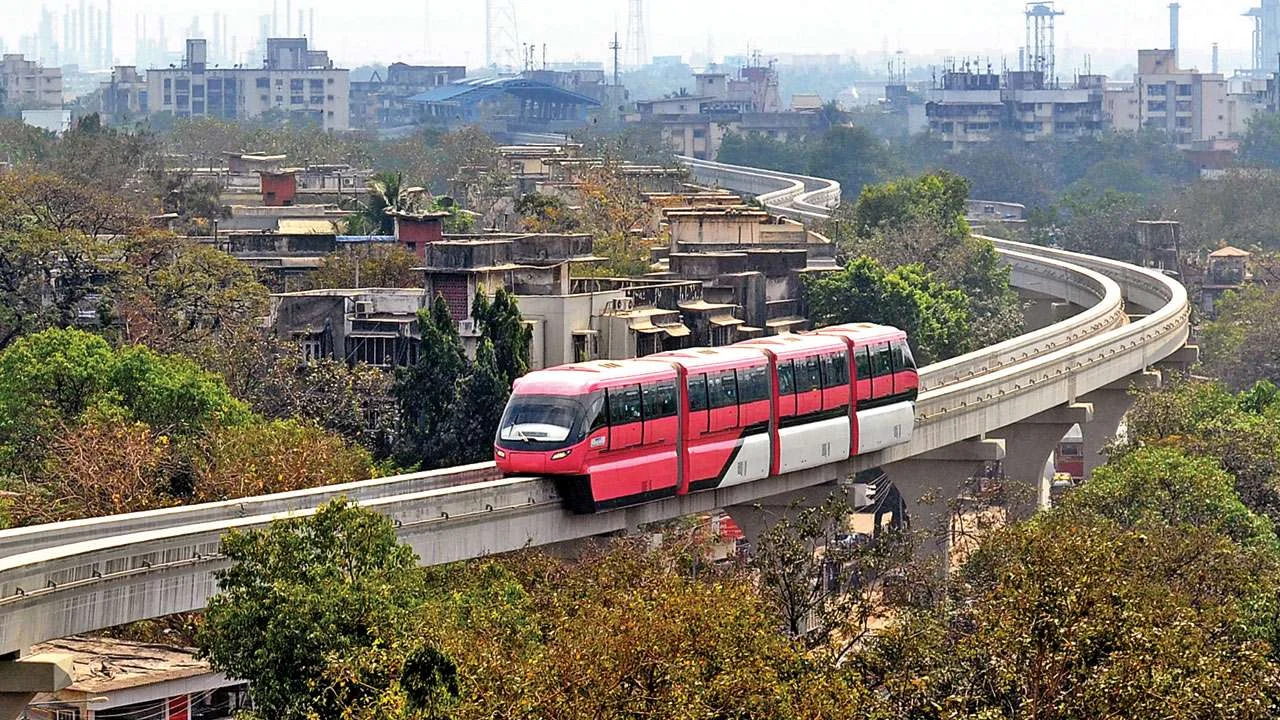
Power Mech Projects has emerged as the lowest financial bidder for the operations and maintenance mandate of the Mumbai Monorail, positioning the engineering and infrastructure firm to take charge of a transit system that has struggled to find operational stability since launch. The development is significant for Mumbai’s public transport network, where improving reliability and passenger confidence in mid-capacity rail systems remains a policy priority.
The contract, issued by the regional transport authority, covers a five-year period and focuses on day-to-day operations and long-term maintenance of the operational monorail corridor between Chembur and Jacob Circle. Urban transport planners say the outcome of this tender will influence not just service quality but also the future role of the monorail within Mumbai’s evolving multimodal mobility framework. Bidding for the Mumbai Monorail O and M package attracted multiple infrastructure players, reflecting renewed interest in urban transit management as cities push for lower-emission transport alternatives. Following a technical screening process, only two firms advanced to the financial evaluation stage. Power Mech Projects submitted the lowest commercial quote, undercutting its nearest competitor by a noticeable margin, according to officials familiar with the tender process.
Industry experts point out that cost competitiveness alone will not determine the success of the Mumbai Monorail O and M arrangement. The corridor passes through densely populated neighbourhoods with complex traffic interfaces, requiring tight coordination with civic agencies, power utilities, and emergency services. Consistent operations, preventive maintenance, and passenger safety will be critical if the system is to regain relevance amid the rapid expansion of metro lines across the Mumbai Metropolitan Region. Currently, only Phase One of the monorail network is operational, spanning nearly 20 kilometres and linking eastern suburbs with central Mumbai. Despite its strategic alignment potential with suburban rail and metro corridors, ridership has remained below projections. Transport analysts attribute this to service disruptions, limited last-mile integration, and public perception challenges.
A stable operations and maintenance framework is therefore seen as a prerequisite for any meaningful turnaround. Urban policy specialists argue that improving service reliability could reduce short car and two-wheeler trips in congested corridors, supporting broader goals of emission reduction and climate-resilient mobility. Monorail systems, when efficiently run, offer lower land take and quieter operations compared to road-based alternatives. From a governance perspective, the tender outcome also reflects a shift toward outcome-based contracting in urban transport, where private operators are expected to deliver measurable service benchmarks rather than merely manage assets. Such models are increasingly viewed as essential for financially constrained public agencies seeking predictable service delivery without escalating operational risk.
As authorities move closer to finalising the Mumbai Monorail O and M contract, attention will turn to transition timelines, workforce continuity, and service improvement milestones. For commuters, the test will be whether a new operational regime can translate into punctual, safe, and dependable travel—an outcome that could determine the monorail’s long-term place in Mumbai’s sustainable transport landscape.
Power Mech Projects Leads Mumbai Monorail Bid