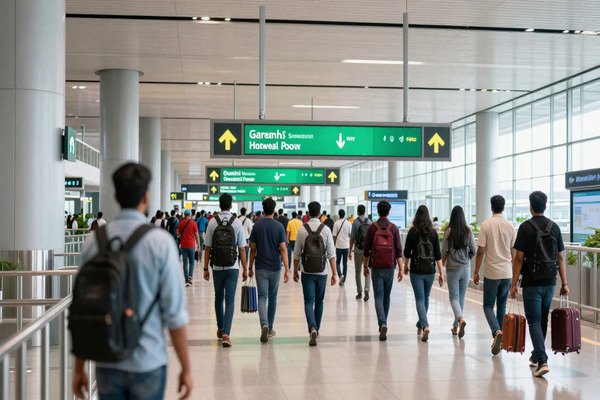
Pune airport has reintroduced a dedicated green channel for international arrivals, marking a significant operational shift aimed at reducing congestion and wait times for passengers with no dutiable goods. The move, implemented within the international arrivals area of the terminal, is expected to improve processing efficiency as overseas travel to and from the city continues to rise. For a fast-growing urban economy like Pune, smoother airport operations carry implications far beyond aviation, influencing business mobility, tourism, and investor confidence.
The green channel allows passengers who have nothing to declare to exit customs without undergoing routine baggage checks. While standard globally, the facility had been absent at Pune’s current terminal since its transition from the older building, largely due to spatial and operational constraints. Airport authorities have now reconfigured the arrivals zone to enable the separation of low-risk travellers from those requiring declaration, aligning Pune with practices followed at larger international gateways.
Customs officials indicate that risk-based profiling will remain central to enforcement. Although most green channel users will pass through without inspection, targeted checks will continue based on intelligence inputs and passenger profiles. This approach reflects a broader shift in border management from blanket screening to data-led oversight allowing authorities to focus resources where risk is highest while improving experience for compliant travellers. The timing is notable. Pune airport handled a sharp rise in international passenger traffic over the past year, reflecting the city’s growing integration with global business and labour markets. Direct connections to West Asia and Southeast Asia support IT professionals, manufacturing executives, students, and migrant workers, many of whom travel frequently. Delays at customs have been a recurring concern, particularly during peak arrival windows when limited parking bays and prolonged aircraft turnaround times disrupt schedules.
Airline operations are also expected to benefit. Faster passenger clearance reduces the time aircraft remain grounded after landing, easing pressure on apron capacity at an airport with constrained infrastructure. Aviation analysts note that even marginal improvements in turnaround time can help stabilise international schedules, reduce fuel burn from auxiliary power usage, and improve overall terminal efficiency an often overlooked contributor to lower airport emissions. For passengers, the change addresses a long-standing pain point. Frequent flyers and business travellers have consistently flagged extended waits at customs despite carrying no declarable items. A smoother exit process improves the overall perception of the city as a global-facing destination, an increasingly important factor as Pune competes with other Indian metros for international investment and events.
The reintroduction of the Pune airport green channel also fits into a wider urban narrative. As cities aim to become more liveable and competitive, soft infrastructure such as efficient border controls and passenger-friendly terminals plays a crucial role alongside roads, metros, and real estate. Improved airport experience supports inclusive growth by enabling easier movement of people and ideas, while operational efficiency contributes indirectly to sustainability goals. Looking ahead, aviation planners suggest that continued growth in international traffic will require further upgrades, including expanded terminal capacity and better multimodal connectivity. The green channel is a modest but meaningful step, signalling a shift towards smarter, people-first airport management in one of India’s most dynamic urban regions.
Pune Airport Green Channel Eases Arrivals Flow