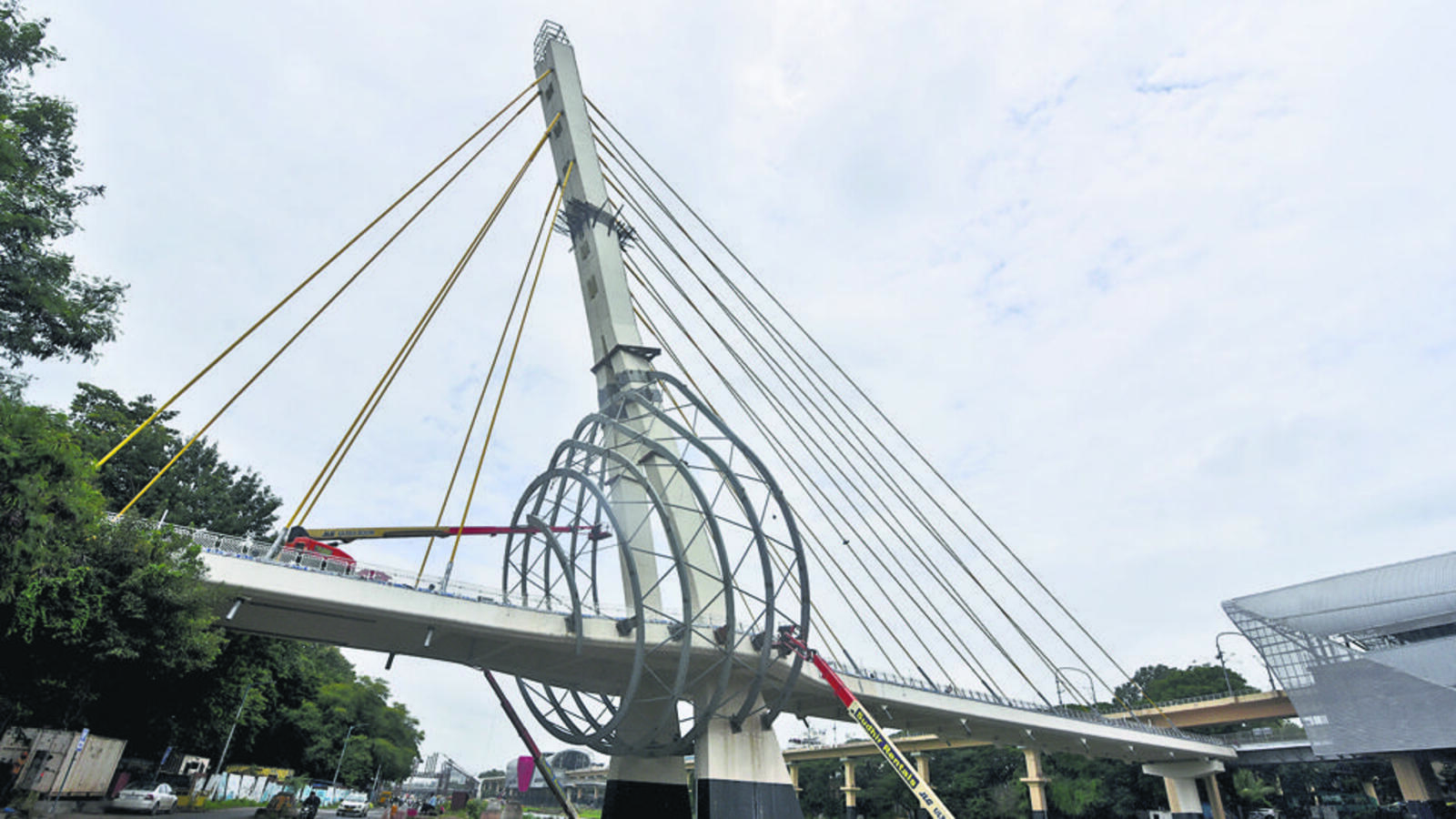
Pune has commissioned a new pedestrian bridge across the Mutha River that does more than ease daily movement it signals how urban infrastructure in Indian cities is evolving to balance mobility, heritage, and climate-sensitive design. The footbridge creates a direct walking connection between a central metro station near a major public garden and the historic Peth precinct, improving last-mile access while reinforcing the city’s cultural identity.
The bridge arrives at a critical moment for Pune’s transport network. With metro ridership steadily rising, pressure on pedestrian access around stations has increased, particularly in dense, older neighbourhoods where road widening is neither feasible nor desirable. Urban planners involved in the project note that safe, walkable crossings are essential for reducing dependence on short vehicle trips, which in turn supports lower emissions and more people-friendly streets.
Architecturally, the structure stands out in a city where most bridges have been purely utilitarian. Its form draws inspiration from a traditional Indian string instrument closely associated with classical music, reflecting Pune’s long-standing reputation as a centre for performing arts and learning. Rather than treating cultural reference as surface decoration, designers have embedded symbolism into the bridge’s structural language, turning a daily commute into a shared civic experience.
From an engineering standpoint, the bridge has been designed to minimise its impact on the river ecosystem. Spanning nearly 180 metres and supported by only two piers within the riverbed, it allows unobstructed water flow during monsoon months an increasingly important consideration as climate change intensifies rainfall patterns. A steeply inclined central pylon and a network of high-tension cables distribute load efficiently, reducing material use while maintaining structural safety. City officials say the bridge is part of a broader shift in how transport infrastructure is conceived under the metro programme. Instead of focusing solely on trains and stations, authorities are investing in pedestrian-first elements that knit new systems into existing urban fabric. For residents of historic neighbourhoods on the river’s eastern bank, the bridge shortens walking distances to public transport and improves access to jobs, education, and services across the city.
Urban economists also see implications for local property markets and street-level commerce. Improved walkability typically increases footfall, benefiting small businesses while making older residential areas more attractive without triggering large-scale redevelopment. This aligns with a more equitable growth model, where infrastructure upgrades enhance liveability rather than displacing communities. The project was formally opened in the presence of senior state and city-level officials, underscoring its symbolic and functional importance. Yet its long-term value will be measured less by ceremony and more by everyday use how comfortably people cross the river, how seamlessly they shift from walking to metro travel, and how well the structure withstands environmental stress over time. As Pune continues to expand its transit network, the bridge offers a template for future interventions: infrastructure that is low-carbon in intent, sensitive to place, and designed around people rather than vehicles. The next challenge for the city will be to replicate this approach at scale, ensuring that mobility upgrades remain inclusive, resilient, and rooted in local context.
Pune Footbridge Links Metro And Heritage Core