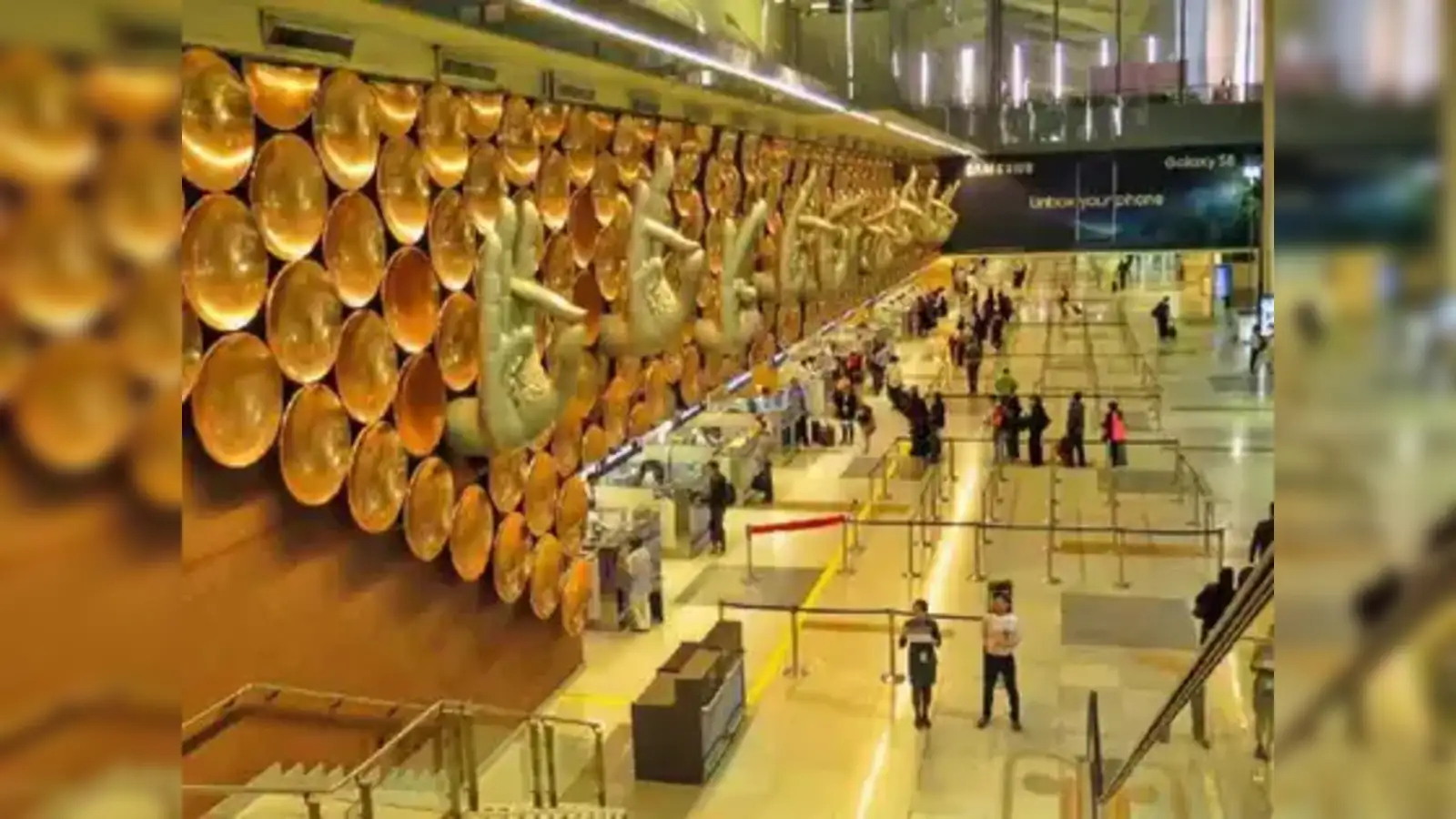
Delhi’s primary aviation gateway is undergoing a quiet but significant transformation as Terminal 3 is re-engineered to handle a sharper rise in international travel. At the domestic wing of T3, internal layouts are being redrawn to create a dedicated international departure zone, a move that reflects changing passenger patterns and the capital’s growing role as a global business and mobility hub.
Airport officials overseeing the project indicate that the redesigned section will begin handling overseas departures later this month. The reconfiguration repurposes part of the domestic security area to accommodate immigration processing, with international travellers now completing border formalities after security clearance. This structural adjustment is intended to ease congestion, shorten walking distances, and bring clarity to passenger movement during peak hours. A key change lies beyond the security checkpoint, where passenger circulation has been divided into two sealed corridors one for domestic flyers and the other for international passengers. These routes now lead to a split concourse, directing domestic travellers towards one set of boarding gates and international passengers towards another. Arrivals are also being similarly segregated, reducing cross-traffic and operational overlap.
This shift is part of a broader capacity recalibration across Delhi’s airport system. With Terminal 1 now fully dedicated to domestic operations and upgraded to handle significantly higher volumes, planners have freed up space at T3 to prioritise long-haul and regional international services. As a result, T3 will soon operate with three international piers and a single domestic pier, marking a decisive pivot in how the terminal functions. Industry experts note that the Delhi airport T3 expansion is not merely a response to post-pandemic traffic recovery, but a strategic bet on sustained international demand driven by trade, tourism, and diaspora movement. Annual international handling capacity at T3 is set to increase by nearly 50 percent, easing pressure during night-time departure banks and improving aircraft turnaround efficiency.
From an urban development perspective, the redesign highlights how aviation infrastructure increasingly shapes city economies. Higher international throughput strengthens Delhi’s position as a regional connector, benefiting hospitality, commercial real estate, logistics, and knowledge-driven sectors. Urban planners also point out that smoother passenger flows reduce energy use within terminals, supporting lower per-capita emissions an often overlooked element of climate-resilient transport infrastructure. The airport operator has consciously avoided mixed-use operations within the newly created international area, choosing operational clarity over short-term flexibility.
Officials familiar with the planning say this reduces security complexity and aligns with global best practices for large hub airports. As air travel demand continues to evolve, the Delhi airport T3 expansion underscores the importance of adaptable infrastructure spaces that can be reconfigured without new construction, land acquisition, or significant environmental cost. The coming months will test whether these changes translate into measurable gains in passenger experience, punctuality, and sustainability across one of India’s busiest terminals.
Delhi Airport Reconfigures T3 For Global Travel Growth