


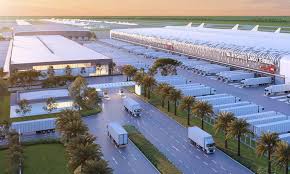
Noida International Airport is set to become a major hub for air cargo as Air India SATS Airport Services (AISATS) unveils plans to invest up to Rs 5,000 crore in phased infrastructure development. The move aligns with India’s ambition to strengthen regional logistics networks and support a rapidly expanding export-oriented economy. Analysts note that integrating cargo terminals with warehousing and multimodal connectivity could transform Noida into a strategic logistics gateway for northern India.
AISATS is pursuing a build-operate-transfer model to develop a multi-phase integrated cargo terminal and warehousing zone. Phase one alone is expected to involve an investment of approximately Rs 700 crore, scaling up progressively as cargo volumes increase and the airport becomes fully operational. Industry experts point out that such strategic infrastructure will enhance supply chain efficiency for sectors including e-commerce, pharmaceuticals, perishables, and high-value manufacturing exports, while also providing new revenue streams through long-term concessions and logistics rentals. The initiative reflects a broader trend in Indian aviation, where cargo and logistics are emerging as critical growth engines beyond traditional passenger services. Urban planners and aviation analysts emphasise that expanding cargo capacity at secondary airports offers operational flexibility, lower costs, and extended concession tenures, making these hubs more financially sustainable. By decentralising cargo handling from congested metro airports, Noida’s facilities can serve as a distributed network connecting major production centres to domestic and international markets.
From a policy perspective, the absence of a finalised national ground-handling framework introduces some operational uncertainty, particularly in long-term capital allocation and workforce planning. Experts argue that a unified regulatory approach could provide predictable safety standards, competition clarity, and consistent concession guidelines, fostering more efficient investment in cargo infrastructure across the country. AISATS is also investing in workforce development, safety, and technology adoption to optimise cargo operations. Training centres in major cities are focusing on structured skill development, simulator-based exercises, and ergonomics-led workforce management. Safety systems, standardised operating procedures, and automation in cargo handling aim to improve throughput, reduce dwell times, and maintain high standards for sensitive goods such as pharmaceuticals and perishable items. With India targeting a $2 trillion export economy by 2030, expanding air cargo infrastructure at Noida supports national economic objectives while stimulating regional employment and logistics-driven urban development. Analysts note that integrating digital tracking, temperature-controlled facilities, and advanced handling systems positions Noida as a next-generation logistics hub.
Looking ahead, Noida International Airport’s cargo expansion could serve as a model for sustainable, network-oriented aviation logistics, balancing operational efficiency with regional development and technological innovation in air freight.
Also Read:
Noida Cargo Infrastructure Poised for Transformation
