


A decade after Vijayawada was positioned as a central driver of Andhra Pradesh’s urban and economic transformation, the city finds itself navigating a period of slowed momentum, uneven infrastructure delivery, and recalibrated expectations. While its geographic advantage and civic importance remain intact, the pace and scale of development have not matched the ambitions once articulated for the region, raising questions about long-term urban resilience and economic competitiveness.
Vijayawada occupies a strategic location within the Krishna river basin and the broader capital region, acting as a transport, commercial, and administrative anchor. However, over the past ten years, infrastructure execution has lagged behind planning intent. Several civic projects intended to modernise drainage, sewage, and urban mobility have progressed slowly, exposing residents to recurring flooding, congestion, and service disruptions. These gaps have increasingly affected quality of life and investor confidence alike. Urban planners point out that the city’s challenges are not solely financial, but institutional. Fragmented governance structures, frequent policy resets, and limited coordination between agencies have constrained delivery timelines. While neighbouring urban centres have benefited from focused sectoral investments and industrial clustering, Vijayawada’s growth has remained largely consumption-led, without a corresponding expansion in employment-intensive industries. Recent policy signals suggest a renewed attempt to correct this imbalance. Authorities have announced large-scale urban renewal initiatives aimed at strengthening climate-resilient infrastructure, particularly stormwater management and water supply systems. These interventions are critical for a city vulnerable to monsoon variability and riverine flooding, especially as climate risks intensify across coastal and delta regions. Simultaneously, long-term spatial planning is being revisited to guide future expansion more systematically. A revised urban development framework is expected to streamline land-use regulations, improve building controls, and integrate transport corridors with housing and commercial growth. If implemented effectively, this could help prevent further sprawl and support more inclusive, people-first neighbourhoods.
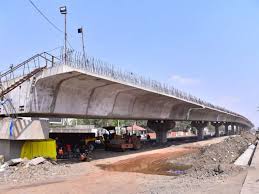
Connectivity improvements have offered some tangible relief. Expanded road links and regional access corridors have improved movement between Vijayawada and surrounding urban nodes, strengthening its role within the capital region network. However, experts caution that transport infrastructure alone cannot drive sustainable growth unless paired with economic diversification and skills-led employment strategies. The city’s real estate market reflects this mixed reality. While residential demand remains steady due to population growth and institutional presence, large-scale commercial and industrial investments have been slower to materialise. This has limited job creation and constrained upward mobility, particularly for younger residents. Vijayawada’s experience over the past decade underscores a broader challenge facing many mid-sized Indian cities: translating strategic importance into sustained, equitable growth. The next phase will depend not only on capital investment, but on execution discipline, climate-aware planning, and policies that prioritise livability alongside economic expansion.
As urban India enters a more resource-conscious era, Vijayawada’s path forward will be shaped by how effectively it aligns infrastructure delivery with environmental resilience and inclusive development outcomes.
Also Read: Sindhudurg Airport Gets All Weather Operations Approval
Vijayawada Struggles To Regain Infrastructure Leadership
