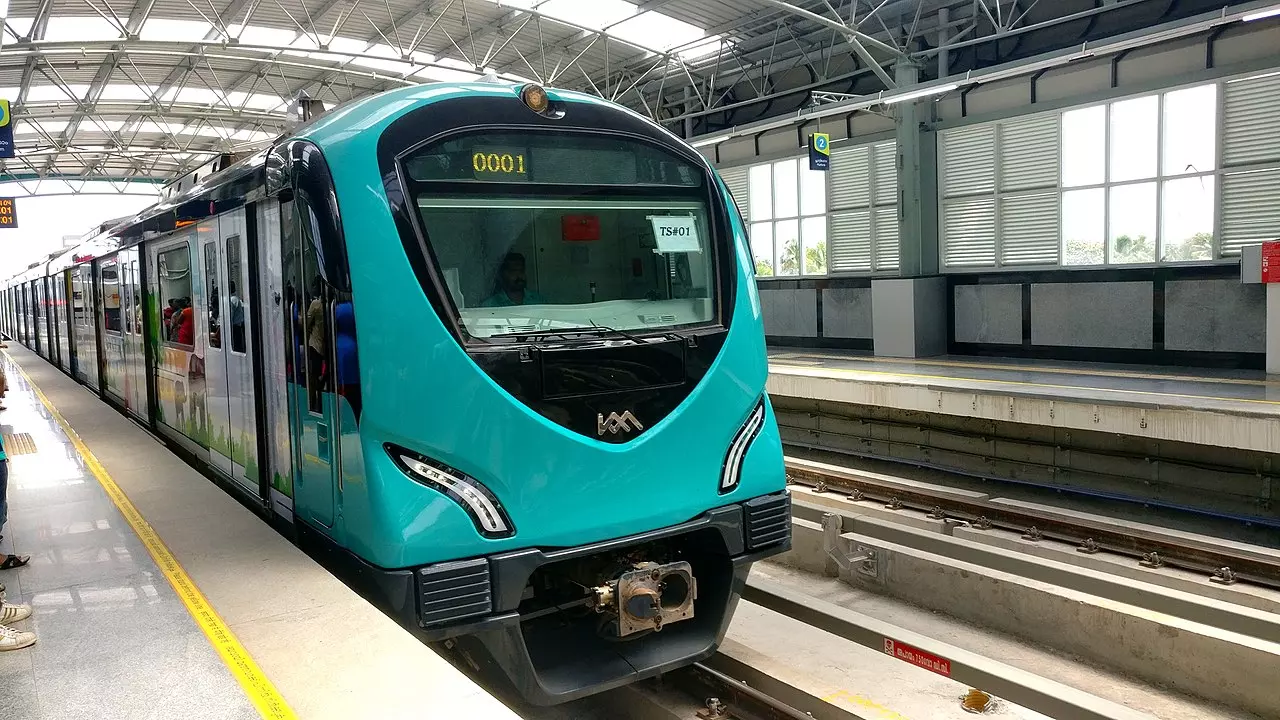
Kochi is taking a critical step toward enhancing urban mobility as Kochi Metro Rail Limited (KMRL) finalises the telecommunication systems contract for its Phase 2 Pink Line. The contract, valued at approximately ₹95.3 crore, has been awarded to L&T Technology Services Limited, signalling a move toward modern, integrated metro operations that could improve commuter safety, operational efficiency, and city-wide connectivity.
Phase 2, a single corridor extending 11.2 kilometres from JLN Stadium to Infopark at Kakkanad, aims to directly link residential areas with one of Kochi’s principal IT hubs. Urban planners note that such extensions are increasingly pivotal for promoting sustainable mobility, easing road congestion, and stimulating transit-oriented development in rapidly growing urban centres. With 11 new stations planned, the corridor is expected to benefit thousands of daily commuters while supporting economic activity in the surrounding employment clusters.The bidding process, conducted by KMRL over several months, involved a technical and financial evaluation of three major contenders. Following a detailed technical assessment completed in late December 2025, L&T Technology Services emerged as the lowest bidder, undercutting Siemens Limited and Alstom Transport India Limited, which quoted ₹103.3 crore and ₹116.7 crore respectively. The awarded contract covers design, manufacturing, supply, installation, testing, and commissioning of the metro’s telecom infrastructure, which includes train control, passenger information systems, security surveillance, and operational coordination.
Civil construction for the Pink Line is progressing steadily, with active work on pier caps and U-girder installations. KMRL has set a target for commissioning in 2026, contingent on timely integration of telecom, electrical, mechanical, and rolling stock systems. Industry experts emphasise that such integrated system contracts are critical for ensuring safe, reliable, and climate-resilient urban transport networks.Beyond operational efficiency, Phase 2 is expected to shape the surrounding urban fabric. Improved connectivity to Infopark may encourage compact, mixed-use developments and reduce dependence on private vehicles, aligning with broader goals of inclusive, low-carbon city planning. Urban mobility analysts also anticipate that the corridor could set a benchmark for future metro expansions in Kerala, demonstrating how strategic infrastructure investments can advance both economic opportunity and sustainable growth.
As Kochi Metro advances toward its Phase 2 launch, the city positions itself among India’s emerging leaders in modern, people-focused urban transit. Continued progress on systems integration, civil works, and stakeholder coordination will be key in translating these infrastructural investments into tangible benefits for commuters, businesses, and the wider city ecosystem.