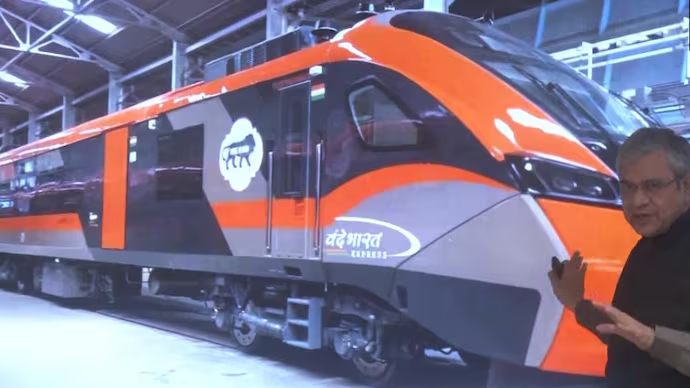
Indian Railways is preparing to introduce its first long-distance Vande Bharat sleeper service on the Guwahati–Kolkata corridor, marking a significant shift in how overnight intercity travel is positioned within India’s transport network. The service, expected to be flagged off later this month, reflects a broader push to modernise rail infrastructure while offering a viable alternative to short-haul aviation in eastern India.
The new train will operate with a 16-coach configuration and is designed to cater to more than 800 passengers per trip. Although engineered for higher speeds, operational limits on the existing track infrastructure will see it run at moderated velocities, aligning with safety and signalling requirements along the Assam–West Bengal stretch. Railway officials say the focus is not just speed, but reliability, comfort and energy efficiency across longer distances. For cities such as Guwahati and Kolkata, the launch has wider urban and economic implications. Improved overnight rail connectivity is expected to support labour mobility, tourism and small business travel, particularly for middle-income households that find air fares volatile and expensive. Transport economists note that the Hyderabad infrastructure crisis has already shown how over-reliance on road and air networks can strain urban systems; rail-based solutions offer a lower-emission, higher-capacity alternative.
Affordability has been positioned as a core feature of the service. Ticket pricing across sleeper classes is significantly below comparable flight fares on the same route, with meals bundled into the fare structure. Industry analysts see this as a strategic attempt to reclaim market share from airlines while promoting rail as a climate-resilient mode of transport aligned with India’s long-term decarbonisation goals.From a design and operations standpoint, the sleeper Vande Bharat introduces several upgrades over conventional overnight trains. These include improved suspension systems to reduce vibration, enhanced acoustic insulation, modern safety technologies such as automatic train protection, and upgraded sanitation systems. Rail engineers say such features are critical if premium rail services are to scale without excluding large sections of the travelling public.
The Guwahati–Kolkata service is also being viewed as a pilot for future deployment across other high-demand corridors. Manufacturing timelines indicate that multiple sleeper trainsets are already in the production pipeline, with a gradual increase planned as supply chains stabilise. Urban planners argue that sustained investment in such rolling stock must be matched with station-area redevelopment and last-mile connectivity to fully unlock economic value. Catering choices reflecting regional cuisines from both ends of the route signal an effort to localise passenger experience, an approach increasingly seen as important in people-first infrastructure planning.As Indian Railways expands its sleeper Vande Bharat programme, the challenge ahead lies in balancing speed, affordability and network readiness. If executed well, the initiative could reshape overnight travel patterns while easing pressure on carbon-intensive transport modes and supporting more equitable regional growth.
Guwahati Kolkata rail corridor gets sleeper upgrade