


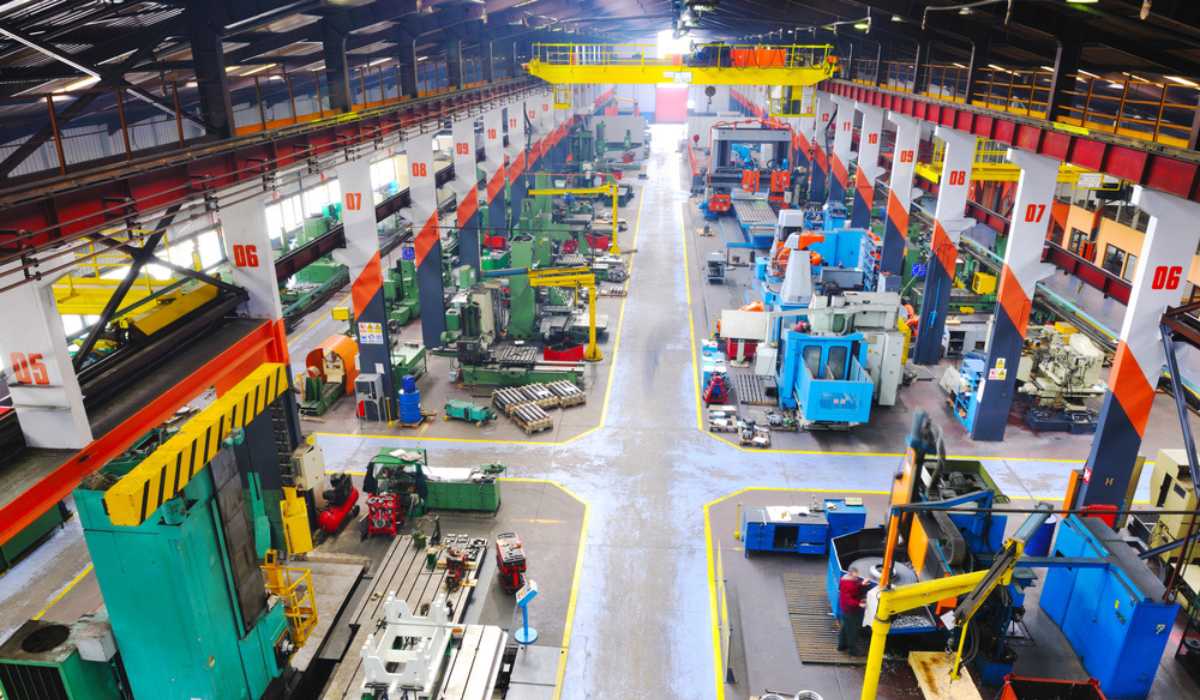
The launch of commercial operations at a new electric vehicle manufacturing facility on Hyderabad’s outskirts has triggered renewed investor interest in India’s clean mobility supply chain, underscoring the city’s growing role as an anchor for low-emission industrial growth. Shares of an electric bus manufacturer rose sharply after the company confirmed that Phase I of its greenfield plant in Telangana had formally entered commercial production.
The facility, located in the Seetharampur industrial belt, has been declared operational from the end of December 2025, marking a key milestone in the company’s long-term capacity expansion strategy. Regulatory disclosures confirm that lenders have been formally notified, signalling financial closure on the first phase of the project. Markets responded positively, pushing the company’s valuation higher despite recent volatility in the broader auto and capital goods segments. Phase I of the Hyderabad EV manufacturing facility is designed to produce up to 2,500 electric buses annually on a single-shift basis, representing half of the site’s planned per-shift output once fully built. Industry analysts note that this scale positions the plant as one of the more significant electric bus manufacturing hubs in southern India, aligned with rising demand from state transport undertakings and city-level clean mobility programmes. The development carries wider urban and economic implications. Electric buses form a critical part of India’s strategy to decarbonise public transport, reduce urban air pollution, and lower lifecycle operating costs for cities. Hyderabad’s ability to attract such manufacturing investments strengthens local employment, supplier ecosystems, and technical skills, while also reducing dependence on long-distance logistics for public transport fleets.
From a market perspective, the stock’s recent rally follows a challenging year marked by corrections and shifting expectations around order inflows. While the company continues to trade at premium valuation multiples compared to traditional vehicle manufacturers, analysts suggest this reflects long-term confidence in electrification-led growth rather than near-term earnings alone. Technical indicators currently place the stock in a neutral zone, suggesting that the price reaction is being driven more by fundamentals than momentum trading. Financial disclosures show that the company recorded strong revenue expansion in the latest reported quarter, supported by steady deliveries and execution of existing orders. Profit growth, while more measured, reflects cost pressures typical of capacity ramp-ups and evolving input prices in the EV supply chain. Urban transport planners say that manufacturing capacity alone will not determine success. The pace of public procurement, charging infrastructure deployment, grid readiness, and policy continuity will shape how effectively electric buses are integrated into city networks. As Phase II capacity expansion remains on the horizon, the focus will now shift to execution efficiency, supply chain resilience, and the plant’s ability to meet demand without compromising sustainability benchmarks.
For Hyderabad, the operationalisation of the Hyderabad EV manufacturing facility reinforces its positioning as a centre for climate-aligned industrial development, linking capital markets, clean mobility, and the future of people-first urban transport.
Also Read: Hyderabad Housing Delay Triggers Regulatory Interest Relief
Hyderabad Manufacturing Boost Strengthens Electric Bus Supply
