


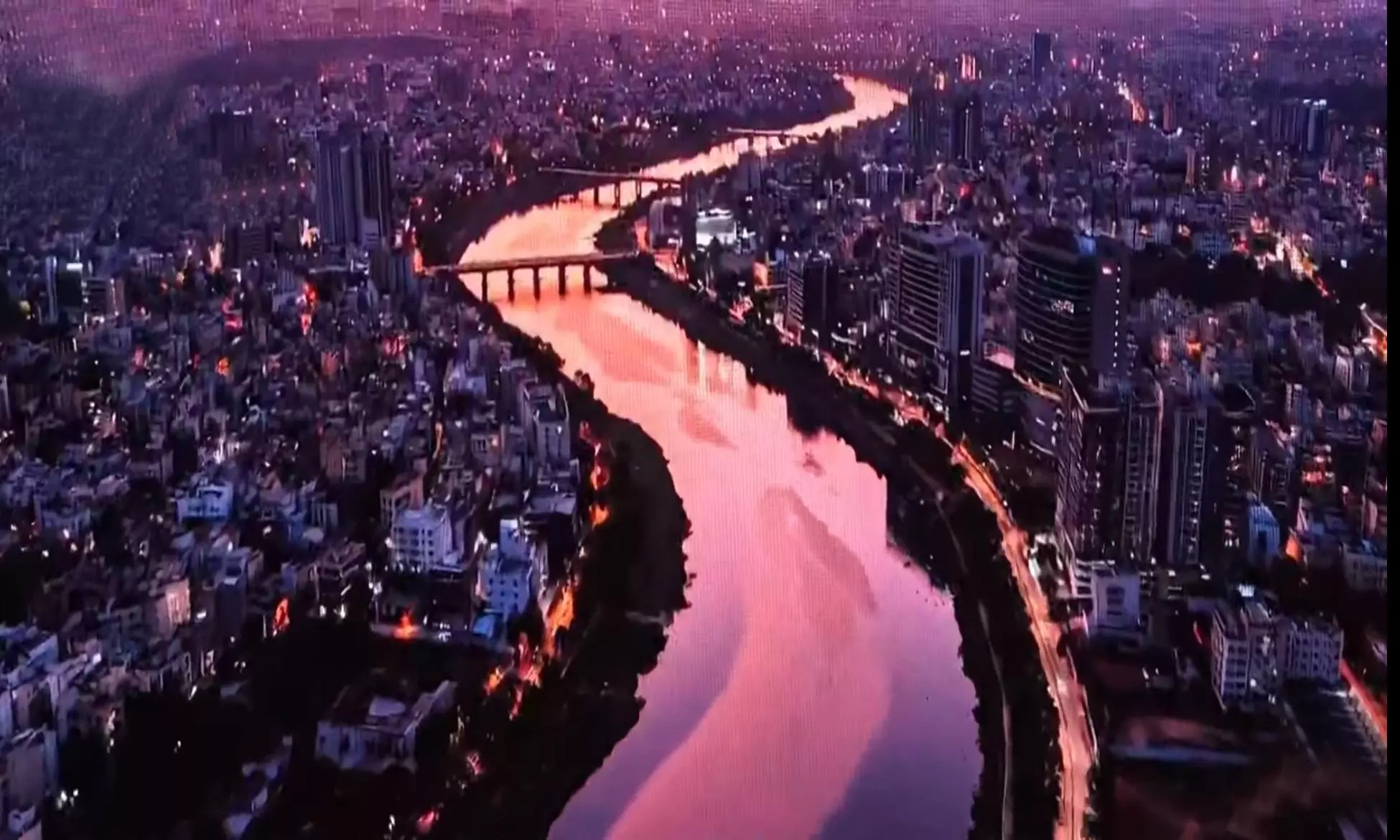
The Telangana government has sought to reframe the Musi River rejuvenation initiative as a long-term urban transformation project, positioning it as central to Hyderabad’s future growth rather than a real estate-led intervention. Addressing the State Assembly, the Chief Minister underlined that the project is intended to restore the river ecosystem while strengthening Hyderabad’s standing as a global city, amid criticism over displacement and development priorities.
The Musi rejuvenation project, one of the largest planned urban renewal exercises in the State, has become a flashpoint for debate on how Indian cities balance environmental repair with economic expansion. The government has argued that riverfront development can act as a catalyst for cleaner waterways, improved public spaces, and renewed economic activity, particularly as Hyderabad’s urban footprint continues to expand rapidly within and beyond the Outer Ring Road. According to officials, nearly one-third of Telangana’s population now resides within the metropolitan core, intensifying pressure on housing, transport, and civic infrastructure. Urban planners note that in such a context, large-scale projects like Musi rejuvenation are increasingly framed as instruments to manage urban density, attract investment, and improve liveability. However, they also caution that success depends heavily on how rehabilitation and resettlement are handled for communities living along the riverbanks.
The government has reiterated its commitment to compensating affected households and providing access to schools, healthcare facilities, and basic services at resettlement sites. Senior officials indicated that displacement, while disruptive, is being addressed through planned rehabilitation aimed at improving long-term living standards rather than temporary relocation. This approach, they argue, is essential for ensuring that river restoration does not come at the cost of social equity. Opposition leaders, however, have raised concerns about the social impact of the project, warning against forced evictions and questioning whether urban renewal disproportionately benefits private development interests. The debate reflects a broader national conversation on riverfront projects, where environmental restoration, urban branding, and real estate dynamics often intersect in complex ways. Urban economists point out that river rejuvenation projects, if designed responsibly, can generate employment, boost local economies, and unlock underutilised land for public use. At the same time, inadequate safeguards can deepen inequality and erode trust in public institutions. The Musi project’s trajectory will therefore be closely watched as a test case for people-first urban redevelopment in a fast-growing Indian metropolis.
Looking ahead, experts suggest that transparent planning, phased implementation, and community participation will be critical to aligning the Musi rejuvenation with Hyderabad’s climate resilience goals. As cities increasingly turn to riverfronts as engines of renewal, the challenge lies in ensuring that ecological restoration, inclusive growth, and urban prosperity move forward together rather than at odds.
Also Read: India Housing Demand Supports Listed Realty Performance
Hyderabad Musi Rejuvenation Triggers Urban Development Debate
