


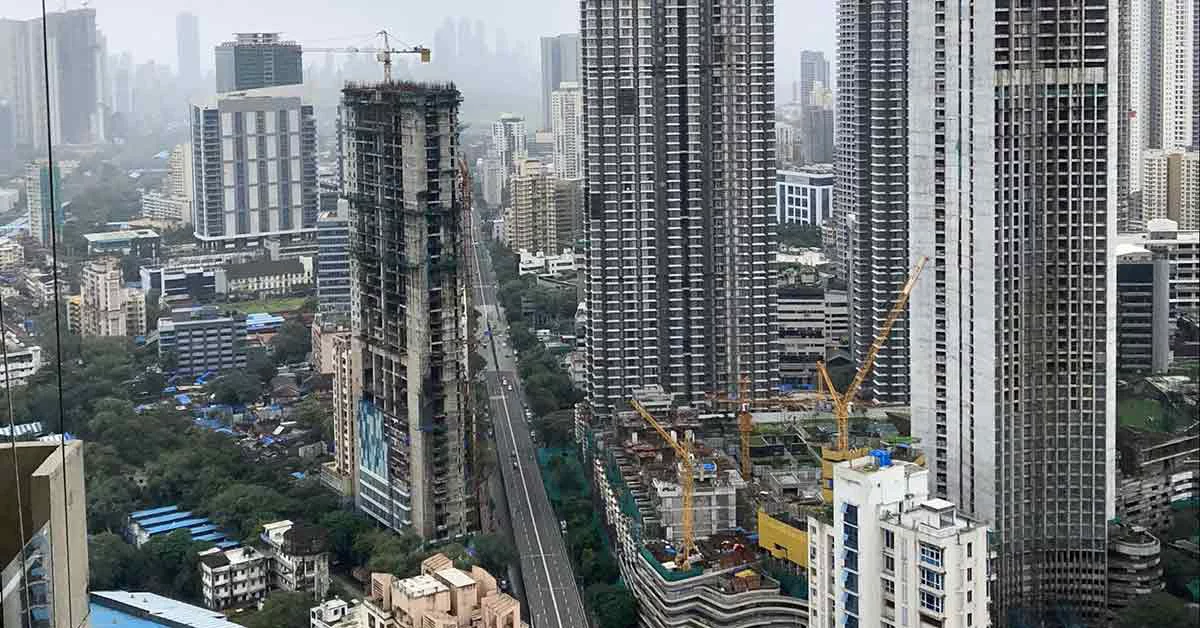
A large cooperative housing redevelopment in Borivali West has moved into its execution phase, underscoring the growing role of society-led regeneration in reshaping Mumbai’s ageing suburban landscape. A city-based developer has been selected to redevelop the BOI Staff Sheetal Co-operative Housing Society, marking another step in Mumbai’s broader push to renew mid-century residential stock through private participation.
The project, spread across nearly 3,925 square metres of land in one of Mumbai’s densely populated western suburbs, reflects how redevelopment is becoming a central urban strategy rather than a peripheral activity. With limited greenfield land available, Mumbai’s housing supply is increasingly dependent on the transformation of old, low-rise buildings into safer, higher-capacity structures that comply with modern planning and safety standards. Urban planners say Borivali West exemplifies the challenges and opportunities of suburban redevelopment. The area has strong rail and road connectivity, established social infrastructure, and rising residential demand, yet much of its housing stock is structurally dated. Redevelopment projects in such neighbourhoods not only unlock additional floor space but also improve seismic safety, fire compliance, and access to basic services such as water management and waste segregation. Industry experts note that redevelopment-led growth has become more financially viable as demand for mid-income housing strengthens across Mumbai’s suburbs. Unlike luxury-led construction in the island city, suburban redevelopment caters to end-users seeking long-term residence rather than speculative investment. This shift is reshaping the city’s real estate risk profile and bringing more stable, occupancy-driven growth.
The Borivali West project is also indicative of how cooperative housing societies are asserting greater agency in redevelopment decisions. With residents retaining ownership rights while upgrading living conditions, such models are viewed as more socially sustainable than displacement-driven redevelopment. Housing policy specialists argue that transparent consent processes and predictable timelines are essential to maintain trust between residents and developers. From an environmental perspective, redevelopment offers opportunities to reduce the carbon intensity of Mumbai’s housing stock. Newer buildings can integrate energy-efficient materials, improved ventilation, rainwater harvesting, and better waste systems features largely absent in older structures. While redevelopment itself has an environmental cost, planners suggest that lifecycle efficiencies often outweigh short-term impacts when projects are designed responsibly. Mumbai’s municipal authorities have increasingly positioned redevelopment as a solution to both housing shortages and urban resilience. However, experts caution that coordination with transport capacity, drainage infrastructure, and open space planning remains critical. Without this alignment, localised redevelopment could strain already congested neighbourhoods.
As Mumbai’s suburbs absorb the next phase of urban growth, projects such as the Borivali West redevelopment illustrate how the city’s future housing supply will be created not through outward expansion, but by rebuilding inward. The success of such efforts will depend on regulatory clarity, construction discipline, and the ability to balance density with liveability in one of the world’s most space-constrained cities.
Also Read: Delhi NCR Office Pipeline Shrinks Despite Demand
