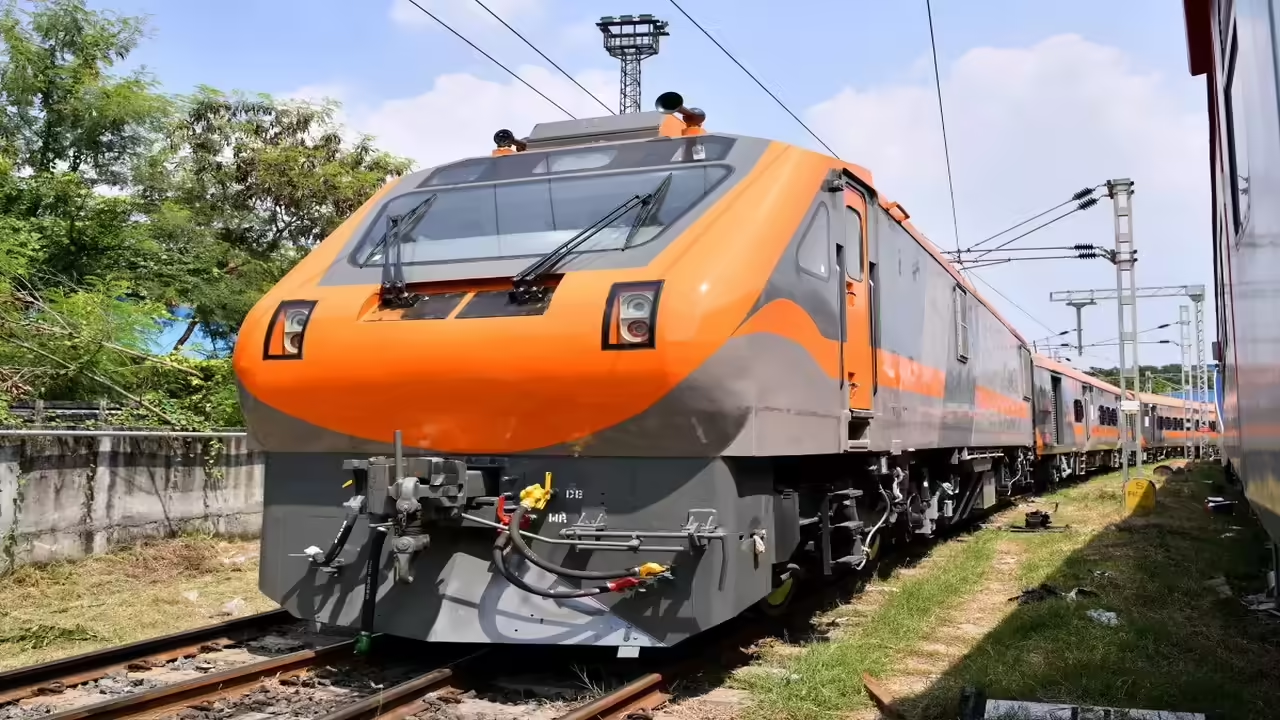
Indian Railways has implemented a nationwide timetable reset from 1 January 2026, recalibrating train schedules, increasing average speeds on key corridors, and introducing targeted digital incentives for passengers. The move reflects a broader operational shift aimed at improving punctuality, reducing congestion on saturated routes, and encouraging a transition towards technology-led, lower-friction public transport systems.
Under the revised plan, the running time of 62 Express services has been shortened, while arrival and departure timings across suburban, Mail, and long-distance trains have been adjusted by minutes rather than hours. Railway officials say the changes are designed to improve network fluidity on high-density sections where closely spaced services often amplify minor delays into system-wide disruptions. A key focus area is the Western Railway suburban network, particularly the Dahanu Road section, which serves as a critical commuter artery linking peripheral townships with the Mumbai metropolitan region. Revised local train schedules here are intended to better align suburban movements with long-distance services, reducing bottlenecks at junctions and level crossings. Urban transport planners note that such micro-adjustments play an outsized role in improving commuter reliability in expanding metropolitan regions.
Beyond suburban corridors, several Mail, Express, and premium services, including select Vande Bharat operations, are operating on refined schedules. These revisions range from marginal changes of five to fifteen minutes to more substantial shifts intended to improve platform availability and turnaround times at major terminals. Railway operations experts point out that optimised timetabling is among the most cost-effective ways to extract additional capacity from existing infrastructure without new construction. The timetable overhaul also aligns with Indian Railways’ wider sustainability objectives. Faster average speeds and reduced idling time translate into lower energy consumption per passenger kilometre. As railways continue to electrify routes and modernise signalling, operational efficiency is increasingly seen as a climate resilience tool rather than merely a service metric.
In a parallel initiative, Indian Railways has introduced a limited-period incentive to promote digital ticketing for short-distance travel. From mid-January 2026, passengers purchasing unreserved tickets through the RailOne mobile application will receive a modest fare reduction when using digital payment modes. Officials involved in passenger services say the measure is intended to reduce cash handling, speed up station transactions, and improve data-driven service planning. Urban economists view the digital push as particularly relevant for daily wage earners, informal workers, and students who rely heavily on unreserved travel. Even marginal savings, when combined with reduced queuing and faster access, can influence travel behaviour at scale. The initiative is expected to be reviewed mid-year to assess adoption rates and operational impact.
Passengers have been advised to verify updated schedules before travel, as the revised timings may affect regular commuting patterns. Railway authorities stress that the success of the Indian Railways timetable changes will ultimately be measured not just by faster trains, but by smoother journeys, predictable arrivals, and a more resilient rail network capable of supporting India’s growing urban regions. As cities expand and travel demand intensifies, such incremental yet systemic adjustments signal a shift towards smarter rail operations where efficiency, inclusivity, and sustainability converge on the timetable.
Indian Railways Updates Timetables To Speed Up Services