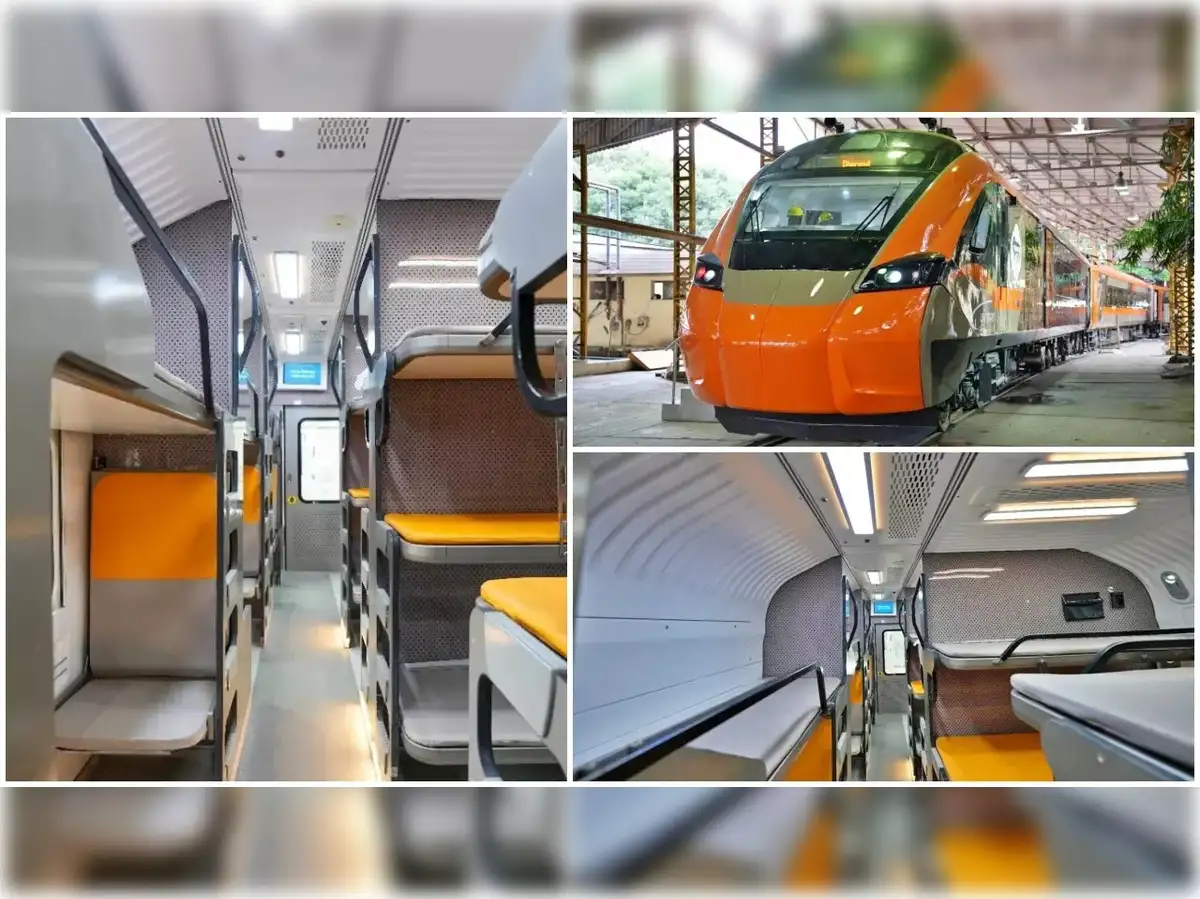
India’s long-distance rail network is set for a structural upgrade as Indian Railways prepares to introduce its first Vande Bharat sleeper service on the Guwahati–Howrah corridor. Scheduled for launch in January 2026, the service marks a transition from high-speed daytime rail to modern overnight mobility, addressing the growing demand for faster, more comfortable inter-city travel across eastern India.
The Guwahati–Howrah route connects two key regional anchors—one a gateway to the Northeast and the other a major economic and logistics hub. Introducing a Vande Bharat sleeper on this corridor is expected to significantly alter travel patterns by offering a time-efficient alternative to both conventional mail trains and short-haul aviation, particularly for passengers undertaking overnight journeys.
Unlike earlier Vande Bharat services configured for seated daytime travel, the sleeper variant is designed specifically for long-haul operations. The 16-coach configuration combines multiple air-conditioned berth classes, allowing more than 800 passengers to travel overnight with enhanced comfort. Rail officials familiar with the project indicate that the train is engineered for higher cruising speeds, supported by improved suspension systems that reduce vibration and fatigue during extended journeys.
From an infrastructure perspective, the Guwahati Howrah Vande Bharat sleeper signals readiness in track quality, signalling, and safety systems along the eastern corridor. Trial runs have demonstrated the train’s capability to operate at significantly higher speeds than legacy rolling stock, although operational speeds will be calibrated to balance efficiency, safety, and network capacity.Urban mobility experts view the introduction as part of a broader recalibration of inter-city transport economics. Overnight trains that reduce journey times can shift demand away from energy-intensive air travel, supporting lower per-capita emissions while remaining accessible to a wider demographic. This aligns with national climate objectives that prioritise rail as the backbone of low-carbon mass mobility.
The economic implications extend beyond transport. Faster overnight connectivity strengthens labour mobility between eastern metros, supports education and healthcare access, and enhances business continuity for enterprises operating across state boundaries. Real estate analysts note that sustained improvements in long-distance rail services often increase commercial activity around major stations, influencing office leasing, hospitality demand, and transit-oriented development. Affordability remains a central feature of the Guwahati Howrah Vande Bharat sleeper. Industry observers expect pricing to remain competitive with premium trains, positioning the service as a middle path between conventional rail and aviation.
This pricing strategy is seen as critical for ensuring inclusive access while maintaining operational viability. As Indian Railways plans additional sleeper deployments on other long corridors, the Guwahati–Howrah launch will serve as a benchmark for performance, passenger response, and network integration. Its success could accelerate the transition towards modern overnight rail as a cornerstone of sustainable, people-first inter-city mobility across India.
Guwahati Howrah Corridor Gets Overnight Rail Upgrade