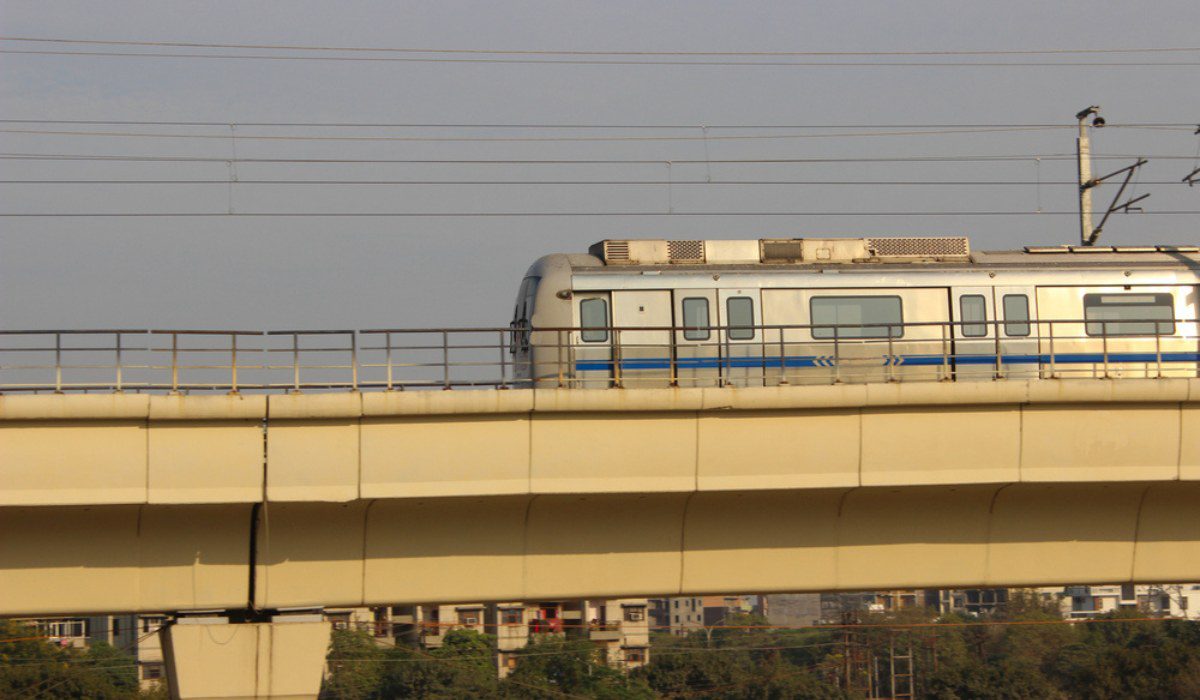
Delhi’s rapid transit map is poised for a significant reordering after the Union government cleared a new underground metro stretch linking Ramakrishna Ashram Marg with Indraprastha. Once integrated, the Magenta corridor will extend beyond every other line in the capital’s network, underscoring how targeted metro investments are reshaping mobility across dense and institution-heavy parts of the city.
The approved section, measuring just under 10 kilometres, pushes the Delhi Metro Magenta Line to a total length of about 76.6 kilometres. This expansion comes at a time when central Delhi is witnessing rising travel demand driven by offices, courts, cultural institutions and public spaces clustered around the Central Vista and riverfront precincts. For daily commuters and visitors, the extension offers a direct, rail-based alternative to some of the city’s most congested surface corridors. Urban transport planners point out that the significance of the project lies not only in length, but in connectivity. The entirely underground alignment adds nine stations through high-density administrative and civic zones, creating new interchange opportunities with three major metro corridors as well as the airport express system. This improves network resilience by distributing passenger loads more evenly, particularly around transfer-heavy stations in the city core.
The Delhi Metro Magenta Line has been designed as a high-capacity orbital spine rather than a radial commuter route. By stitching together west, south and now central Delhi, the corridor enables cross-city movement without forcing riders to pass through already saturated interchange hubs. A proposed pedestrian subway between two central stations is expected to further streamline transfers and ease crowding at one of the busiest nodes in the system. From a sustainability perspective, the expansion aligns with the capital’s broader effort to curb transport-related emissions. Underground metro corridors, while capital-intensive, are seen by environmental experts as a long-term investment that reduces dependence on private vehicles in sensitive heritage and administrative zones where road widening is neither feasible nor desirable.
The project also marks a structural shift within Phase IV of Delhi Metro’s expansion programme. While earlier phases focused on extending reach to peripheral neighbourhoods, recent approvals indicate a sharper focus on densification, interchange efficiency and last-mile optimisation. Industry analysts say this approach strengthens the economic case for metro-led development, particularly for commercial districts and public institutions where reliable transit directly supports productivity.
As construction progresses alongside other Phase IV corridors scheduled to open this year, attention will increasingly turn to execution timelines and integration quality. For a city grappling with air pollution and uneven access to jobs, the next test will be whether this record-setting corridor translates into measurable gains in travel reliability, environmental performance and everyday urban experience.
Delhi Metro Magenta Line Set New Length Record