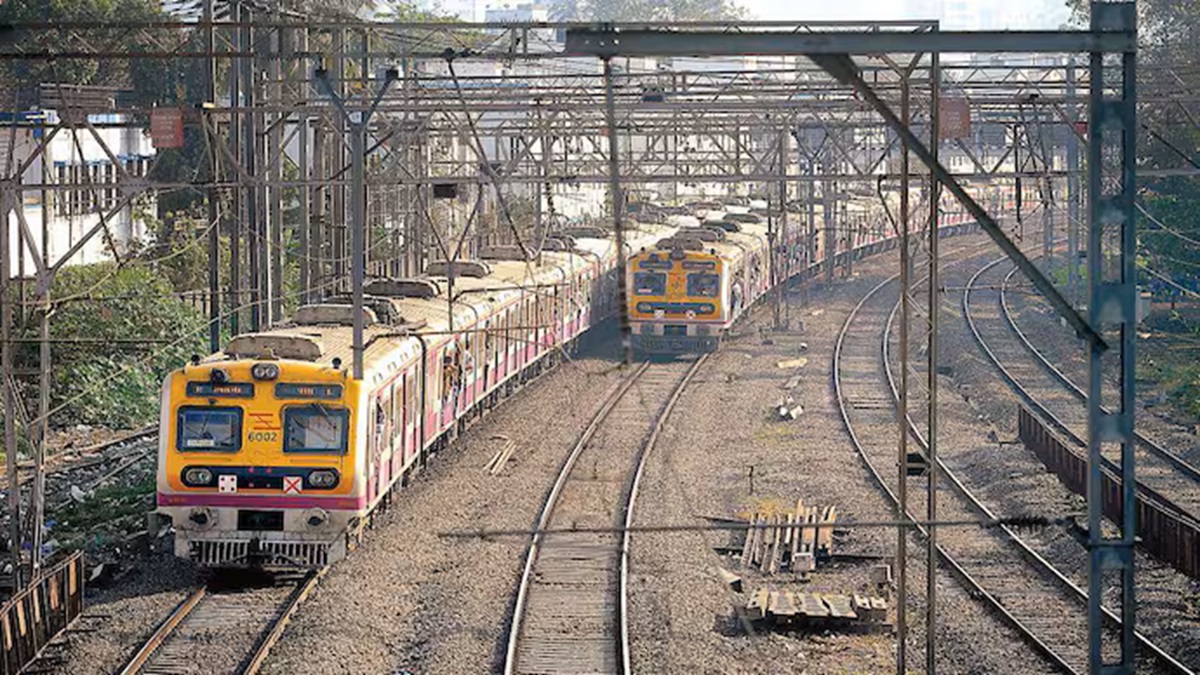
Western Railway has temporarily altered the operation of select long-distance passenger trains on Mumbai’s western corridor as critical signalling and track integration works progress between Borivali and Kandivali. The short-term disruptions are part of a larger infrastructure programme aimed at expanding rail capacity on one of India’s most saturated suburban networks, with long-term implications for commuter reliability and regional connectivity.
The operational changes stem from non-interlocking works required to integrate additional rail lines currently under construction in the Borivali–Kandivali section. This stretch forms a key choke point on the Western Railway network, where suburban, long-distance, and freight services converge within limited track space. Rail planners say such technical interventions are unavoidable when transitioning from legacy layouts to higher-capacity, segregated corridors. As part of the temporary regulation, certain Mail and Express services have been curtailed short of their usual Mumbai terminals, requiring passengers to transfer at intermediate stations. While the immediate impact is limited in scale and duration, the changes underline the complexity of upgrading rail infrastructure in a city where daily ridership already stretches system limits.
Transport experts point out that the addition of fifth and sixth rail lines on this corridor represents a structural shift in how Mumbai’s railways are expected to function. The expanded track capacity is designed to separate fast, slow, and long-distance services more efficiently—an operational reform that could reduce cascading delays and improve punctuality across the network once fully commissioned. Officials involved in the project indicate that the current phase of work focuses on synchronising signalling systems with the new tracks, a process that demands controlled blocks and temporary service adjustments. Such works are typically scheduled during periods of relatively lower long-distance demand to minimise disruption, though they still require careful passenger communication and coordination at stations.
Urban mobility planners say the Borivali–Kandivali upgrade is especially significant because it sits at the interface of Mumbai’s dense suburban belt and its expanding peripheral towns. Faster and more reliable long-distance services can reduce pressure on road corridors, support lower-emission travel, and improve access to economic opportunities beyond the city core. From a sustainability perspective, incremental investments in rail capacity are seen as essential to keeping Mumbai’s growth aligned with climate and equity goals. Rail-based transport remains the city’s most energy-efficient mass mobility system, and enhancing its resilience is critical as travel demand continues to rise.
For passengers, the immediate inconvenience of altered train routes is expected to ease once the current phase of work concludes. In the longer term, the completion of additional lines between Borivali and Kandivali is anticipated to unlock operational flexibility that has eluded the Western Railway corridor for decades—marking a quiet but consequential step toward a more dependable urban rail system.
Western Railway Works Reshape Mumbai Rail Operations