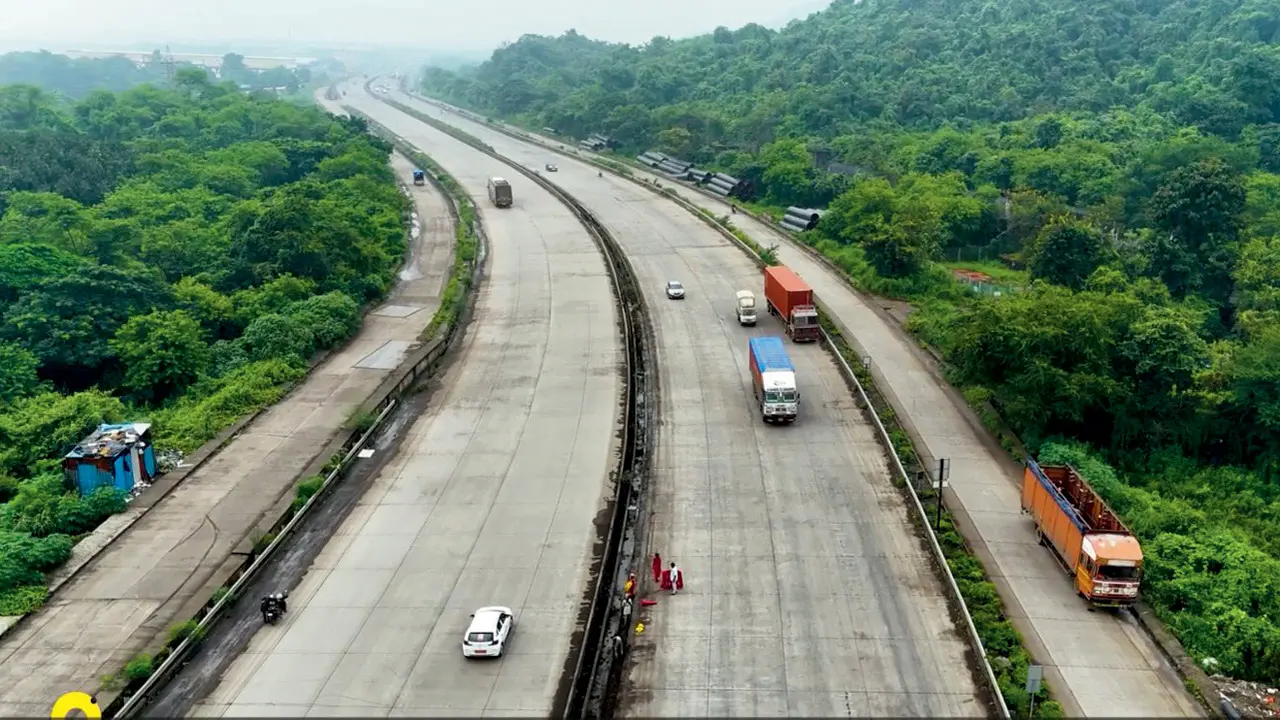
Mumbai’s regional road network is on course for a significant transformation in 2026, with multiple long-delayed infrastructure projects nearing completion across key commuter and freight corridors. Together, these upgrades are expected to reshape travel between Mumbai and its neighbouring economic hubs by easing congestion, improving safety, and reducing journey times that currently stretch unpredictably during peak hours.
Among the most consequential is the long-anticipated realignment on the Mumbai–Pune Expressway, designed to bypass a steep and accident-prone ghat section. The new alignment, spanning just over 20 kilometres, is expected to remove one of the most persistent bottlenecks on the state’s busiest inter-city corridor. Transport planners say the redesign will not only shorten the route but also stabilise traffic flow that is often disrupted by fog, landslides, and heavy braking on sharp gradients. Industry observers note that the expressway upgrade could have ripple effects beyond private travel. Faster and safer movement between Mumbai and Pune supports logistics efficiency, regional labour mobility, and lower fuel consumption—an important consideration as cities look to cut transport-related emissions without curbing economic activity.
Within the city, east–west connectivity is also set to improve with a proposed elevated corridor linking dense residential and commercial zones in the western suburbs to employment clusters along a key arterial road. Once operational, the flyover is expected to absorb traffic currently spilling onto local streets, where congestion has strained neighbourhood air quality and pedestrian safety. Urban mobility experts say such links are increasingly critical as suburban job growth outpaces public transport coverage in certain pockets. Further north, the expansion of a key highway connecting Mumbai to Nashik is progressing toward completion by early 2026. The widening of this stretch into a high-capacity corridor is aimed at addressing chronic congestion caused by mixed traffic—long-haul freight, intercity buses, and local commuters sharing limited road space. By separating flows more efficiently, authorities expect travel times to become more predictable while reducing accident risks.
Collectively, these projects reflect a shift in how transport infrastructure is being planned across the Mumbai Metropolitan Region. Rather than isolated interventions, planners are increasingly focusing on corridor-level improvements that link ports, industrial zones, residential suburbs, and regional cities. The approach aligns with broader goals of improving economic productivity while reducing the social costs of long commutes. However, urban planners caution that road expansion alone cannot solve mobility challenges. The success of these projects will depend on how well they integrate with public transport, traffic management systems, and land-use planning. Without such coordination, time savings risk being eroded by induced demand.
As 2026 approaches, the focus will move from construction milestones to outcomes—whether these investments translate into safer roads, cleaner air, and more humane daily travel for millions who rely on Mumbai’s overstretched transport network.
Mumbai Road Network Poised For 2026 Upgrade