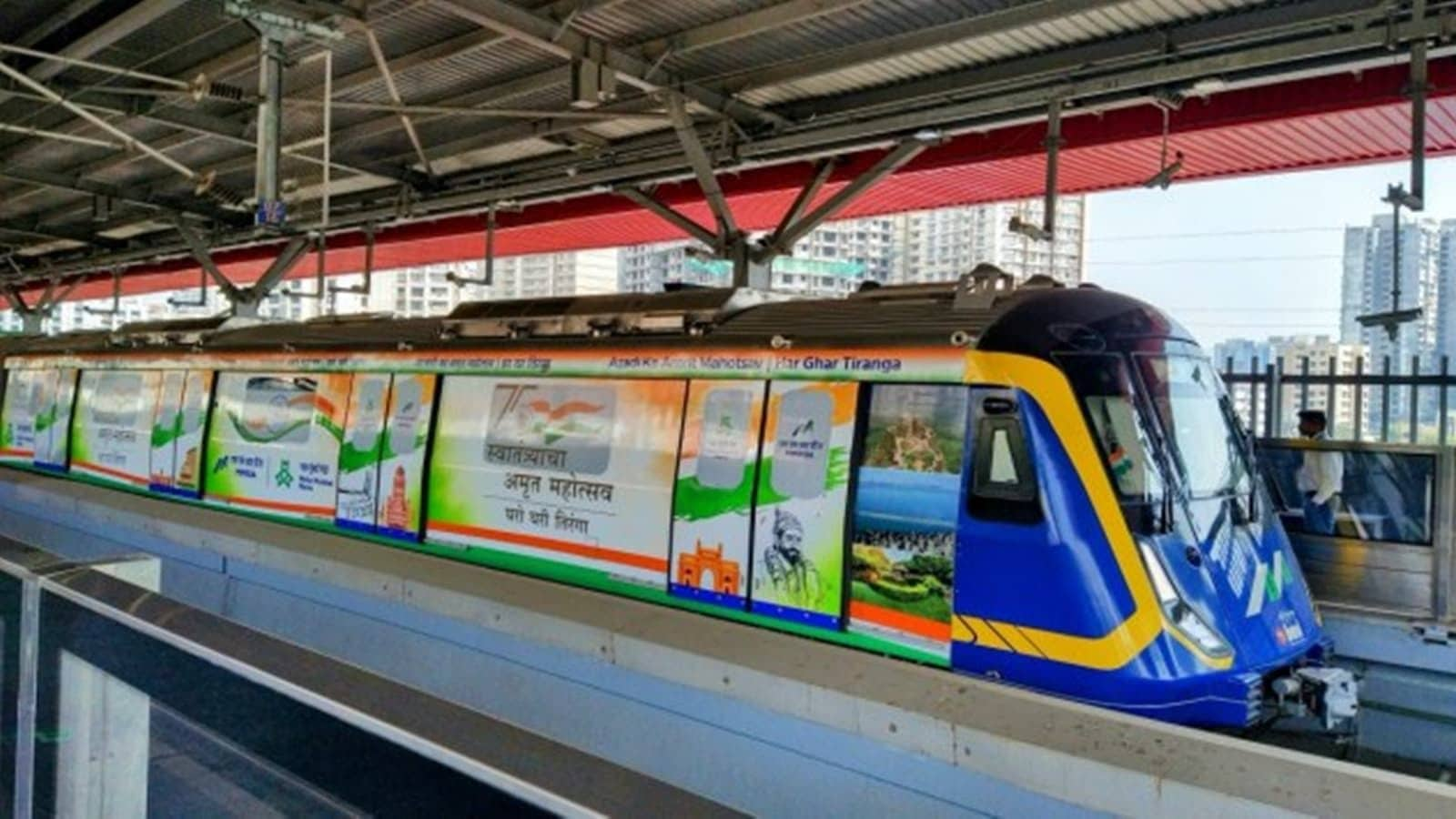
Mumbai’s public transport map is set for a decisive shift in 2026, with multiple Metro corridors and extensions scheduled to open across the Mumbai Metropolitan Region (MMR), finally linking long-neglected suburbs such as Mira Bhayandar and large parts of Thane to the city’s rapid transit network. For a region struggling with congestion, rising emissions, and uneven access to jobs, the upcoming Mumbai Metro expansion 2026 marks a critical step toward more balanced urban mobility.
Following the commissioning of the underground north–south Aqua Line connecting the western suburbs to the southern business district, transport authorities are preparing to operationalise sections of four additional Metro lines next year. Together, these openings are expected to redistribute travel demand away from overcrowded suburban railways and private vehicles, while extending formal mass transit into fast-growing residential corridors. One of the most consequential additions is the initial stretch of Metro Line 9, which extends the north–south western corridor beyond the municipal boundary into Mira Bhayandar. Urban planners see this as a structural correction to decades of housing growth without matching transit investment. Even a partial opening is expected to significantly cut travel times for daily commuters who currently rely on congested arterial roads and packed local trains to reach employment hubs in Andheri and further south.
East–west connectivity is also set to improve with phased openings on Metro Line 2B. While initial sections in the eastern suburbs may see modest ridership due to limited interchanges, transport officials say the full corridor will eventually connect the western business districts with Kurla, Chembur, and Mankhurd, creating new cross-city travel options and reducing dependence on road-based transport. In parallel, the long-awaited Metro Line 4 and its extension, Line 4A, are expected to bring rail-based mass transit to large parts of Thane. This corridor, running along densely populated arterial roads, is projected to serve lakhs of daily commuters who currently depend on buses and private vehicles. Planners note that the staggered opening strategy reflects construction and design complexities but allows early mobility benefits to flow to high-demand sections.
Another major addition is Metro Line 6 along the Jogeshwari–Vikhroli Link Road, one of Mumbai’s most traffic-choked corridors. Designed to pass above existing roads and flyovers in several locations, the line is being positioned as a showcase of space-efficient urban infrastructure, albeit with operational constraints until a permanent depot becomes fully functional. Beyond rail, road connectivity is also set to improve with the planned opening of the long-delayed missing link on the Mumbai–Pune Expressway. By bypassing a bottleneck hill section, the project is expected to cut travel time and fuel consumption on one of India’s busiest intercity corridors.
Taken together, the Mumbai Metro expansion 2026 reflects a broader shift toward integrating transport planning with climate resilience, housing patterns, and regional economic growth. The challenge ahead will lie in ensuring last-mile connectivity, service reliability, and affordable access so that the benefits of these projects are felt equitably across the metropolitan region.
Mumbai Metro Expansion Reshapes Regional Mobility