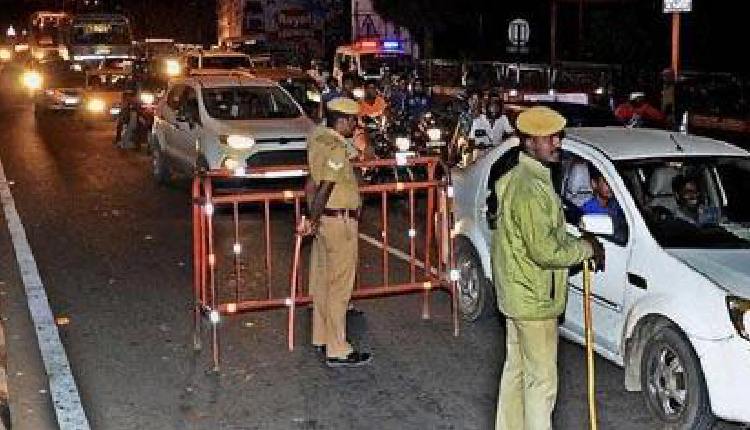
Chennai has moved into high-alert mode ahead of New Year’s Eve, deploying one of its largest coordinated urban safety operations in recent years as authorities prepare for large crowds across public spaces, entertainment zones, and transit corridors. More than 25,000 police personnel have been mobilised across the city and its suburban jurisdictions, signalling an increasingly preventive approach to crowd management and public order during mass celebrations.
The security framework spans Greater Chennai, Tambaram, and Avadi police limits, supported by home guards, rapid-response units, and technology-driven surveillance. Officials say the emphasis this year is on early intervention—using drones, expanded CCTV coverage, and mobile patrol teams—to detect crowd surges, reckless behaviour, or emergencies before they escalate. Urban safety experts note that such layered policing reflects the realities of denser cities where public gatherings can quickly overwhelm infrastructure if unmanaged.Public advisories have urged residents to cooperate with enforcement teams and comply with restrictions designed to reduce accidents and disorder. Drunken driving, dangerous riding, and street racing have been identified as key risks, prompting the establishment of more than 500 vehicle checkpoints across the metropolitan region. Dedicated inspection teams will operate throughout the night, supported by two-wheeler patrols to improve visibility and response times in narrow or high-risk areas.
In a significant move prioritising preventive safety, all major beaches across Chennai and its suburbs will remain closed from Wednesday evening until January 1, 2026. Authorities cited recurring challenges related to crowd control, alcohol consumption, and coastal hazards during late-night gatherings. Coastal security has also been strengthened in coordination with maritime agencies and lifeguard teams, underscoring a broader approach to urban risk management beyond city streets.Firecrackers have been prohibited in public and residential areas, while apartment complexes planning celebrations must obtain prior approvals, particularly for sound systems. Civic officials argue that such measures are necessary to balance festive expression with the rights of residents, emergency access, and environmental considerations such as noise pollution and air quality.
Establishments serving alcohol have been directed to enforce age restrictions and ensure the safety of women patrons. Urban governance specialists observe that nightlife regulation has become a critical component of city safety planning, especially during large-scale celebrations that draw visitors from across the region.Emergency preparedness has also been scaled up, with ambulances and medical teams stationed near high-footfall locations. Warning signage and public messaging aim to guide movement and discourage risky behaviour.
As Chennai continues to grow as a cultural and tourism hub, officials say New Year’s Eve policing is evolving from reactive enforcement to anticipatory urban management. The effectiveness of this approach will be measured not only by the absence of incidents, but by how safely and inclusively public spaces function during one of the city’s busiest nights.