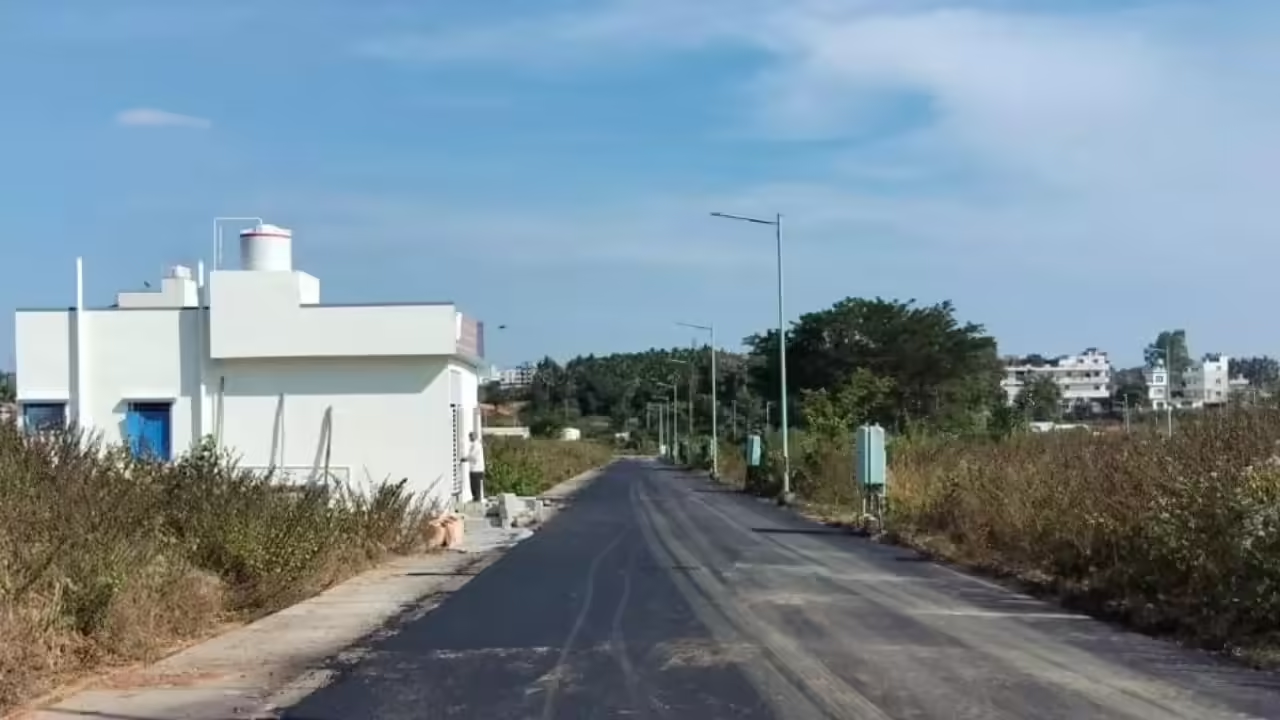
Bengaluru Nadaprabhu Kempegowda layout development progresses amid infrastructure gaps
Bengaluru’s Nadaprabhu Kempegowda Layout is moving closer to residential readiness as the Bangalore Development Authority (BDA) accelerates land acquisition and construction. While approximately 78% of development work is reported complete, residents and urban planners warn that essential infrastructure gaps may delay full habitation and compromise long-term usability of the layout.
Construction activity has advanced rapidly across the layout, yet several critical issues remain. Key roads, including a 60-foot connector from III Block A Sector to the 300-foot arterial road, are incomplete, with ongoing encroachments obstructing access for construction vehicles and material transport. Missing footpaths in multiple sectors force pedestrians to rely on vehicles for short-distance movement, raising concerns about safety, congestion, and increased local emissions.Residents have also highlighted inconsistencies in boundary demarcations, suggesting that some properties may extend into adjacent plots. Legal experts indicate that such discrepancies could trigger disputes and litigation once more homeowners begin constructing or occupying dwellings. Power, water, and sanitation infrastructure is still largely unavailable, limiting the potential for immediate occupancy or rental activity. Utility ducts currently presented as footpaths pose additional hazards, as maintenance work may leave pedestrians without safe passage, highlighting flaws in the layout’s planning framework.
The BDA’s original plantation and green space strategy has also drawn criticism. Residents describe the placement of trees and landscaped areas as impractical, noting that current designs fail to provide sufficient shade, safety, and long-term sustainability. Urban development specialists emphasise that inadequate landscaping and poorly designed public spaces can compromise both environmental quality and community wellbeing in new residential areas.In response, BDA leadership has acknowledged these concerns and promised to address outstanding issues over the next five to six months. Officials categorised most problems as minor technical challenges, assuring residents that remaining work—ranging from road completion to utilities and landscaping—will be systematically resolved to ensure habitability.
Urban planning analysts note that Nadaprabhu Kempegowda Layout illustrates a broader challenge in rapidly expanding Indian cities: balancing accelerated construction with the delivery of essential services and sustainable design principles. Effective coordination between civic authorities, developers, and residents is critical to creating liveable, safe, and environmentally responsible urban neighbourhoods.
As Bengaluru continues its urban expansion, the coming months will determine whether Nadaprabhu Kempegowda Layout sets a benchmark for integrated infrastructure delivery or reflects the recurring gap between construction progress and habitability standards. The project underscores the importance of proactive planning, regulatory oversight, and community engagement in shaping resilient, people-first urban environments.