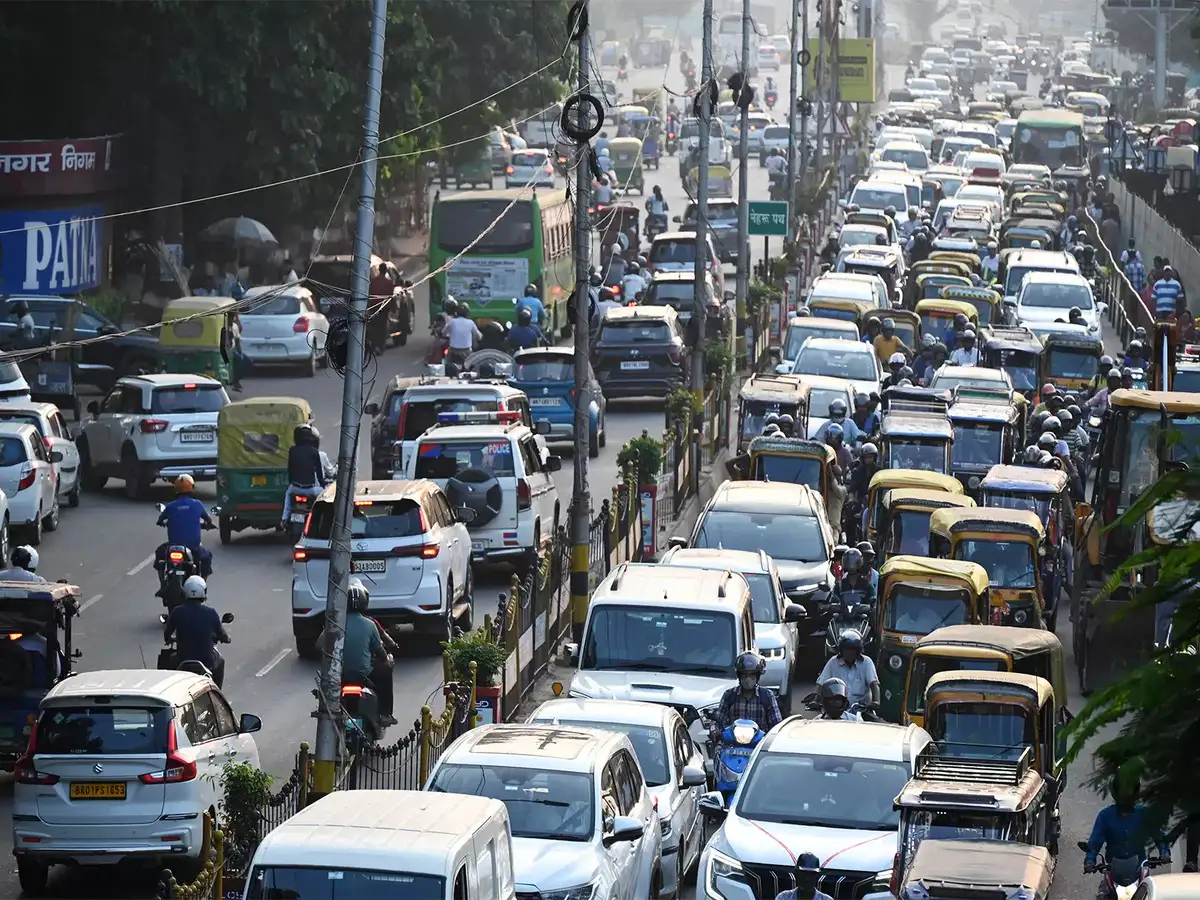
Delhi authorities have rolled out an extensive citywide traffic management plan ahead of New Year 2026, introducing restrictions, diversions and parking controls across major public gathering zones. The measures, which come into force from Wednesday evening and extend into January 1 at select locations, aim to manage heavy footfall, prevent gridlock and ensure public safety during one of the capital’s busiest nights of the year.
The most significant controls are centred on central Delhi, particularly around Connaught Place, a major commercial and entertainment district that traditionally attracts large crowds. From early evening onwards, access to the inner and outer circles is being tightly regulated, with only authorised vehicles permitted. Traffic officials have established multiple cut-off points on feeder roads to prevent congestion from spilling into the core business district, reflecting lessons from previous years when unmanaged inflows led to prolonged standstills.
Similar crowd-control measures are planned around the India Gate complex, where pedestrian volumes often exceed road capacity during public celebrations. Authorities may temporarily restrict vehicle movement through surrounding corridors if crowd density increases. Urban planners note that these steps prioritise pedestrian safety in heritage precincts that were not designed for modern traffic volumes, particularly during peak civic events. In southern Delhi, restrictions along key arterial roads serving high-density residential and commercial pockets are expected to alter routine commuting patterns. Heavy vehicles and city buses are being diverted away from sensitive stretches during peak celebration hours. Traffic engineers say such calibrated restrictions help balance emergency access with crowd movement, especially in mixed-use neighbourhoods where narrow internal roads can quickly become choke points.
Northern Delhi’s Paharganj area, a dense commercial and hospitality zone, is also under special regulation due to expected religious and tourist footfall. Advisory diversions have been issued to reduce pressure on already constrained roads, a move welcomed by local traders who have often raised concerns about congestion affecting pedestrian access and business continuity. Parking controls form a key component of the Delhi traffic advisory. Designated parking zones have been identified across central Delhi, operating on a limited, first-come basis. Vehicles parked outside approved areas will be subject to towing, reinforcing the administration’s push to discourage private car use in congested zones. Transport policy experts view this as part of a gradual shift towards people-first urban mobility, particularly during high-impact civic events.
Rail connectivity to major stations will remain largely functional, though some approach routes have been altered. Authorities have issued alternative access plans to maintain last-mile connectivity while keeping celebration zones secure.
From an urban governance perspective, the advisory highlights the growing complexity of managing large-scale public events in a megacity.As Delhi’s population and night-time economy expand, experts argue that long-term solutions lie in improved public transport capacity, better pedestrian infrastructure and decentralised entertainment hubs. For now, residents and visitors are advised to plan travel in advance, rely on public transport where possible and follow on-ground instructions. How smoothly the city navigates New Year 2026 may offer insights into Delhi’s evolving approach to safe, inclusive and resilient urban mobility.
Delhi Prepares Traffic Controls For Year End Surge