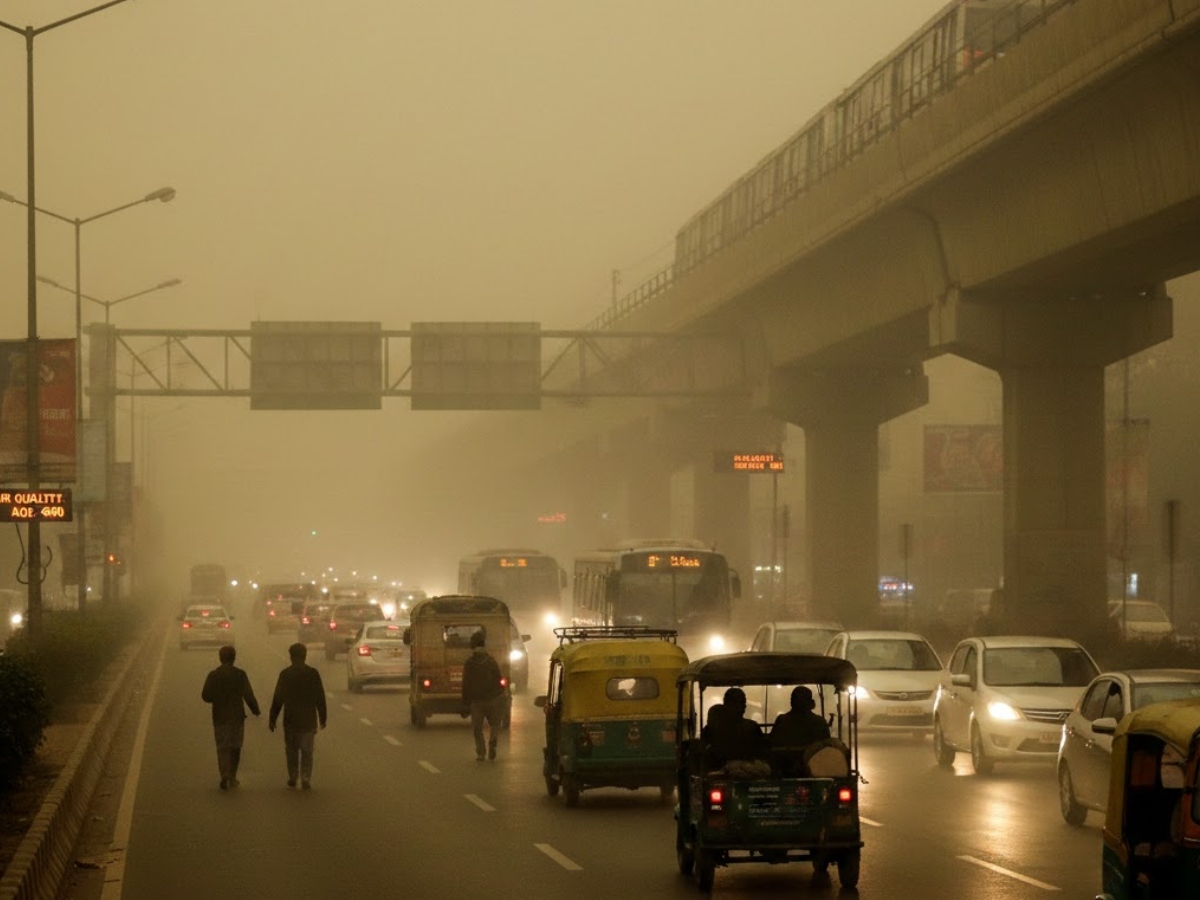
Large parts of Delhi and the National Capital Region (NCR) experienced a sharp deterioration in weather conditions on Wednesday morning as dense fog combined with severe air pollution, disrupting mobility across one of India’s most economically active urban regions. Visibility dropped sharply across arterial roads and transit corridors, while air quality slipped deeper into hazardous territory, highlighting the growing intersection between climate stress, urban infrastructure, and public health.
The fog settled across residential, commercial and transit-heavy zones in Delhi, Noida, Ghaziabad and East Delhi during early morning hours, slowing vehicular movement and extending commute times. Urban transport planners note that such weather events disproportionately affect daily wage workers, delivery networks and public transport users, underscoring how environmental stress can quickly translate into economic friction for large cities. Compounding the visibility challenge, Delhi NCR air quality remained in the ‘severe’ category. Official monitoring data showed the regional average hovering well above safe limits, with several pollution hotspots recording alarmingly high readings. Anand Vihar emerged as one of the worst-affected locations, with pollution levels far exceeding national health standards. Central business districts and dense residential zones also reported hazardous air quality, reinforcing long-standing concerns about winter pollution traps caused by low wind speeds, temperature inversion and high emissions.
Aviation operations at Delhi’s primary airport were also affected. Flights continued under advanced low-visibility landing protocols, allowing aircraft movement despite reduced sight distance. However, industry experts caution that such conditions increase operational complexity and the risk of cascading delays, particularly during peak travel periods ahead of the year-end holidays. Passengers were advised to expect schedule variability as airlines and ground teams worked to manage congestion safely. Rail services across northern India experienced delays as fog reduced track visibility, affecting long-distance and suburban trains. Transport economists point out that recurring winter fog events strain logistics efficiency, raising costs for freight movement and just-in-time supply chains that support Delhi NCR’s manufacturing, retail and construction sectors.
From a broader urban development perspective, the episode reflects structural challenges facing fast-growing metropolitan regions. Environmental experts argue that recurring extreme pollution and weather events are no longer episodic disruptions but systemic risks. These conditions place additional pressure on healthcare systems, reduce workforce productivity and undermine liveability, all of which have long-term implications for real estate values and investment confidence. Urban planners emphasise that addressing these challenges requires coordinated action across transport planning, cleaner energy adoption, construction management and regional air-shed governance.
Strengthening public transport resilience, accelerating zero-emission mobility and improving urban green cover are increasingly seen as essential components of climate-resilient city planning. As weather conditions are expected to remain volatile in the coming days, authorities have urged residents to limit outdoor exposure and follow travel advisories. For Delhi NCR, the convergence of fog and severe pollution once again underscores the urgency of integrating environmental resilience into the region’s growth and infrastructure strategy.
Delhi NCR Fog And Pollution Disrupt Daily Mobility