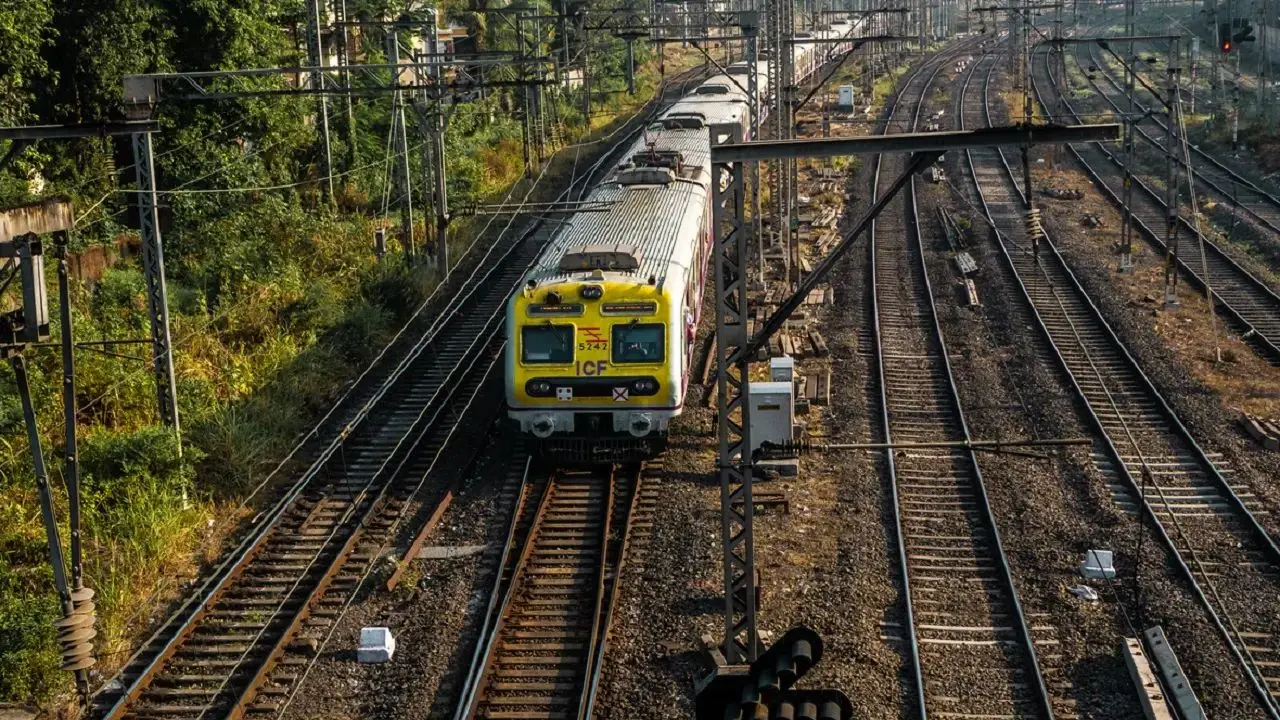
Maharashtra’s suburban rail network is set for a significant capacity upgrade following the sanctioning of additional railway lines between Badlapur and Karjat, a critical section of the Mumbai Metropolitan Region’s eastern corridor. The project, approved under the Mumbai Urban Transport Project 3B, is expected to improve suburban reliability while strengthening one of India’s most heavily utilised long-distance rail routes linking Mumbai and Chennai.
The sanctioned works involve the construction of third and fourth railway lines along the existing Badlapur–Karjat alignment, spanning over 32 kilometres. Rail officials say the primary objective is to achieve full segregation of suburban and mainline traffic on this stretch, reducing operational conflicts that frequently cause delays for both daily commuters and long-distance trains. Urban transport planners note that this section has long functioned as a bottleneck, with suburban services, express trains and freight movements sharing limited track capacity. By creating dedicated corridors, the project is expected to enable more predictable suburban timetables while improving scheduling flexibility for intercity and freight services on the Mumbai–Chennai high-density route.
The project has received approval from both the Union Cabinet and the Government of Maharashtra, with execution assigned to the Mumbai Railway Vikas Corporation. Officials indicated that land acquisition is a key prerequisite, after which construction is expected to take three to four years. Around 38 hectares of private land will be required, in addition to existing railway and government land parcels. From an economic perspective, railway experts highlight the project’s importance beyond daily commuting. The Badlapur–Karjat section plays a strategic role in supporting freight traffic linked to upcoming ports, logistics parks and industrial nodes across the Mumbai Metropolitan Region. Improved rail capacity is expected to reduce dependence on road-based freight, easing congestion and lowering emissions over the medium term.
The estimated project cost stands at over ₹1,300 crore, to be jointly funded by the state government and the Ministry of Railways. Analysts view this cost-sharing model as essential for accelerating urban rail investments in rapidly expanding metropolitan regions, where transport infrastructure must keep pace with housing and employment growth. In addition to capacity gains, safety and station-level improvements form part of the project scope. Planned measures include enhanced boundary protection, improved passenger circulation at stations and better integration with surrounding suburban areas. Mobility researchers argue that such upgrades are crucial to making suburban rail systems safer and more inclusive, particularly for women, elderly commuters and persons with reduced mobility.
As Mumbai’s eastern suburbs continue to densify, demand on the suburban rail system is projected to rise steadily. The Badlapur–Karjat quadrupling is therefore seen as a foundational intervention, enabling the network to absorb future growth while maintaining operational stability. For Maharashtra, the project reflects a broader shift towards rail-led urban mobility, where suburban segregation and freight efficiency are treated as complementary goals. If delivered on schedule, the upgrade could serve as a model for balancing commuter convenience, economic competitiveness and long-term sustainability across India’s busiest rail corridors.
Maharashtra Rail Approves Badlapur Karjat Quadrupling Boosting Suburban Segregation Mumbai Chennai Corridor