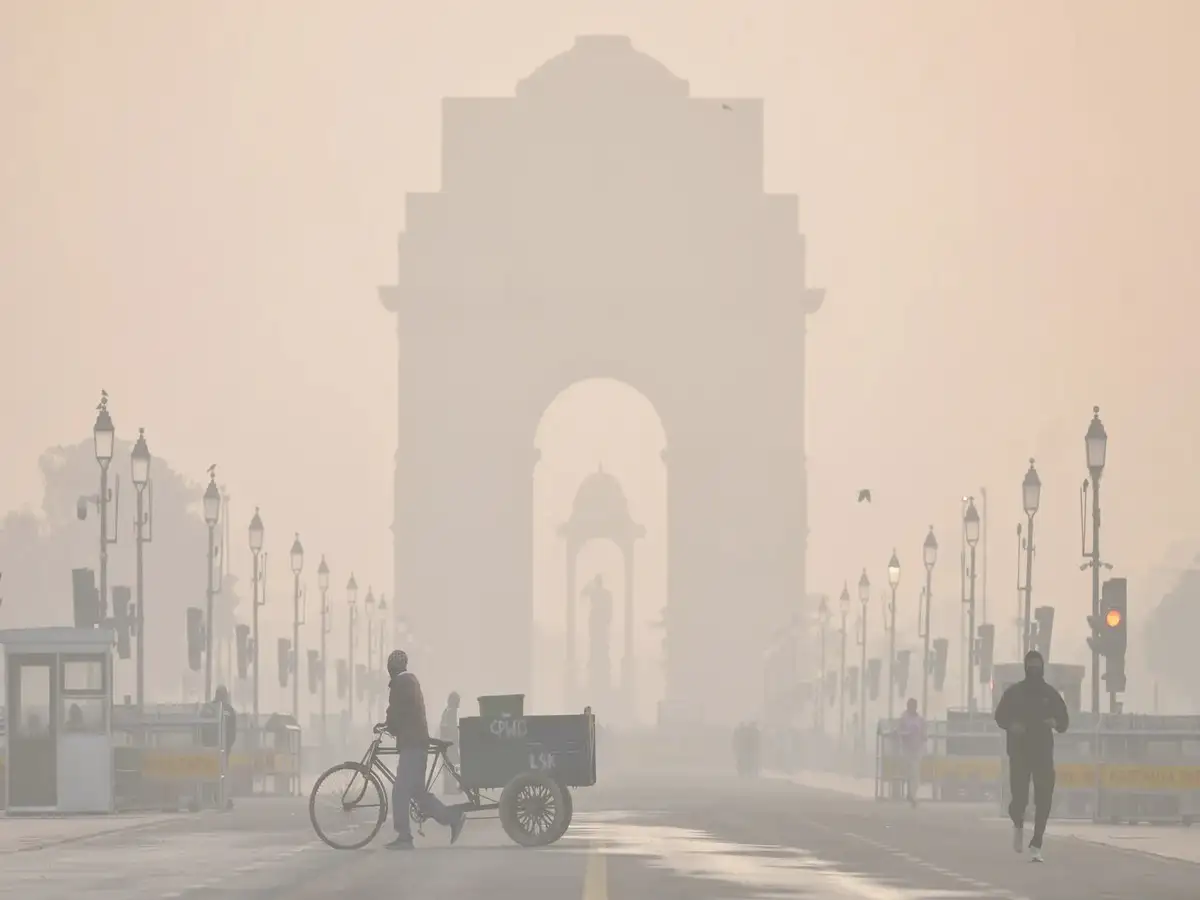
Delhi enters the coming year grappling once again with hazardous air quality, even as the city government signals a shift from short-term firefighting towards longer-term structural solutions. With air pollution remaining one of the capital’s most persistent urban challenges, authorities have outlined a broad strategy combining technology pilots, stricter enforcement and ecological restoration to deliver more durable improvements in public health and environmental resilience.
Despite incremental progress in recent years, winter pollution continues to push Delhi’s Air Quality Index well into “very poor” and “severe” categories, affecting daily life, productivity and healthcare systems. Urban planners say the scale of the problem reflects deep-rooted issues linked to transport emissions, construction dust, waste management and regional factors, requiring coordinated and sustained intervention rather than seasonal responses.One of the most closely watched initiatives has been the city’s recent experiment with cloud seeding, conducted in partnership with a leading technical institute. The pilot, executed after multiple weather-related delays, marked the first such exercise in nearly five decades. While officials describe it as an exploratory tool rather than a standalone solution, experts note that its real value lies in understanding whether emergency interventions can supplement long-term pollution control during extreme smog episodes.
Alongside experimental measures, the government rolled out its Winter Air Pollution Control Action Plan for 2025–26 ahead of peak smog season. The framework focuses on reducing particulate matter through dust suppression, tighter monitoring of construction sites, checks on vehicle emissions and controls on industrial and waste-burning activities. Anti-smog guns, mist sprayers, mechanised road sweepers and water sprinklers have been deployed across high-impact zones to curb airborne dust at street level.
Officials say enforcement has also been stepped up, with penalties issued for violations and enhanced checks at city borders to limit high-emission vehicle entry. Transport analysts argue that such measures, while disruptive in the short term, are essential to encouraging cleaner mobility choices and reducing dependence on private vehicles in the long run. Structural monitoring capacity is being expanded as well. The city plans to add new air-quality monitoring stations at key institutional and residential locations, increasing the overall network to improve data-driven decision-making. Parallel efforts are underway to install real-time water-quality sensors along the Yamuna and major drains, reflecting a more integrated approach to environmental governance.
Equally significant are land-use and ecological interventions. The remediation of legacy landfill sites at Okhla, Bhalswa and Ghazipur is expected to free up land for green redevelopment, while the designation of the Southern Ridge as a reserved forest aims to safeguard a critical urban lung. Urban policy experts view these initiatives as steps towards aligning Delhi’s environmental strategy with sustainable city principles prioritising cleaner air, healthier neighbourhoods and inclusive public spaces. While results may take time, the coming year will test whether a combination of technology, enforcement and ecological restoration can finally shift Delhi’s air quality trajectory towards lasting improvement.
Delhi Gasps For Clean Air Government Plans Permanent Pollution Fix Next Year