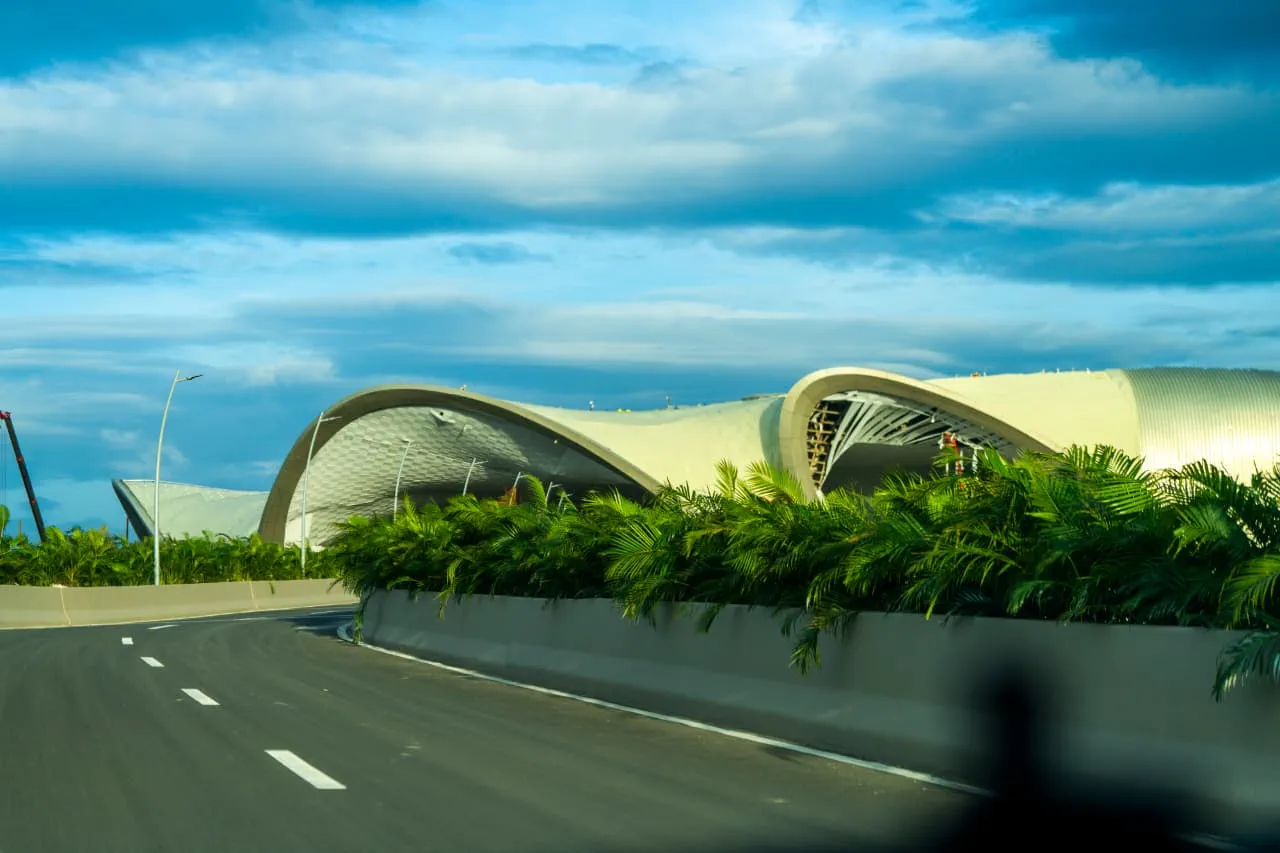
Mumbai formally entered the league of global multi-airport cities this week as commercial operations commenced at Navi Mumbai International Airport, marking a pivotal moment in India’s fast-expanding aviation landscape. The launch comes amid surging air travel demand and reflects a broader push to build resilient, future-ready infrastructure capable of supporting economic growth while easing pressure on legacy urban assets.
The opening of the new airport follows sustained double-digit growth in India’s aviation sector over the past four years, driven by rising incomes, regional connectivity, and expanding airline fleets. Domestic carriers have placed orders for nearly 1,900 aircraft, with around half expected to be inducted within five years. Industry analysts say this scale of fleet expansion makes new airport capacity not just desirable, but essential. Strategically located in Ulwe, around 37 kilometres from South Mumbai, the new airport has been designed to decongest the city’s existing aviation gateway, which has long operated near capacity. With its commissioning, Mumbai joins cities such as London, New York, and Tokyo that rely on multiple airports to manage growing passenger volumes and maintain operational efficiency.
Spread across nearly 2,900 acres, the airport will ultimately be capable of handling up to 90 million passengers annually. In its first phase, it is expected to serve 20 million passengers a year, offering immediate relief to constrained airside and terminal infrastructure elsewhere in the metropolitan region. Urban transport experts note that while distance from certain suburbs remains a concern, capacity expansion was unavoidable given the limitations of the older airport site. The airport is operated under a public-private partnership model, with a private airport operator holding a majority stake and the state’s development agency retaining a significant share. Officials associated with the project said the model allows faster execution while maintaining public oversight, a structure increasingly favoured for complex urban infrastructure.
Beyond passenger travel, the new facility has been positioned as a logistics and cargo hub for western India. Its initial cargo handling capacity of half a million tonnes annually, combined with proximity to the country’s largest container port, is expected to strengthen sea-air freight integration. Automated systems and AI-enabled monitoring are designed to reduce aircraft turnaround times, improving operational efficiency and lowering emissions intensity per movement. Urban planners argue that such infrastructure, if supported by timely public transport links, can help distribute economic activity more evenly across the metropolitan region. “Airports today function as employment nodes and logistics anchors, not just transit points,” an aviation infrastructure expert said.
The launch also follows the recent inauguration of a new terminal in Guwahati and ongoing terminal upgrades in several other Indian cities. Together, these projects highlight a coordinated national effort to modernise aviation infrastructure and accommodate long-term growth. As India prepares for the entry of new domestic airlines and rising international traffic, Mumbai’s dual-airport system is expected to play a critical role. The challenge now lies in ensuring seamless surface connectivity, sustainable operations, and inclusive access—factors that will determine whether this expansion translates into long-term urban and economic resilience.
Adani Advances India Aviation Infrastructure Via Navi Mumbai Airport Launch