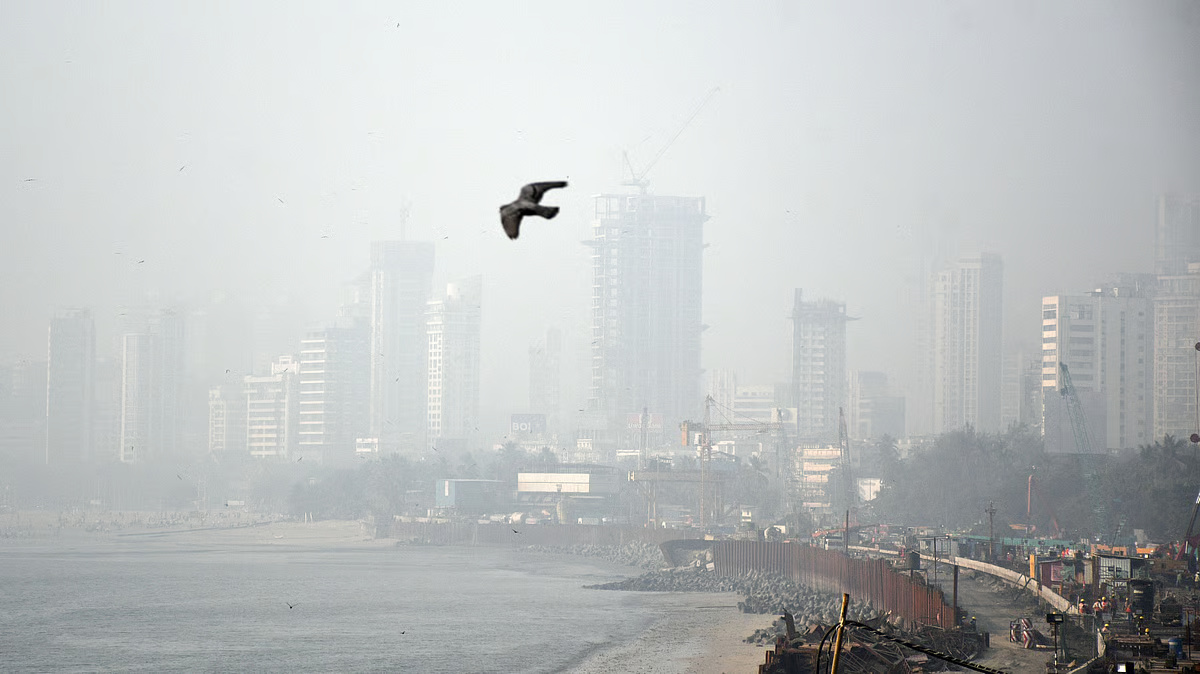
Mumbai residents can expect clear skies on Monday, with temperatures ranging from 19°C in the early morning to a peak of 33°C, according to the India Meteorological Department (IMD). While the city enjoys sunny weather, the air quality index (AQI) continues to remain in the moderate range, which may pose mild health risks for sensitive groups including those with respiratory or cardiovascular conditions.
Data from the Sameer app indicates that Mumbai recorded an AQI of 133 on Monday. Certain areas reported higher readings, with BKC at 160, Deonar at 142, Andheri East at 138, and Malad West at 140. Other localities such as Mazgaon and Colaba maintained lower AQI values of 123 and 118 respectively, while Borivali and Bhandup West registered 113 and 94. Experts suggest that particulate matter from vehicular emissions and construction activity continues to influence urban air quality, even under clear skies. Meanwhile, Delhi faced a contrasting scenario with a dense fog enveloping the city on Monday morning and AQI deteriorating sharply to 402, categorised as ‘severe’ by the Central Pollution Control Board (CPCB). The city has been experiencing poor air quality over several days, with levels surpassing 400 in multiple locations including Anand Vihar (455), Wazirpur (443), and Rohini (442). This combination of severe pollution and limited visibility due to fog has raised concerns for both public health and traffic safety.
Urban air quality analysts emphasise that seasonal temperature inversions and stagnant atmospheric conditions often exacerbate pollutant concentrations in northern cities like Delhi. “While Mumbai benefits from coastal breezes that help disperse pollutants, Delhi’s landlocked geography contributes to persistent high AQI during winter months,” a senior environmental analyst noted. For city planners and health authorities, monitoring AQI alongside weather conditions remains critical for timely advisories. In Mumbai, authorities have encouraged residents with pre-existing respiratory or cardiac conditions to limit prolonged outdoor exposure, even though current air quality is within moderate limits. Similarly, Delhi officials continue to issue public warnings about outdoor activities and vehicular emissions, while advising drivers to exercise caution in fog-affected areas.
As Indian cities balance urban growth with environmental sustainability, integrating green infrastructure, emission controls, and smart mobility strategies becomes essential. Sustained improvements in air quality require a coordinated approach across transport, construction, and industrial sectors, alongside public awareness campaigns.
Mumbai Records Sunny Monday With Moderate Air Quality Index At 133 Today