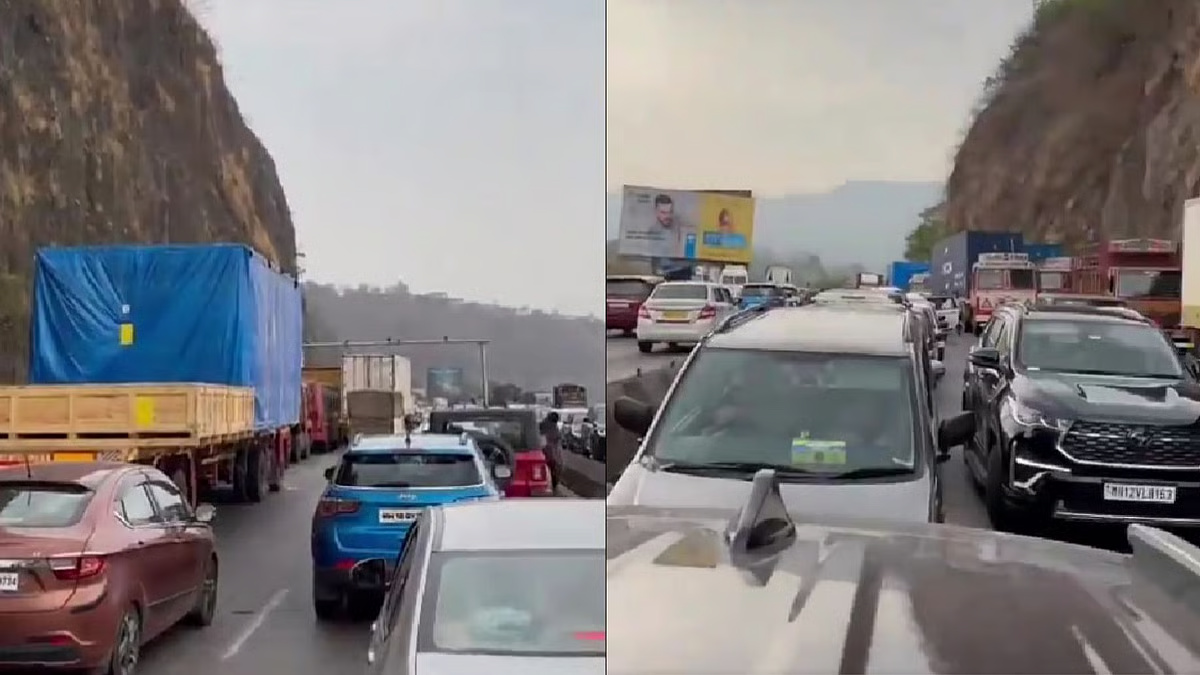
Mumbai-Pune commuters faced significant delays on Sunday, December 28, as the expressway connecting the two cities experienced heavy congestion amid the festive season. Social media users reported journeys that typically take 30–40 minutes stretching to several hours, particularly along the Pune-bound stretch, highlighting the growing pressure on this critical transport corridor.
Images and posts shared online depicted long queues of vehicles and near standstill traffic near key bottlenecks, such as the Khandala ghat section. According to a traffic advisory from a local social media handle, vehicles departing Panvel at 4 pm reached Baner only by 6:30 pm, translating to roughly 13 kilometres covered in over an hour. “Massive jams on the Mumbai-Pune expressway have become too normalised,” wrote one commuter, reflecting widespread frustration. Several users highlighted that this congestion is becoming a recurring issue, particularly during peak travel periods and holiday weekends. Some compared the current conditions with the expressway’s past, when it was regarded as a flagship route offering smooth, high-speed travel.
Industry experts attribute these bottlenecks to a combination of rising private vehicle use, limited capacity during peak hours, and seasonal holiday movement. “The Mumbai-Pune Expressway continues to serve as a primary artery for daily commuters and intercity travellers,” said an urban mobility consultant. “Without significant expansion or alternative transport options, congestion during high-demand periods is inevitable.” Several users suggested leveraging rail alternatives to ease the load on the expressway. One commuter proposed that the Central Railway extend Karjat trains to Lonavala, offering a faster, more sustainable option for travellers, particularly during festive seasons. Enhancing rail connectivity could reduce reliance on road transport, aligning with broader sustainable mobility goals.
Authorities have acknowledged the congestion but cited the absence of major accidents or breakdowns as a positive, noting that traffic flow, though slow, remained controlled. Measures such as real-time traffic monitoring, advisory warnings, and staggered travel recommendations were highlighted as mitigation strategies. While the expressway remains vital for both commercial and personal travel, the incidents underscore the growing need for integrated, multi-modal transport solutions between Mumbai and Pune. Investments in public transport, improved traffic management, and infrastructure expansion are crucial for ensuring safer, faster, and more reliable connectivity, especially during peak travel periods.
Mumbai Pune Expressway Faces Massive Holiday Traffic With Slow One Hour Travel