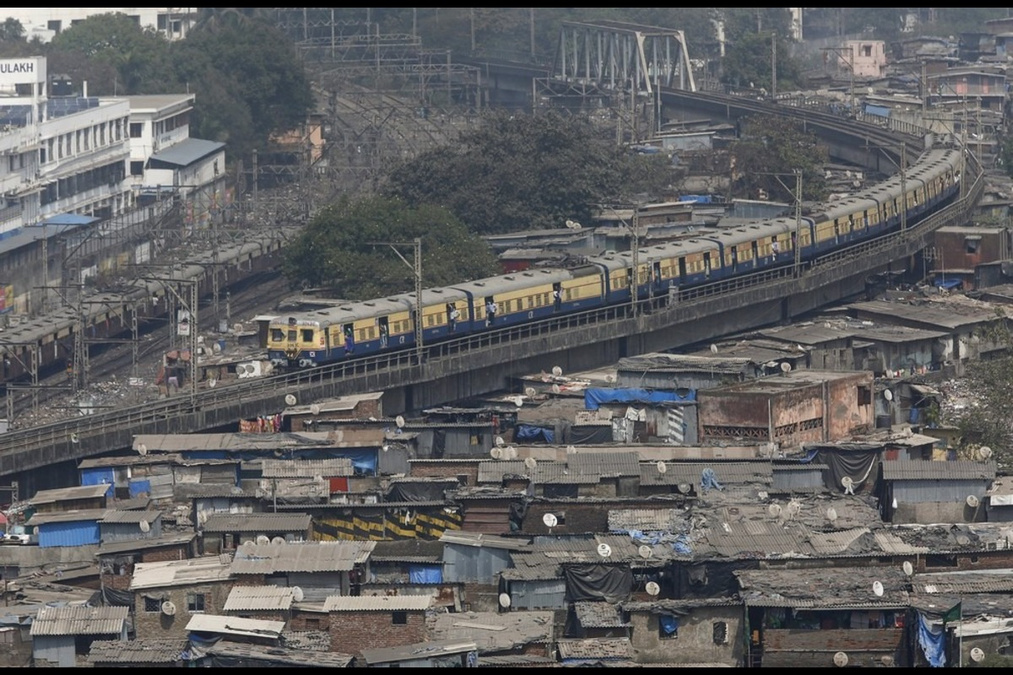
Mumbai’s ambitious plan to expand its suburban railway network is facing a persistent and complex roadblock: decades-old informal settlements built along rail corridors. The presence of dense slum clusters on railway land has stalled the long-planned addition of fifth and sixth railway lines, a project critical to easing congestion across the city’s lifeline transport system and improving daily commuting for millions.
Urban planners estimate that over 30 hectares of land adjoining Western and Central Railway tracks have been gradually encroached upon over the past six decades. These settlements now occupy strategic stretches required for track widening, signalling upgrades, and safety buffers. The delayed expansion, currently valued at nearly ₹2,500 crore, is considered essential for increasing train frequency, improving punctuality, and supporting Mumbai’s future growth. Officials familiar with the matter say the challenge is spread across multiple high-density zones. On the Central Railway network, settlements near Mankhurd, Kurla, Sion, Wadala, and Kings Circle have constrained capacity enhancement works. The Western Railway faces similar constraints in Bandra, Mahim, Borivali, Kandivali, Malad, Dahisar, and Virar. In several locations, the proximity of homes to live tracks also raises serious safety concerns.
The railways, however, lack a formal rehabilitation mandate, relying instead on state-led housing authorities to relocate affected families. This institutional gap has slowed eviction processes and complicated project timelines. A senior rail official noted that infrastructure agencies are caught between legal obligations, humanitarian considerations, and urgent mobility needs, resulting in prolonged delays. Residents living along the tracks argue that displacement without assured rehabilitation is unacceptable. Community representatives say many families have lived in these settlements for decades, contributing to the city’s informal economy and paying local levies. They contend that Mumbai’s chronic housing shortage has left low-income households with few alternatives close to employment centres.
Recent enforcement drives have shown mixed progress. On the Central Railway corridor, several hundred structures have been cleared between key stations, allowing work on additional lines to resume after years of stagnation. Land requirements remain significant, with thousands of square metres still needed to complete missing links. On the Western Railway network, partial success has been achieved in extending a sixth line in the northern suburbs, though a critical gap near the island city remains unresolved. Transport experts warn that continued delays will limit Mumbai’s ability to introduce hundreds of new suburban services planned for the metropolitan region. Without parallel investment in inclusive housing solutions near transit corridors, they argue, infrastructure expansion will remain vulnerable to social and legal bottlenecks.
As Mumbai pushes towards a more sustainable and low-carbon mobility future, the standoff highlights a deeper policy challenge: aligning transport infrastructure growth with equitable urban housing strategies. Resolving this balance may determine whether the city’s rail network can truly keep pace with its rising population.
Mumbai Illegal Slums Stall Rs 2500 Crore Fifth Sixth Rail Line Expansion