Mumbai’s municipal waste management landscape is witnessing a significant consolidation push after a leading private operator secured long-term contracts worth ₹1,300 crore from the Brihanmumbai Municipal Corporation (BMC), strengthening its footprint across the city’s sanitation network. The seven-year agreements underline the growing role of private players in managing urban waste at scale as India’s financial capital grapples with rising volumes and sustainability pressures.
The newly awarded contracts expand the operator’s presence from two to seven municipal wards across two civic zones. The scope of work includes door-to-door waste collection, transportation, deployment of specialised vehicles, manpower management and equipment maintenance. Civic officials said the expanded coverage is expected to improve service consistency in densely populated neighbourhoods while easing operational pressure on the municipal system. Urban infrastructure experts note that Mumbai’s waste generation continues to rise alongside population growth and construction activity, making professionalised waste services critical. “Long-term contracts provide operational stability and enable private operators to invest in cleaner fleets, technology and process efficiencies,” an urban services analyst said, adding that such arrangements can also support better compliance with environmental norms.
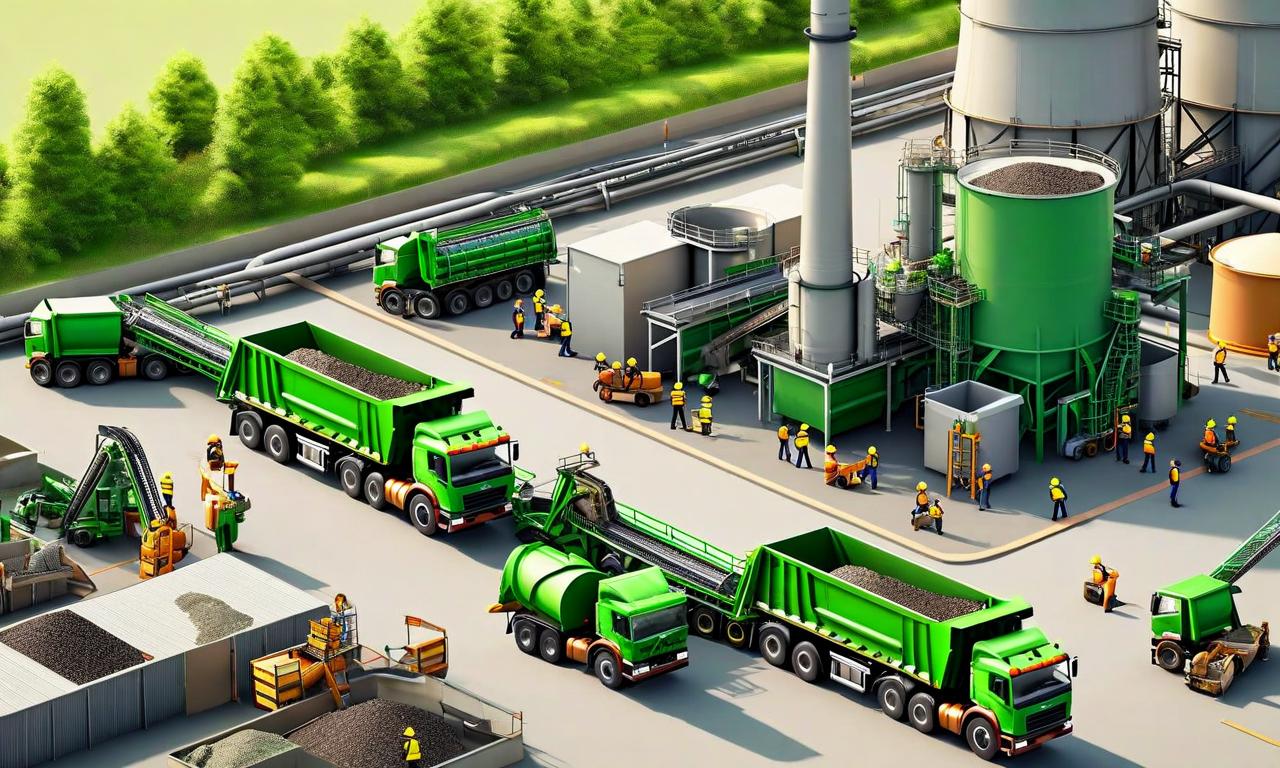
Beyond municipal contracts, the company is actively diversifying its revenue base, reflecting a broader shift in India’s waste management sector. Management representatives indicated that non-municipal income, currently accounting for roughly a tenth of revenues, is expected to rise steadily over the next three to four years. This strategy aims to reduce dependence on civic bodies while tapping into emerging opportunities in recycling and resource recovery. One such growth area has been refuse-derived fuel, where annual volumes have increased sharply to around 144,000 tonnes. RDF, produced from non-recyclable dry waste, is increasingly being used as an alternative fuel in cement kilns and industrial boilers, aligning waste processing with circular economy principles. Industry experts say demand for such fuels is likely to grow as industries seek lower-emission substitutes for fossil fuels.
The company is also exploring new recycling verticals, including processing of used tyres and end-of-life vehicles. These segments, still at a nascent stage in India, are gaining attention as policymakers push for extended producer responsibility and tighter disposal norms. Planned capital expenditure of ₹50–70 crore has been earmarked to support these initiatives over the medium term. From a financial perspective, the operator expects its core municipal waste business to continue delivering stable margins, while newer recycling ventures may show a wider profitability range as they scale up. Analysts suggest that predictable cash flows from city contracts can help offset the higher risk associated with emerging waste-to-resource segments.
For Mumbai, the expansion signals a gradual evolution towards more integrated, professionally managed waste systems. As cities seek cleaner, more inclusive and lower-carbon urban environments, experts argue that aligning municipal contracts with recycling, energy recovery and material reuse will be key to building sustainable urban infrastructure without overburdening public finances.
Mumbai Antony Waste Secures ₹1300 Crore BMC Contracts Expands Operations Across Wards