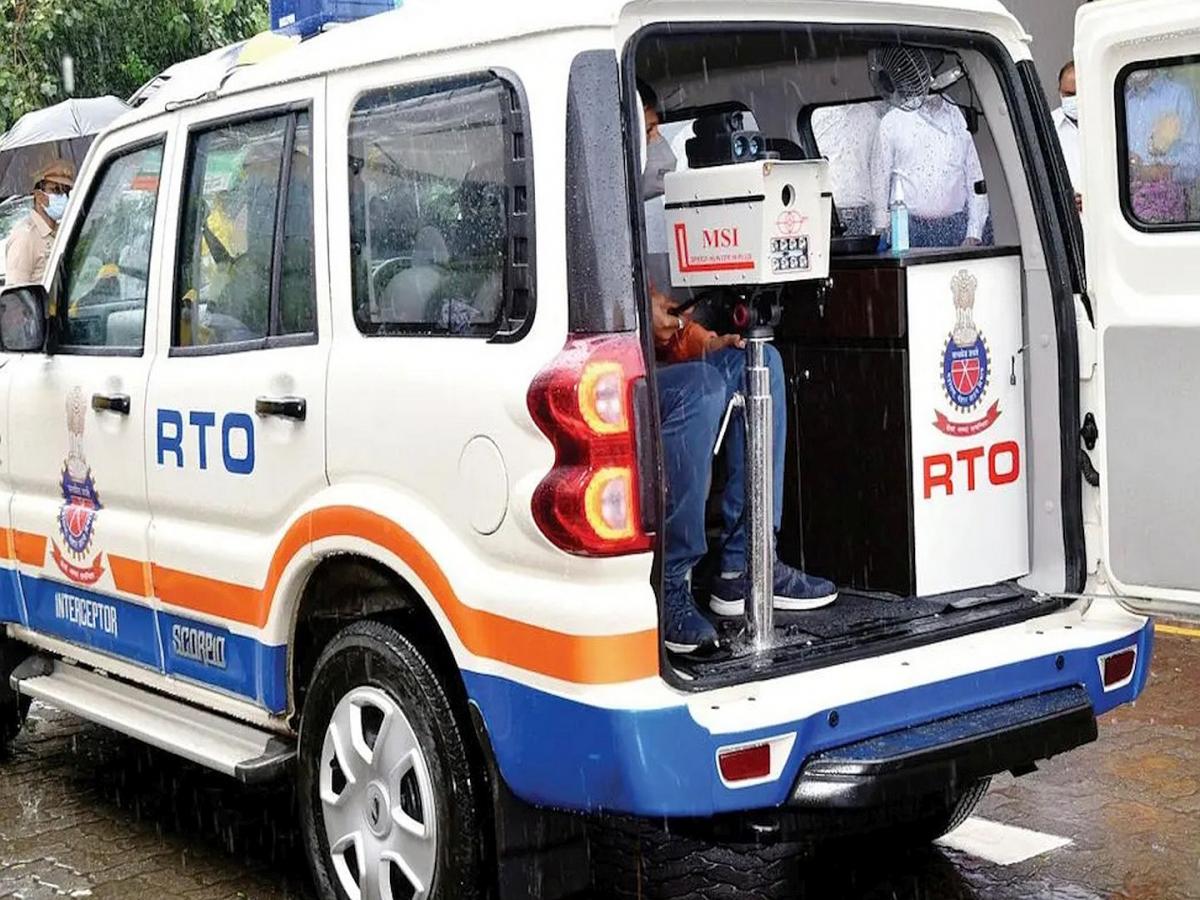
Mumbai and the wider Mumbai Metropolitan Region (MMR) have witnessed a sharp intensification of traffic enforcement after regional transport authorities deployed newly procured interceptor vehicles across major corridors, penalising more than 3,200 motorists and collecting fines exceeding ₹33 lakh within less than two weeks. The drive highlights how technology-led policing is increasingly shaping urban mobility governance in India’s largest metropolitan region.
According to transport officials, the enforcement exercise covered both Mumbai city and its surrounding urban agglomeration, focusing on highways, arterial roads and accident-prone stretches. Two-wheeler riders formed the majority of offenders, reflecting long-standing concerns around helmet compliance and road safety culture in dense Indian cities. Officials said most violations were linked to failure to wear helmets, followed by overspeeding and non-use of seatbelts by car occupants. The interceptor vehicles are equipped with a suite of advanced tools, including automatic number plate recognition cameras, radar-based speed detection systems, lux meters to assess lighting levels, and artificial intelligence-enabled 360-degree cameras. These systems automatically detect and record multiple violations simultaneously, reducing reliance on manual checks and enabling faster, more consistent enforcement. Radar units can identify speeding vehicles from distances of up to 1.5 kilometres, allowing teams to process hundreds of cases within short timeframes.
An RTO official said the vehicles were strategically positioned along the Eastern and Western Express Highways as well as key internal roads, marking a shift towards data-driven traffic management. Under the Motor Vehicles Act, penalties are generated automatically once violations are confirmed, limiting discretionary intervention and improving transparency in enforcement. To operationalise the system, around 200 motor vehicle inspectors and assistant inspectors were trained to handle the new equipment. Authorities confirmed that interceptor vehicles are now part of routine enforcement across all regional transport offices in the MMR, with deployments expected to increase during periods of heavy traffic such as festive seasons and year-end celebrations.
Urban mobility experts note that while enforcement alone cannot resolve congestion or unsafe travel, consistent monitoring can influence commuter behaviour and support broader road safety outcomes. In a region grappling with rising vehicle ownership, limited road space and high accident rates, technology-backed enforcement is increasingly viewed as a necessary complement to public transport expansion and safer street design. However, the rollout has also drawn attention to the high cost of surveillance infrastructure. Each interceptor vehicle costs roughly ₹13 lakh, while the radar systems fitted on them are priced significantly higher. Industry observers argue that such investments must be paired with parallel spending on pedestrian safety, public transport reliability and non-motorised mobility to ensure equitable and sustainable urban movement.
As Mumbai and the MMR pursue safer, more inclusive and lower-emission mobility systems, officials say technology-led enforcement will remain one pillar in balancing convenience, compliance and long-term urban liveability.
MMR RTO Interceptor Drive Penalises 3200 Traffic Violators Collects ₹33 Lakh Fines