


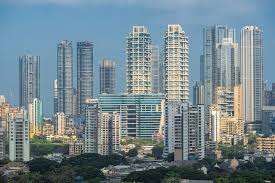
Mumbai’s skyline is changing at a pace few global cities would permit without strict controls. While high-rise construction is often associated with economic confidence and land efficiency, urban planners warn that the city’s largely unrestricted vertical growth risks undermining infrastructure capacity, neighbourhood character and long-term liveability.
Unlike cities such as New York, Singapore or London, where micro-skylines are regulated within defined precincts, Mumbai allows towers to rise almost anywhere, barring aviation-restricted zones. This has resulted in striking contrasts: low-rise homes abutting luxury skyscrapers, often without proportional road widths, open spaces or civic amenities. Urban experts argue that such development reflects policy-driven density rather than a coordinated vision for sustainable urban form. “Planning decisions today appear disconnected from infrastructure realities,” said an urban conservation expert associated with a city-based heritage organisation. “Height, massing and visual coherence are rarely assessed together, and aesthetics are treated as incidental rather than integral.” Several planners attribute this trend to capital-intensive development models that prioritise rapid returns over long-term urban resilience. Architects point out that repeated relaxations in development controls have enabled floor space index allowances to rise sharply, without a corresponding evaluation of traffic capacity, drainage systems or public services. “There is little regulation of building height or form in sensitive locations such as waterfronts, open grounds or historic vistas,” noted a senior urban designer. “Decisions are often taken on a case-by-case basis, with limited regard for cumulative impact.”
This marks a sharp departure from Mumbai’s own planning history. Early twentieth-century regulations introduced by colonial-era authorities focused on light, ventilation and building separation. These rules ensured equitable access to air and daylight, regardless of floor level, and established a clear relationship between height and open space. The introduction of floor space index in the late 1960s gradually shifted planning away from form-based controls towards volume-driven development. Neighbourhoods such as Malabar Hill and Cumballa Hill once exemplified restrained density, where taller residential buildings rose above tree canopies yet respected spacing norms. Today, those earlier landmarks are visually eclipsed by clusters of taller towers, eroding the sense of hierarchy that once defined the skyline. International precedents offer alternatives. In New York, contextual zoning regulates height and bulk to ensure new buildings respond to their surroundings. Mandatory setbacks for taller towers help preserve street-level light and visual balance. “The idea is not to prevent growth but to manage it,” said an architect working on global urban projects. “Density works best when it is carefully calibrated.”
As Mumbai invests heavily in new transport corridors and coastal infrastructure, planners argue that skyline management must evolve alongside climate resilience, walkability and inclusive housing goals. Without such alignment, the city risks trading short-term visual spectacle for long-term urban stress. A more measured approach, experts suggest, could allow Mumbai to grow vertically while still building neighbourhoods designed to endure.
Also Read: Mumbai Slum Encroachments On Rail Land Delay Major Suburban Rail Expansion Projects
Mumbai High Rises Surge Without Alignment To Precinct Planning Or Infrastructure Capacity
