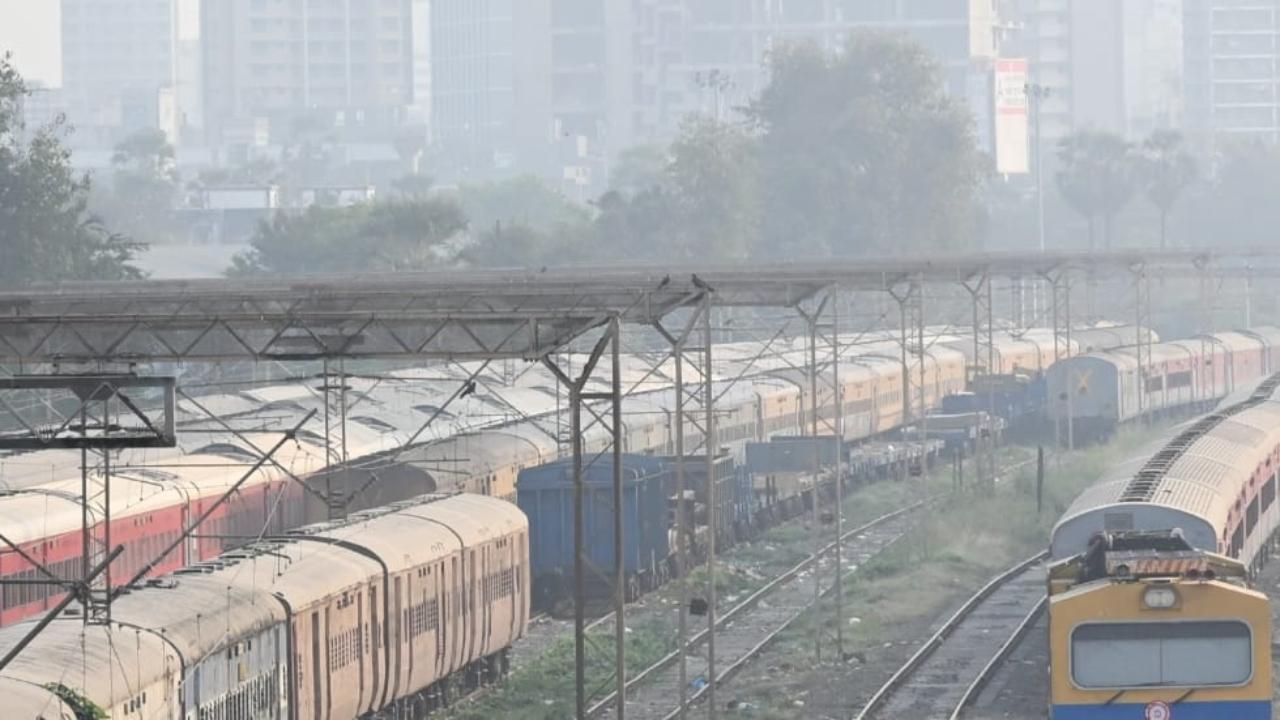
Indian Railways has unveiled an ambitious infrastructure expansion plan aimed at significantly increasing train-handling capacity in Mumbai and several other major cities over the next five years. The programme is designed to respond to rising passenger demand while improving operational efficiency across one of India’s most heavily used rail corridors.
In the Mumbai Metropolitan Region, Western Railway currently manages 44 long-distance trains daily. According to railway officials, planned infrastructure upgrades will create capacity for around 65 additional long-distance services, alongside the addition of nearly 70 coaches each day. The expansion is expected to reduce congestion at key terminals and improve travel reliability for both suburban and intercity passengers. The capacity enhancement programme covers six major cities under Western Railway’s jurisdiction, including Mumbai, Surat, Vadodara, Ahmedabad, Ujjain, and Indore. The works involve the construction of new terminals, additional platforms, upgraded maintenance depots, pit lines, stabling facilities, and modern signalling systems. Multitracking and improved traffic management are also being introduced to allow more trains to operate simultaneously with fewer delays.
In Mumbai, several long-pending projects form the backbone of the upgrade strategy. The Mumbai Central–Borivali sixth line project is progressing in phases, with one phase already operational and the next targeted for completion by early 2026. Once commissioned, the corridor will allow better segregation between suburban and long-distance trains, a move expected to ease bottlenecks during peak hours. Additional line capacity is being created through the Borivali–Virar fifth and sixth lines and the Virar–Dahanu third and fourth lines. These corridors are critical for accommodating long-distance services without disrupting suburban operations. Another strategic intervention is the Naigaon–Juichandra double chord line, which will enable direct connectivity to the Konkan Railway, eliminating the need for locomotive reversals and improving fuel efficiency.
New long-distance terminals are also under development at Jogeshwari and Vasai Road, while existing hubs such as Mumbai Central, Dadar, and Bandra Terminus are being upgraded with extra platforms and maintenance infrastructure. Rail planners say this decentralisation of terminals will distribute passenger load more evenly across the city. Suburban rail users are also expected to benefit. Western Railway currently runs over 1,400 suburban services daily, and the upgrades are projected to release capacity for approximately 165 additional services. Platform extensions to support 15-car rakes and the proposed harbour line extension from Goregaon to Borivali are part of this effort.
Railway officials said the programme is being implemented in stages, with benefits accruing progressively. If executed as planned, the expansion could support a more inclusive, energy-efficient urban mobility system, reinforcing rail as the backbone of sustainable city transport while easing daily travel pressures for millions.
Mumbai Railways Plan Major Capacity Upgrades With More Trains Stations Across Cities