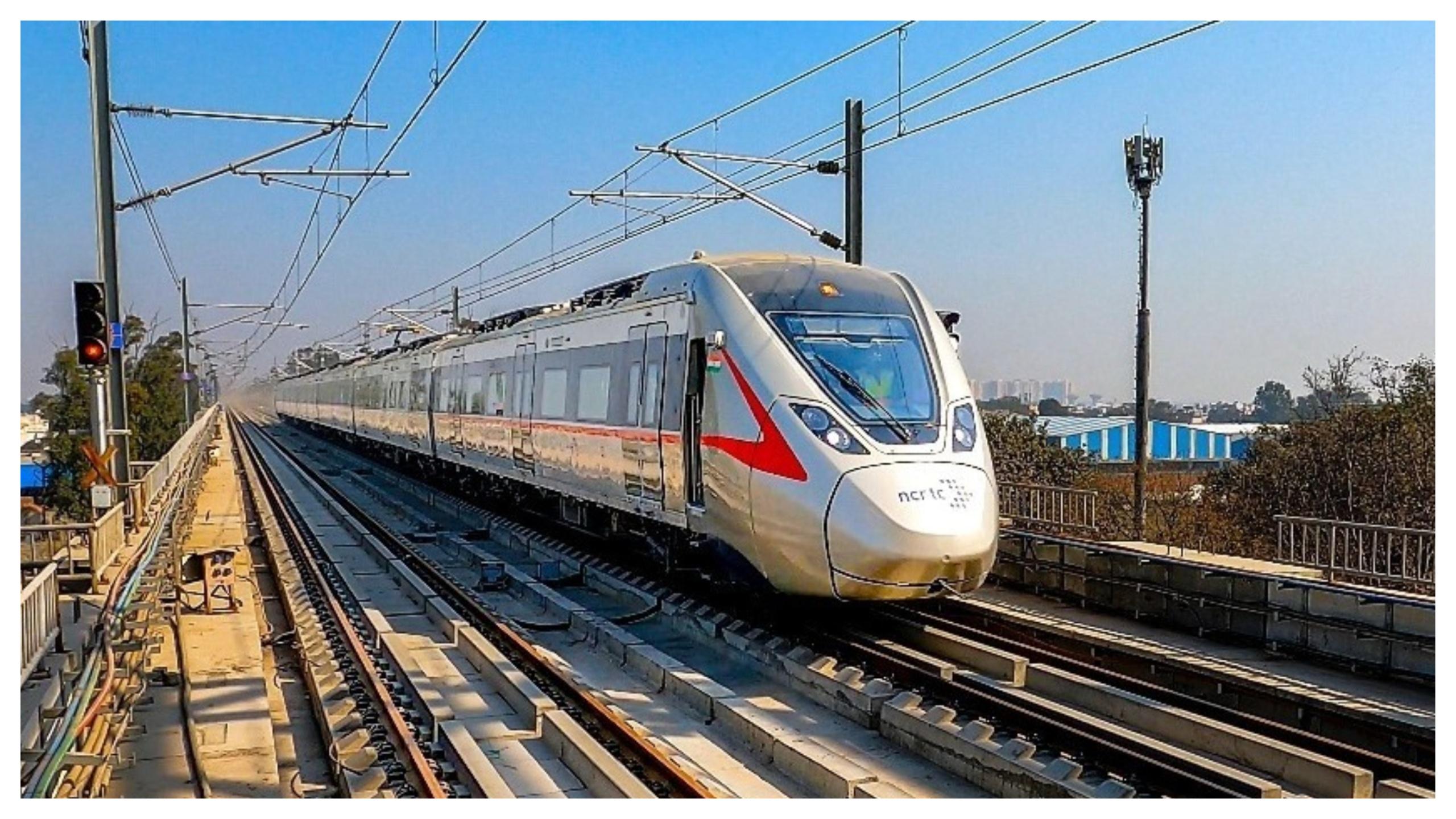
After years of policy deadlock and funding uncertainty, 2025 marked a decisive turning point for the expansion of the Namo Bharat regional rapid rail network across the National Capital Region. Beyond the partially operational Delhi–Meerut corridor, two long-pending routes Delhi–Gurugram–SNB–Alwar and Delhi–Panipat–Karnal finally moved from administrative limbo into active procurement and design, reshaping the future of regional mobility.
Urban transport planners say the shift was enabled by an unusual alignment of governments across NCR states, reducing inter-agency friction that had earlier slowed progress. “Large regional rail systems only move when political coordination exists at scale,” said an infrastructure policy expert, noting that fragmented governance had previously stalled approvals and funding flows.
By late 2025, that alignment translated into concrete decisions. The Public Investment Board cleared both corridors within a combined outlay of about ₹65,000 crore, while the implementing agency initiated parallel tenders for utility relocation and design consultancy a critical step before civil construction. Industry officials describe this phase as the point of no return, where projects become execution-driven rather than aspirational.
The Focus Keyword Namo Bharat corridors now extends beyond a single operational line. The Delhi–SNB route alone spans more than 100 km across three states and is designed to converge with other Phase-1 lines at Sarai Kale Khan, a multimodal hub integrating metro, rail, buses and highways. Once fully operational, commuters could travel seamlessly across NCR without changing platforms a structural shift for a region long dependent on private vehicles. Performance data from the Delhi–Meerut corridor has strengthened confidence. Since phased operations began, ridership has grown steadily, with daily footfall crossing 80,000 at peak by the end of 2025. Transport economists say this demonstrates latent demand for fast, reliable regional transit and its potential to reduce road congestion, emissions and commuting stress.
Financial backing has also stabilised. Multilateral funding approvals completed the financing stack for the Meerut line, while detailed project reports for future corridors including a proposed Gurugram–Faridabad–Noida route are now ready, targeting construction later this decade. Urban development specialists argue that the real impact of Namo Bharat corridors lies beyond speed. By shrinking travel times between housing clusters and employment hubs, the network supports more balanced urban growth, lowers transport-related carbon emissions and improves access for workers across income groups. “This is about enabling inclusive regional economies, not just faster trains,” said a senior urban planner. As NCR prepares for rapid population growth, the events of 2025 suggest that integrated rail infrastructure could finally underpin a more sustainable, equitable and liveable metropolitan future.
Delhi Expands Namo Bharat Corridors Beyond Meerut With Major Tenders Approved