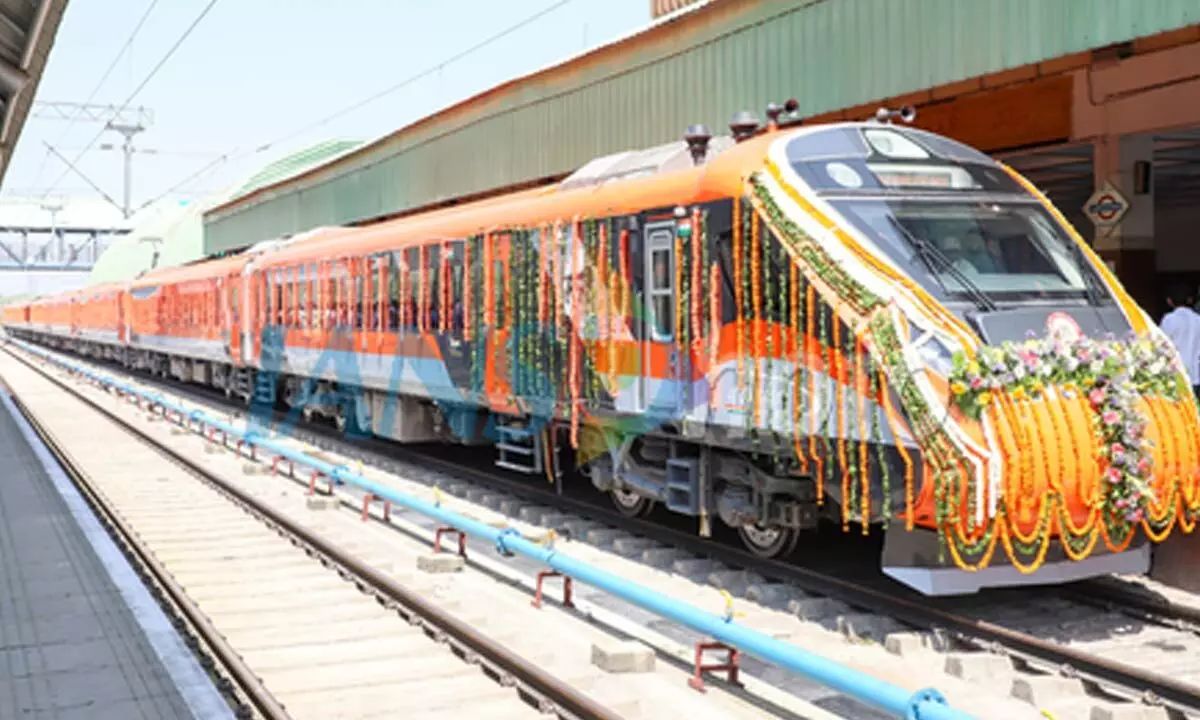
As year-end travel demand surges across northern India, Indian Railways has introduced a set of special reserved train services between New Delhi and Shri Mata Vaishno Devi Katra, aiming to manage the annual New Year rush while easing pressure on regular rail operations. The initiative, rolled out by the Jammu Division of Northern Railway, reflects a broader effort to make intercity travel safer, more predictable and socially inclusive during peak festive periods.
The special services, operating through to January 1, 2026, are expected to cater to a mix of religious pilgrims and leisure travellers heading to Jammu and Kashmir. With winter tourism and shrine visits peaking simultaneously, officials anticipate unusually high passenger volumes on the busy Delhi–Katra corridor. Each special train comprises 16 fully reserved coaches, a move intended to improve comfort levels and crowd management compared with unreserved alternatives. According to railway officials, the New Delhi–Katra special train will run five times between now and December 31, departing the capital late at night and reaching Katra by noon the following day. The return service from Katra to New Delhi will also operate five times between December 28 and January 1, allowing travellers flexibility around holiday schedules. Timings have been designed to minimise overnight congestion at terminals while enabling same-day onward connections.
Transport planners note that such seasonal capacity additions play a crucial role in supporting sustainable mobility in high-density travel corridors. By absorbing excess demand through planned services rather than last-minute adjustments, the railways can reduce overcrowding, lower safety risks, and discourage a shift towards private road travel, which typically spikes during festive seasons and adds to regional emissions. An official associated with rail operations said the temporary services are part of a wider strategy to respond dynamically to travel demand without long-term infrastructure strain. “Special trains allow us to scale up capacity quickly while maintaining operational efficiency,” the official noted, adding that advance reservations are strongly advised due to limited availability.
Beyond immediate passenger convenience, the move carries wider urban implications. Reliable intercity rail links during peak periods support regional economies dependent on pilgrimage and tourism, while reinforcing railways as the backbone of low-carbon long-distance travel. For cities like Delhi, managing outbound holiday traffic efficiently also helps reduce congestion around terminals and arterial roads. As India’s urban centres grapple with balancing mobility demand and environmental responsibility, targeted interventions such as special festival trains highlight how public transport systems can remain resilient, inclusive and climate-aligned particularly during periods of intense, short-term pressure.
Delhi Introduces Five Special New Year Trains Between New Delhi And Katra