


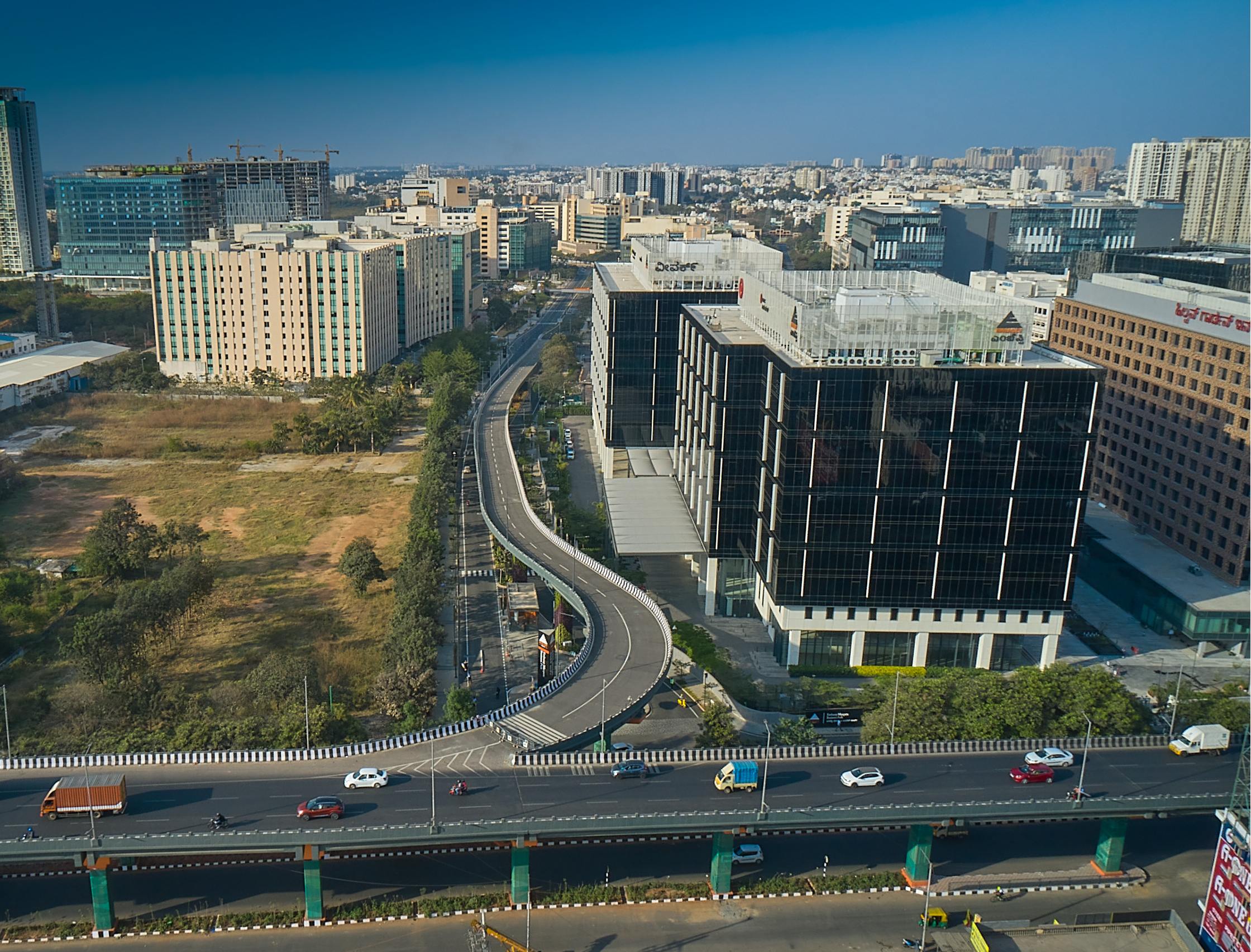
Bengaluru’s office property market continues to draw sustained institutional interest, with an alternative investment platform acquiring a sizeable office asset within one of the city’s largest technology parks. The transaction underlines growing confidence in stabilised, income-generating commercial real estate even as investors remain selective amid global economic uncertainty.
The acquisition involves approximately 3.76 lakh sq ft of completed office space located within a prominent technology campus in north Bengaluru, a micro-market that has long anchored the city’s IT and services economy. The asset forms part of a mature business park known for its diversified tenant base across technology, manufacturing, financial services, consulting and flexible workspace operators. Industry analysts note that such diversification has helped cushion rental income during economic cycles, making the location attractive to yield-focused capital. According to people familiar with the transaction, the investment was executed through a rental-yield-oriented commercial real estate fund, marking its third deployment. The strategy reflects a broader trend among domestic alternative asset managers who are prioritising predictable cash flows over speculative development plays. A senior investment executive said funds are increasingly favouring completed assets in established business districts, where leasing risk is lower and operational efficiencies can be scaled.
The seller, a listed office real estate investment trust, has positioned the divestment as part of a capital recycling strategy aimed at sharpening portfolio efficiency. Market observers say such asset sales allow large landlords to unlock capital from stabilised properties and redirect it towards new development, sustainability upgrades or balance-sheet optimisation. This recycling model has become more pronounced as institutional owners adapt to evolving occupier expectations around energy efficiency and workplace quality. Bengaluru’s office market has shown relative resilience compared to other global tech hubs, supported by steady demand from global capability centres and domestic enterprises. While net absorption moderated in parts of 2024, vacancy levels in prime technology parks have remained manageable, aided by limited new supply in well-connected corridors. An urban economist pointed out that integrated business parks with access to public transport and planned infrastructure upgrades are better positioned to retain long-term relevance. From a city-planning perspective, such transactions highlight the importance of consolidating growth within existing employment hubs rather than encouraging unchecked urban sprawl. Concentrated commercial districts, when supported by mass transit, last-mile connectivity and energy-efficient buildings, can reduce commute distances and urban emissions over time.
As Bengaluru balances economic growth with environmental and social sustainability, institutional investments into operational, well-located office assets suggest a gradual shift towards more measured, responsible urban development. The deal signals confidence not just in rental yields, but in the city’s ability to evolve its commercial landscape in line with future-ready urban priorities.
Also Read: Mumbai Housing Affordability Improves Now Requires Just 47 Percent Of Household Income
Bengaluru EAAA Alternatives Acquires Embassy Manyata Tech Park For Rs 530 Crore
