


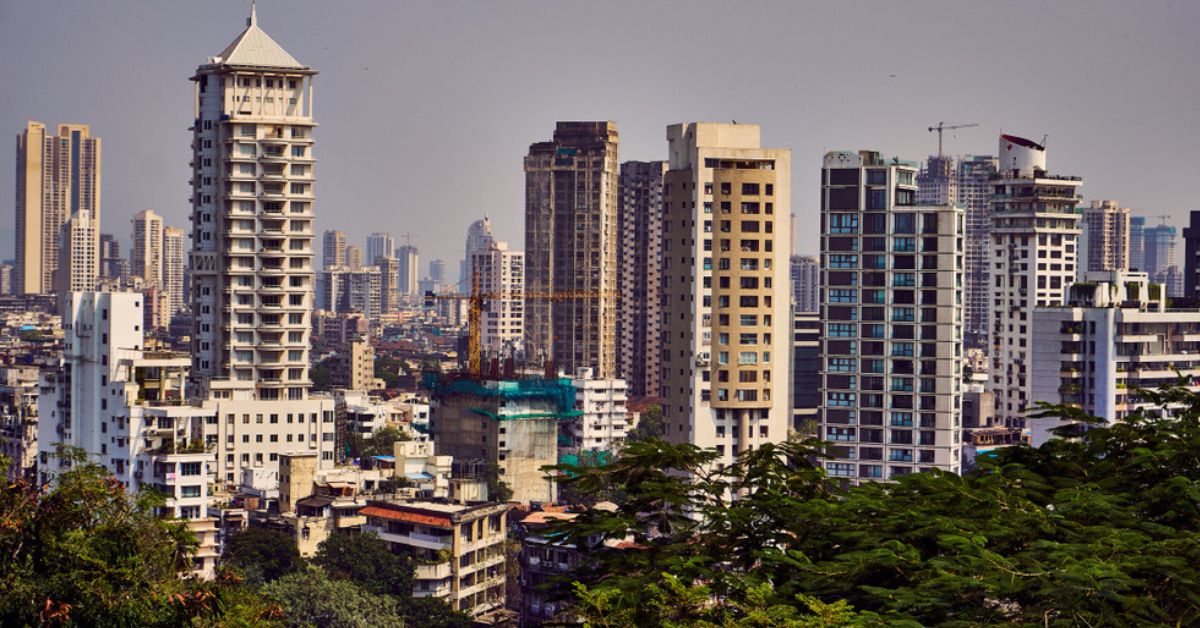
Mumbai’s housing market has crossed a significant milestone, with home purchase costs now accounting for 47% of a household’s income, according to the latest housing affordability assessment by a global real estate consultancy. This marks the first time the city has moved below the 50% affordability threshold widely used by lenders to assess mortgage viability, signalling a structural shift in one of India’s most expensive urban property markets.
The improvement represents a notable turnaround for Mumbai, where affordability pressures have historically constrained homeownership. In 2010, the city’s affordability ratio stood at an extraordinary 93%, effectively placing ownership out of reach for most salaried households. While the figure eased to 50% last year, the latest dip to 47% suggests a more sustainable balance between prices, incomes and borrowing costs. Industry experts attribute the change to a combination of softer interest rates and faster income growth. Since early 2023, the central bank has reduced policy rates by a cumulative 125 basis points, reversing a sharp tightening cycle in 2022 when rates were raised aggressively to rein in inflation. Lower borrowing costs have translated into reduced monthly loan repayments, improving access for first-time buyers and mid-income households. Crucially, income growth has outpaced residential price increases across most major cities a reversal of the long-standing pattern in Indian real estate. An industry executive noted that wage growth in services, technology and manufacturing hubs has helped stabilise affordability, even as construction and land costs remain elevated. This shift is particularly important for cities pursuing more inclusive and equitable urban growth.
The affordability trend is not confined to Mumbai. Seven of India’s eight largest housing markets recorded year-on-year improvements. Ahmedabad emerged as the most affordable city, where housing costs consume just 18% of household income. Pune and Kolkata followed at 22%, while Chennai stood at 23%. Bengaluru and Hyderabad remained stable at 27% and 30% respectively. The National Capital Region was the sole outlier, where affordability weakened marginally due to a surge in high-end housing launches pushing up average prices. Urban planners say these patterns reflect changing development priorities. Cities with diversified housing supply, improved public transport and compact growth models are better positioned to balance affordability with sustainability. In contrast, markets skewed heavily towards premium housing risk widening social and spatial inequalities. Looking ahead, analysts expect affordability conditions to remain broadly supportive into 2026, underpinned by steady economic growth and a stable interest rate environment. However, experts caution that maintaining affordability will depend on continued income expansion, supply of mid-income housing and investments in transit-oriented development.
For Mumbai and its peers, the challenge now lies in translating improved affordability into inclusive homeownership while aligning new development with climate resilience and low-carbon urban planning a balance that will define the next phase of India’s urban housing story.
Also Read: Navi Mumbai NMMC Asks Developers To Tighten Pollution Controls At Construction Sites
