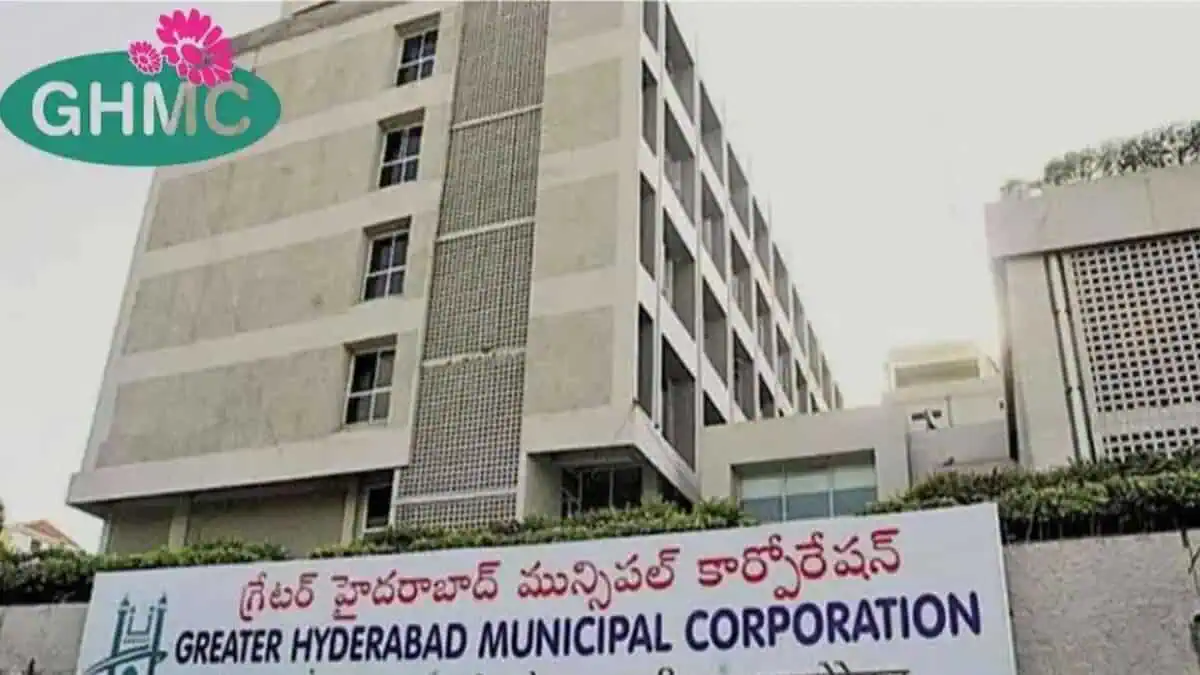
Hyderabad’s municipal boundaries have grown dramatically following the merger of 27 surrounding municipalities into the Greater Hyderabad Municipal Corporation (GHMC). While headlines celebrated India’s “largest city” status, experts caution that the expansion reflects administrative centralisation rather than genuine urban development. The increase in geographic jurisdiction has yet to enhance service delivery, leaving questions over the effectiveness of Hyderabad’s civic governance.
The GHMC now spans 2,053 sq km, up from 625 sq km in 2007 and 54 sq km in the 1980s when the city was governed as the Hyderabad Municipal Corporation. A senior urban planner explained that enlarging municipal boundaries does not automatically transfer functional authority or improve citizen services. Many critical responsibilities, including water supply, sewerage, education, healthcare, and urban planning, remain under state agencies or other authorities, limiting the GHMC’s practical powers. Financially, the merger adds land but not revenue-generating capacity. Hyderabad’s municipal collections, estimated at Rs 5,000–6,500 crore post-merger, are modest compared with Mumbai’s Rs 43,000 crore or Bengaluru’s Rs 19,900 crore, despite the GHMC’s vastly expanded territory. Analysts note that the real asset consolidated through this expansion is land, potentially available for monetisation to fund projects, rather than enhanced fiscal autonomy or improved services.
The merger also exemplifies the hollowing of local democracy. Councillors and municipal representatives wield limited influence, largely executing decisions directed by bureaucrats or senior state officials. Past amendments to Telangana municipal laws have weakened local autonomy, transferring substantive powers to collectors and commissioners. Observers highlight that the GHMC now functions as a ceremonial entity on paper, with administrative control heavily centralised. Urbanisation has been framed as the driver for such mergers, yet the policy largely concentrates investment in urban centres while systematically weakening surrounding rural economies, indirectly pushing migration into the city. Comparisons with other cities show differing approaches: Bengaluru was split into multiple corporations before a central authority was created, while Delhi and Mumbai maintain more compact jurisdictions with functional control. Hyderabad’s pattern of merging, splitting, and reintegrating municipal bodies reflects a prioritisation of administrative centralisation over citizen-centric governance.
Urban planners argue that Hyderabad needs functional decentralisation, integrated master planning, and revenue reforms to truly improve civic services. Returning critical functions such as water, healthcare, and road management to municipal control, alongside transparent resource allocation, could create a genuinely sustainable and inclusive urban environment. Without these reforms, Hyderabad risks becoming the largest city in area only, while its governance, accountability, and service delivery remain fragmented. Effective urban expansion must be measured not by square kilometres but by improvements in citizen access, functional capacity, and environmental sustainability.
Hyderabad Expands GHMC To 2053 Square Kilometres While Power Remains Centralised Officials Warn