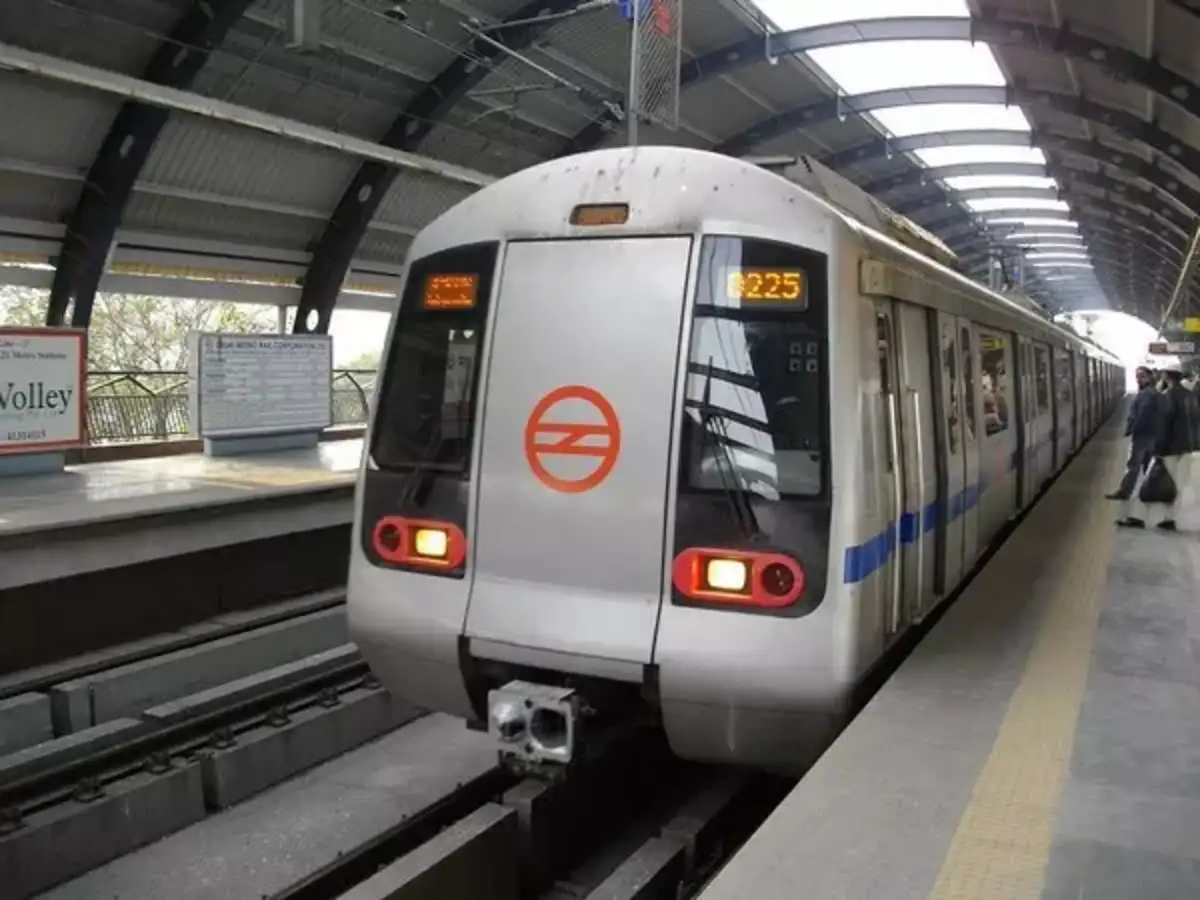
Delhi’s urban transport strategy is entering a new phase as the city’s mass transit system prepares to introduce premium coaches and curated last-mile cab services aimed at attracting higher-income commuters away from private vehicles. The initiative, announced at a public interaction in south Delhi, seeks to combine comfort, convenience, and environmental gains while generating additional revenue for system-wide upgrades.
Under the proposal, one luxury coach will be integrated into selected six-coach metro trains. These coaches will offer enhanced seating, reduced crowding, and a quieter travel experience. Complementing this will be app-linked premium cabs stationed at metro exits, enabling door-to-door connectivity for passengers commuting between homes, offices, and major business districts. Officials involved in the planning said the service is designed to appeal to professionals who currently rely on private cars due to comfort or convenience concerns.
Passengers opting for the premium experience will pay a higher fare. According to transport officials, the additional revenue will be ring-fenced for improving services across the broader network, including station upgrades, cleanliness, and accessibility for regular commuters. “The idea is not exclusivity, but cross-subsidy,” an urban transport official said, adding that premium pricing could help fund improvements without burdening the average rider.The Delhi Metro currently supports around 3.5 million daily users, translating into nearly 6.5 million passenger trips. Urban planners argue that even a modest shift of car-owning commuters to mass transit could significantly reduce traffic congestion and tailpipe emissions. With road transport remaining one of the capital’s largest contributors to air pollution, the Delhi Metro luxury coaches initiative is being positioned as a behavioural nudge rather than a structural overhaul.
Experts note that global cities increasingly deploy tiered public transport models to balance inclusivity with financial sustainability. “Public transit systems worldwide are exploring differentiated services to improve revenue resilience while retaining social equity,” said a mobility researcher, pointing to examples in East Asia and Europe. The move also comes as Delhi-NCR’s metro network crosses 400 kilometres of operational lines, making it one of the largest urban rail systems globally. Nationally, metro rail spans over 1,100 kilometres, with significant expansions underway.
Policymakers believe that sustained investment in high-capacity, electric public transport remains central to India’s long-term urban growth and climate commitments. While the premium offering may invite debate around equity, officials stress that its success will be measured by reduced private vehicle usage and reinvestment into common infrastructure. If implemented carefully, the Delhi Metro luxury coaches plan could signal a pragmatic pathway for cities seeking cleaner air, efficient mobility, and financially robust public transport systems without compromising inclusivity.
Delhi Metro To Launch Luxury Coaches Last Mile Cabs To Cut Pollution