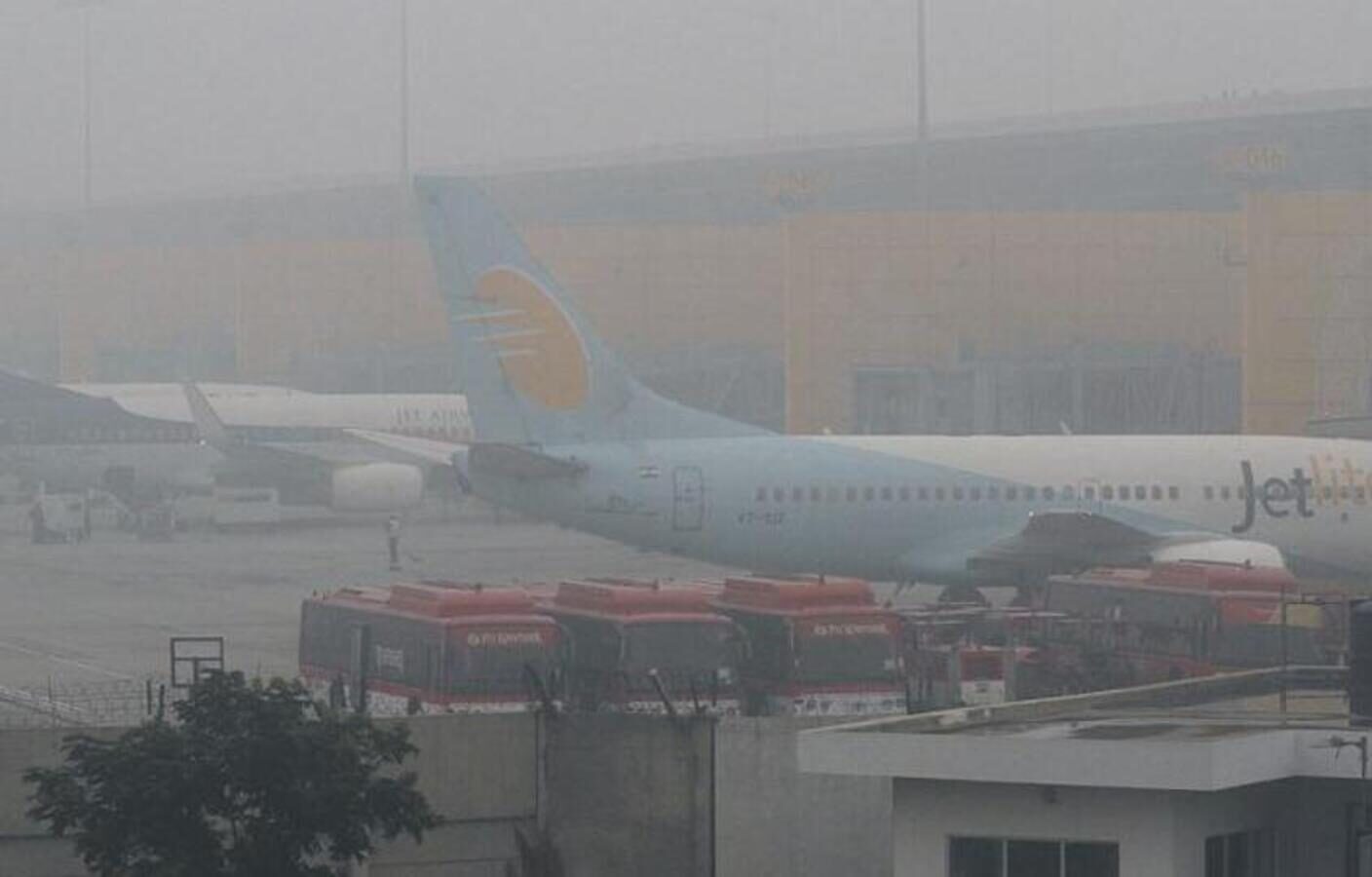
Dense winter fog has once again disrupted air travel across India, with Delhi, Varanasi and Mumbai among the worst-affected airports, grounding flights and stranding hundreds of passengers during peak travel hours. The recurring weather challenge has renewed concerns around airport preparedness, passenger communication and climate-resilient aviation infrastructure in the country’s largest urban centres.
Over the past week, low visibility conditions during early mornings and late nights have forced airlines to cancel or delay multiple services across northern and eastern India. Delhi’s Indira Gandhi International Airport, one of Asia’s busiest hubs, witnessed repeated operational slowdowns, while Varanasi and Kolkata reported cascading disruptions due to inbound and outbound delays. Mumbai, though relatively better equipped, also saw schedules stretched as fog conditions intensified inland. Airlines, including the country’s largest low-cost carrier, confirmed cancellations on routes connecting cities such as Varanasi, Patna, Kolkata and Bengaluru, citing safety protocols linked to reduced runway visibility. An airline official said winter fog remains “one of the most operationally complex challenges” as even short visibility drops can affect tightly scheduled networks nationwide.
The Ministry of Civil Aviation has issued advisories urging passengers to monitor real-time flight updates and remain flexible with travel plans. Regulators have reiterated that safety standards take precedence over punctuality, even as pressure mounts to minimise passenger inconvenience. Airports have been asked to strengthen coordination with airlines and ground handlers to manage crowding during prolonged delays. Urban mobility experts say the disruption highlights a structural issue rather than a seasonal anomaly. “Fog-related delays are now predictable events, yet infrastructure upgrades are uneven across airports,” noted an aviation systems specialist. While some metro airports are equipped with advanced instrument landing systems, many high-traffic regional airports still struggle to maintain throughput during low-visibility conditions.
The impact extends beyond aviation. Tourism-dependent cities such as Delhi and Varanasi are seeing itinerary changes, hotel cancellations and reduced footfall during what is typically a strong winter travel season. Local businesses linked to hospitality and transport report uncertainty as travellers delay or reroute plans.
From a sustainability lens, experts argue that resilient airport design must be integral to future urban development. Investments in advanced navigation technology, better runway lighting, and integrated weather forecasting systems could reduce disruptions while improving safety and efficiency. Improved public transport connectivity to airports could also ease passenger stress when flights are delayed for long durations.
Authorities say long-term solutions are under review, including wider deployment of low-visibility landing systems and revised standard operating procedures for winter operations. For now, travellers are advised to plan conservatively, allow buffer time, and rely on official airline channels for updates. As climate variability intensifies, winter fog is likely to remain a recurring test for India’s aviation ecosystem. How effectively cities adapt will shape not just travel reliability, but the broader resilience of urban transport networks.
Delhi Winter Fog Grounds Flights At Varanasi Mumbai Airports Nationwide Severe Disruptions