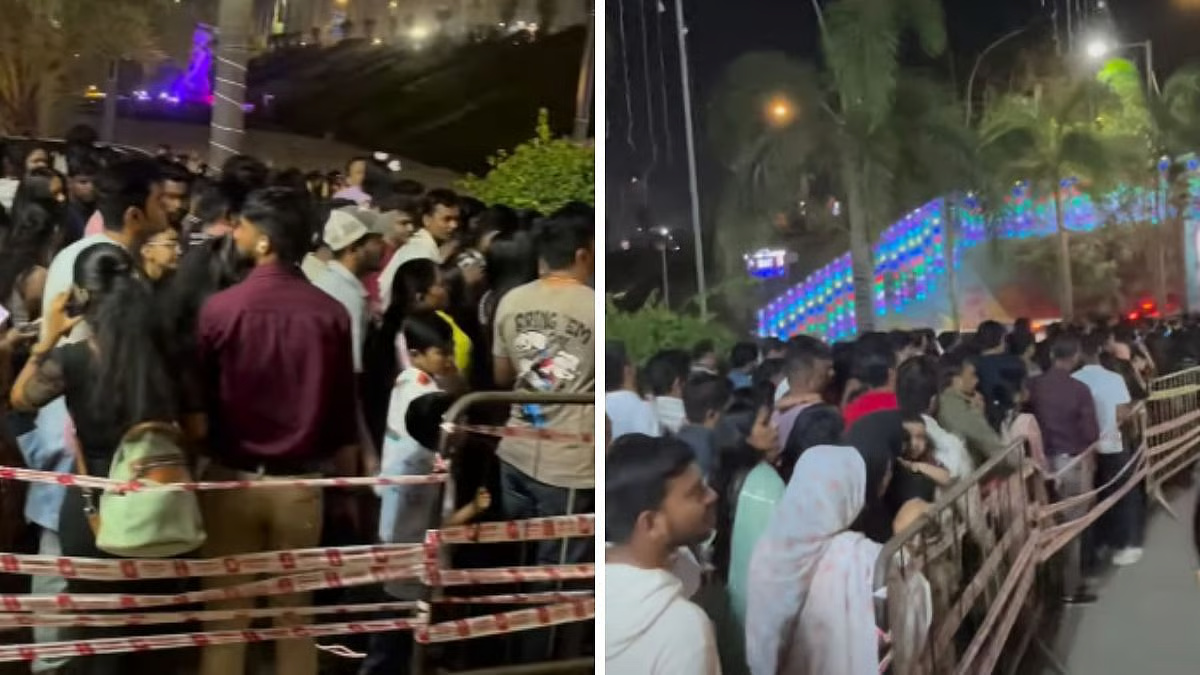
Mumbai’s Christmas Eve celebrations once again turned Bandra Reclamation into a focal point of festive energy, drawing thousands of residents and visitors and underscoring the city’s growing challenge of managing large public gatherings. As revellers gathered late into the night to mark the occasion, the popular waterfront stretch witnessed severe overcrowding, slow-moving traffic and pedestrian congestion, reflecting both the city’s cultural vibrancy and its infrastructural pressures.
From early evening onwards, crowds steadily built up across Bandra Reclamation, Mount Mary Church precinct and adjoining market areas. Festive lighting, seasonal decorations and the promise of midnight celebrations attracted families, young people and tourists from across the Mumbai Metropolitan Region. By nightfall, roads were packed, footpaths were barely navigable and vehicles moved at a crawl, according to eyewitness accounts and widely shared social media videos. Urban mobility experts note that Bandra’s appeal during Christmas lies in its walkable streets, historic landmarks and strong community traditions. However, these same characteristics also make the area vulnerable to crowding during peak festivals. With limited open spaces and narrow access roads, managing sudden surges in footfall becomes increasingly difficult without temporary traffic diversions and crowd control measures.
Local residents described a festive yet overwhelming atmosphere. While many welcomed the return of large-scale celebrations after recent years of subdued gatherings, others expressed concern about safety and ease of movement. An official involved in crowd management said personnel were deployed across key junctions, though the sheer volume of visitors stretched available resources during peak hours. The Mount Mary Church area remained a major draw, with visitors queueing patiently to enter the premises. Nearby markets stayed busy late into the night as people purchased decorations, sweets and gifts. Traders reported strong seasonal sales, highlighting the economic importance of festival-driven footfall for neighbourhood businesses.
Urban planners argue that such events reveal the need for better-designed public celebration zones within cities. “Festivals are essential to urban life, but cities must plan for them just as they plan for daily commuting,” said an urban planning expert. Temporary pedestrianisation, improved signage, last-mile public transport and clearly designated gathering areas could ease pressure on residential streets, they added. The reliance on private vehicles and app-based taxis also contributed to congestion, pointing to gaps in late-night public transport connectivity. Sustainable mobility advocates suggest that special festival transit services and shuttle routes could reduce traffic emissions and improve safety during high-footfall events.
As Mumbai continues to grow, balancing cultural expression with urban liveability will remain a recurring challenge. Christmas Eve at Bandra Reclamation showcased the city’s inclusive spirit and shared traditions, but it also highlighted the importance of proactive crowd planning. With thoughtful design and coordinated civic responses, Mumbai can ensure that its festive spaces remain joyful, accessible and safe for all.
Bandra Reclamation Witnesses Massive Overcrowding As Mumbaikars Rush For Midnight Christmas Celebrations