


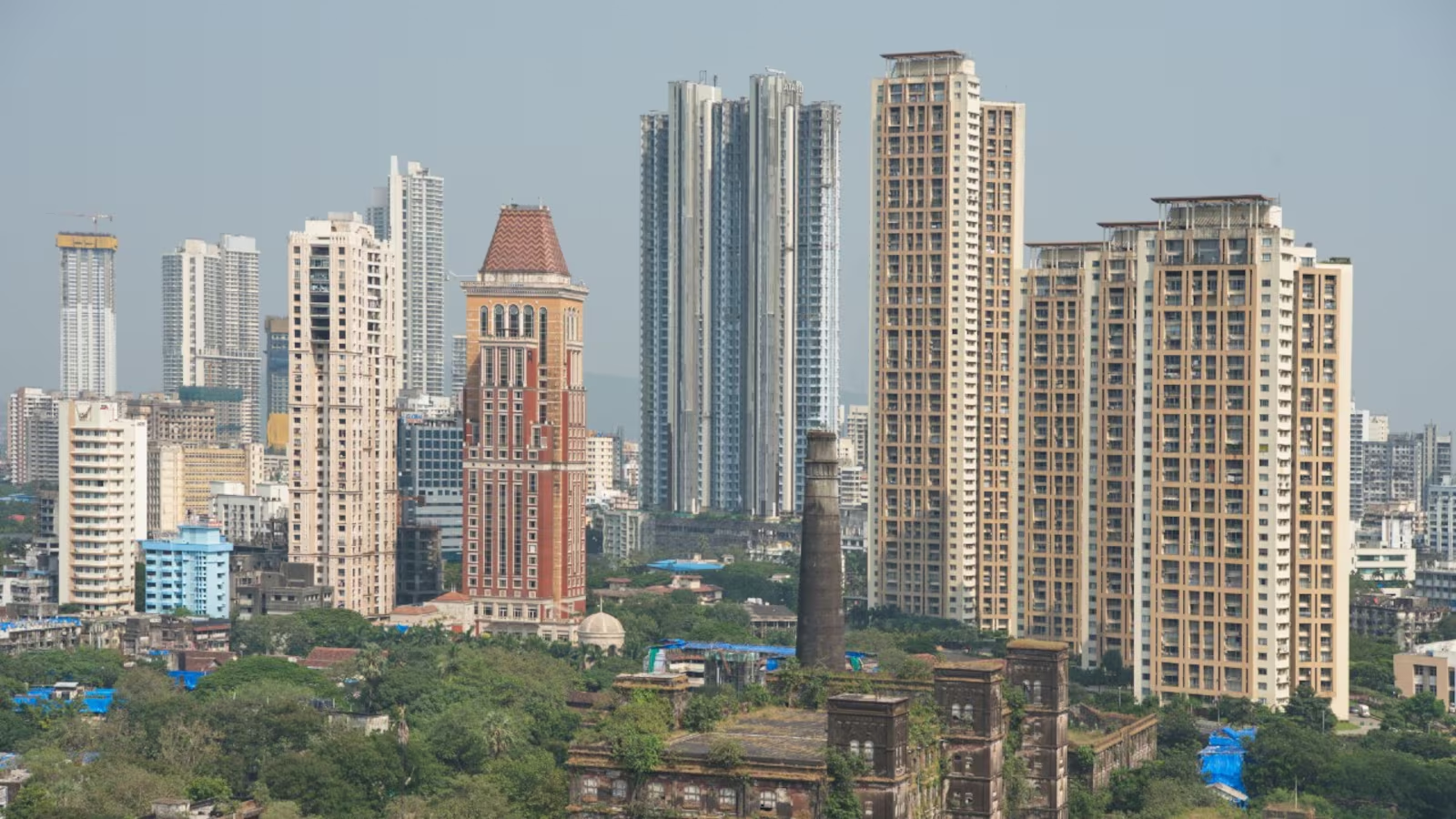
Mumbai’s land administration framework, long criticised for delays and opacity, may be heading towards incremental reform. District administrations overseeing Mumbai City and Mumbai Suburban districts recently convened a joint review with leading real estate bodies to address procedural bottlenecks that have stalled projects, increased costs, and complicated urban redevelopment across India’s most land-constrained metropolis.
The meeting brought together senior district officials responsible for revenue and land records, alongside representatives from organised real estate associations. According to officials familiar with the discussions, the focus was on resolving legacy issues related to land titles, record digitisation, mutation delays, premium calculations, and inter-departmental approvals areas that continue to impede housing supply and commercial development in Mumbai. Industry participants flagged that inconsistent interpretations of land rules between city and suburban jurisdictions often result in prolonged approval timelines. “Even minor discrepancies in records can delay projects by months, sometimes years,” an industry representative said, noting that such delays disproportionately affect redevelopment projects in dense neighbourhoods, where housing shortages are most acute. Officials acknowledged these concerns, indicating that greater coordination between district offices is necessary to ensure uniform processes. A senior revenue official said the administration is examining ways to standardise procedures and improve accountability across departments, particularly as Mumbai undertakes large-scale redevelopment of ageing housing stock and industrial land.
Urban planners argue that land administration reform is critical to Mumbai’s broader sustainability goals. Delays in approvals push up project costs, which are eventually passed on to homebuyers and tenants. “Efficient land governance is not just a developer issue it affects affordability, urban density, and the city’s carbon footprint,” an urban policy expert observed. Faster clearances, experts say, can enable more compact development, reducing sprawl and transport emissions. The discussion also touched on the need for transparent, digital land records that are easily accessible to both citizens and investors. While Maharashtra has made progress in digitisation, gaps remain, particularly for legacy properties and old layouts. Officials indicated that resolving these gaps could reduce disputes, ease financing, and improve investor confidence in Mumbai’s real estate market. For the administration, the engagement reflects a shift towards dialogue rather than enforcement alone. “The objective is not dilution of regulation but clarity and predictability,” an official involved in the meeting said, adding that regular consultations could help pre-empt disputes before they escalate into litigation.
As Mumbai grapples with climate risks, housing shortages, and infrastructure strain, streamlined land administration is increasingly seen as foundational to inclusive urban growth. While no immediate policy changes were announced, stakeholders described the meeting as a constructive step towards aligning governance systems with the city’s evolving development needs an essential requirement for building a more resilient, equitable, and future-ready Mumbai.
Also Read: Navi Mumbai Cognizant Renews 92000 Sq Ft Lease Nearly Rs 40 Crore
Mumbai Collectors Hold Meeting With Real Estate Bodies To Resolve Land Issues
