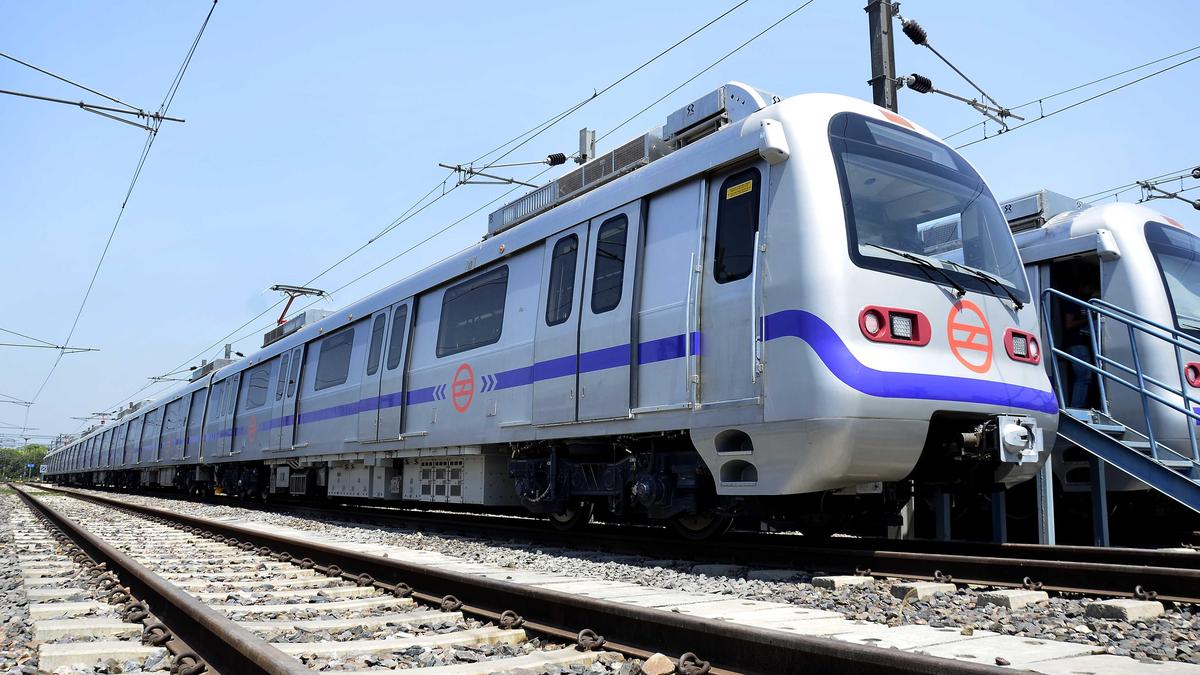
The Union Cabinet has approved a significant expansion of the Delhi Metro network, clearing Phase V A of the capital’s mass rapid transit system. The decision, which sanctions new corridors and stations over the next three years, reinforces Delhi’s long-term strategy to address congestion, pollution and uneven urban growth through high-capacity public transport infrastructure.
Under the approved plan, the metro network will be extended by 16 kilometres through three new corridors, adding 13 stations across dense residential and commercial zones. Ten of these stations will be underground, while three will be elevated, reflecting efforts to minimise surface disruption in already saturated urban areas. The project has received financial approval of ₹12,015 crore, positioning it among the largest urban transport investments cleared this year.
Urban transport experts note that the Delhi Metro has played a defining role in reshaping travel behaviour across the National Capital Region. With daily ridership of around 6.5 million passengers on a 395-kilometre network, the system has consistently reduced dependence on private vehicles while supporting compact, transit-oriented development. Once Phase V A is completed, the network length is expected to cross 400 kilometres, further strengthening Delhi’s status as one of the world’s largest metro systems.
Officials briefing the media highlighted that the expansion aims to improve last-mile connectivity and ease pressure on some of the city’s busiest corridors. Industry observers say this focus is critical as Delhi continues to witness population growth, peripheral urbanisation and rising travel demand. Without sustained investment in mass transit, congestion and air pollution risks could intensify, undermining economic productivity and quality of life. The project’s design mix of underground and elevated sections also reflects evolving planning priorities. Subsurface alignments, though costlier, help preserve road capacity and public space in high-density neighbourhoods. Elevated stretches, meanwhile, allow faster construction and visual integration along wider arterial roads. A senior urban planner said the approach signals a maturing infrastructure strategy that balances efficiency, environmental impact and urban form.
From a sustainability perspective, metro expansion is increasingly viewed as a cornerstone of Delhi’s climate response. Transport remains a major contributor to urban emissions, and shifting commuters from private vehicles to electric rail systems offers measurable carbon and air quality benefits. Analysts point out that every incremental kilometre of metro track strengthens the city’s ability to pursue low-carbon, inclusive growth without constraining mobility. Economically, the project is expected to generate employment across construction, engineering and allied services over the three-year execution period.
Improved connectivity can also unlock real estate potential around stations, provided development is guided by inclusive zoning and affordable housing policies. As implementation moves forward, experts stress the importance of timely execution, integration with bus and pedestrian networks, and transparent project monitoring. If delivered as planned, Delhi Metro Phase V A could reinforce public transport as the backbone of the capital’s urban future cleaner, more accessible and resilient to the pressures of rapid growth.
Delhi Cabinet Approves Metro Phase Five Adding Thirteen Stations Sixteen Kilometres Network