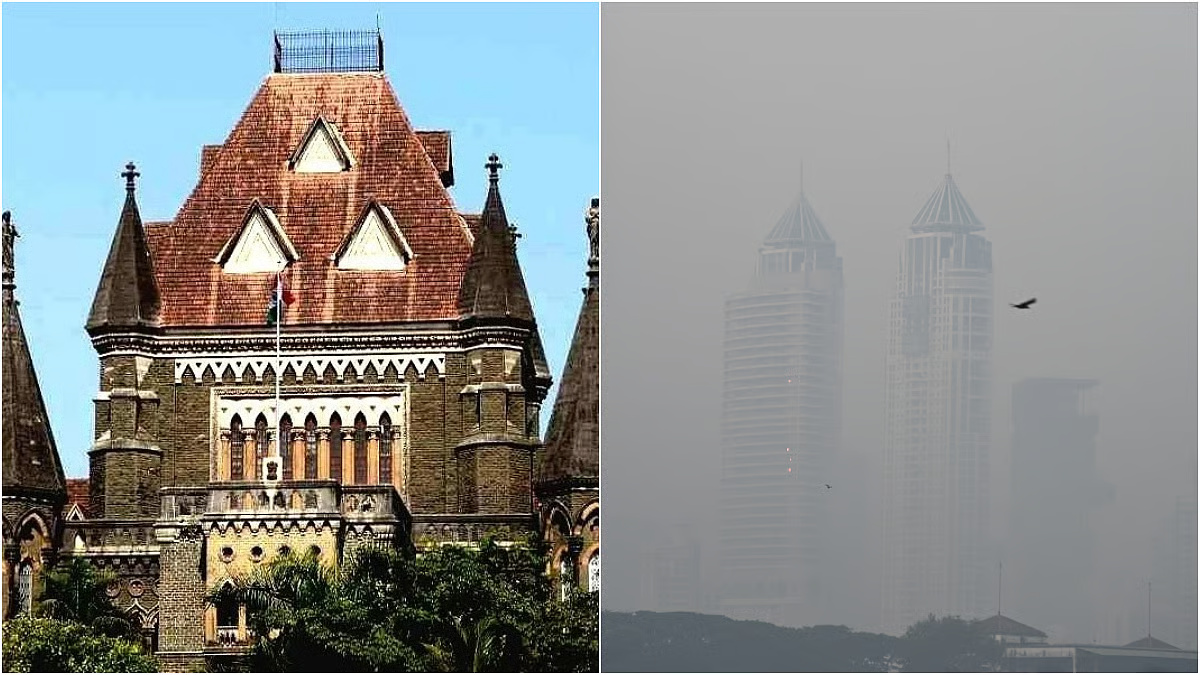
The Bombay High Court on Tuesday reprimanded the city’s civic authorities and pollution control board for failing to enforce air quality norms, highlighting that urban development cannot come at the cost of public health. While the bench acknowledged the importance of ongoing construction and infrastructure projects, it stressed strict compliance with environmental standards to curb the city’s escalating air pollution levels.
The bench, comprising Chief Justice Shree Chandrashekhar and Justice Gautam Ankhad, warned that continued negligence could make the situation uncontrollable. “We do not oppose development or construction, but compliance cannot be ignored. Authorities have failed in their fundamental duty,” the court remarked, urging immediate corrective measures. Officials from the Brihanmumbai Municipal Corporation (BMC) and the Maharashtra Pollution Control Board (MPCB) appeared before the bench following the directive. The court called for actionable suggestions to mitigate pollution, emphasising that public officials also have responsibilities as citizens to safeguard environmental standards.
The hearing addressed multiple petitions flagging the deteriorating air quality index (AQI) across the city. Industry experts and environmentalists highlighted that construction sites contribute significantly to particulate matter pollution, exposing workers and nearby residents to hazardous conditions. A senior environmental consultant noted, “Construction dust and emissions are among the largest contributors to urban air pollution in Mumbai. Without rigorous enforcement, the AQI will continue to breach safe limits.” The court’s observations came amid mounting concerns over health and environmental consequences. Data from the MPCB shows rising PM2.5 and PM10 levels in several central and suburban districts, often exceeding national safety limits. Urban planners emphasised that long-term strategies must integrate construction regulation, green buffers, and sustainable transport solutions to ensure compliance without halting city development.
Civic authorities were instructed to implement a combination of immediate mitigation measures and stricter monitoring of construction activities. These include dust suppression, real-time AQI monitoring at major development sites, and regular inspections of contractors. Experts also recommended integrating pollution control mandates into urban planning frameworks to minimise risks during infrastructure expansion. As Mumbai continues its rapid urbanisation, balancing economic growth with environmental sustainability remains critical. The High Court’s directives reinforce the need for accountable governance and proactive enforcement of air quality regulations, ensuring that the city’s expansion does not compromise health, equity, or long-term urban resilience.
Bombay HC Pulls Up BMC And MPCB Over Worsening Air Quality Crisis