Bengaluru Hennur Bagalur Road Partially Closed For Three Months Traffic Diversions Advised
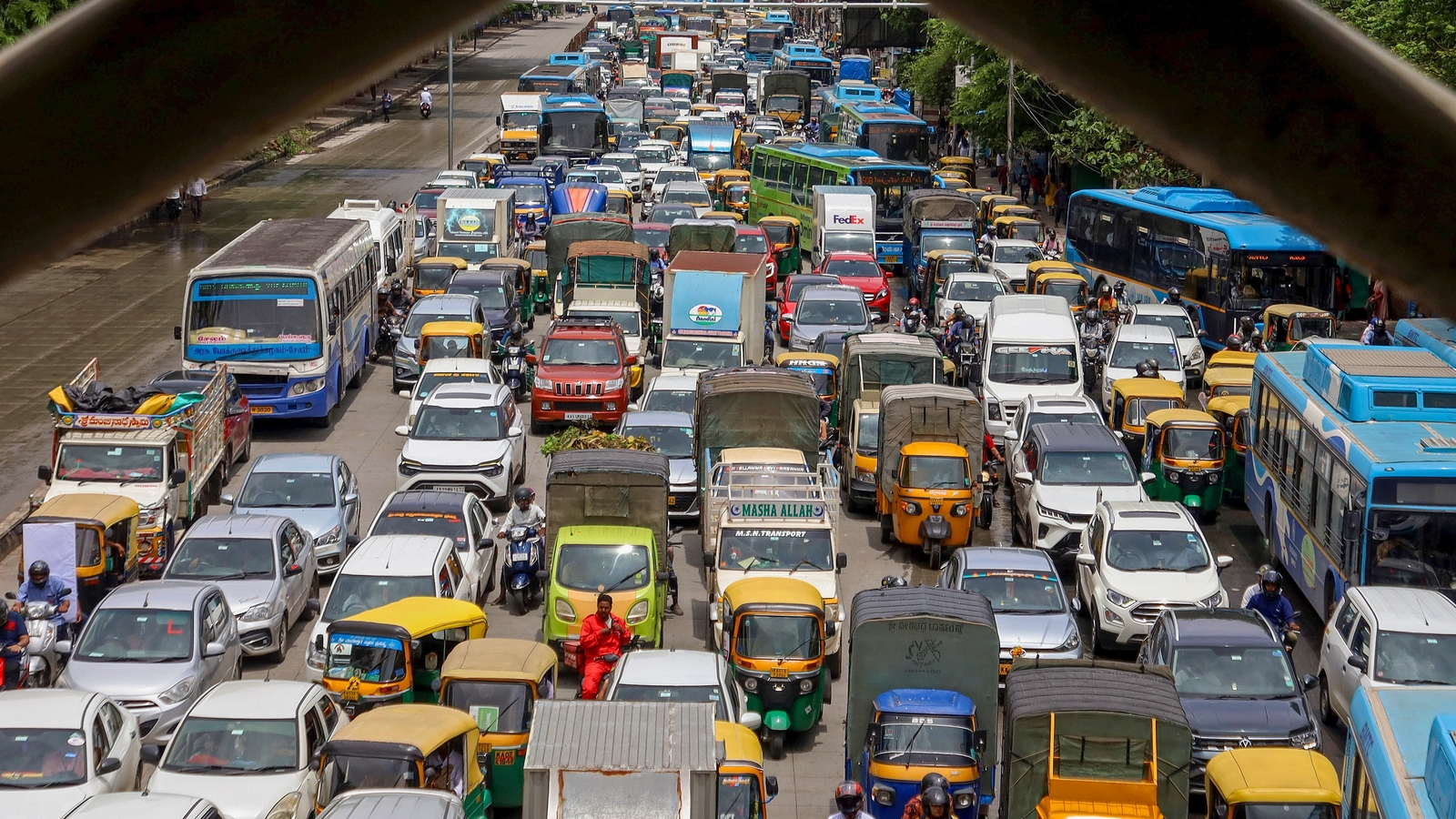
Corporate leaders in Bengaluru are pressing authorities for targeted, area-specific interventions to address the city’s growing infrastructure challenges, which are affecting operations and workforce retention. At a recent Greater Bengaluru IT Companies and Industries Association (GBTICA) event, executives from IT firms, startups, and global capability centres (GCCs) underscored that traffic congestion, poor road conditions, and waterlogging vary significantly across different localities, demanding bespoke solutions.
The meeting, attended by state labour minister Santosh Lad, former Rajya Sabha MP MV Rajeev Gowda, and Greater Bengaluru Authority (GBA) chief commissioner M Maheshwar Rao, followed earlier discussions between IT/BT minister Priyank Kharge and multinational company representatives along the Outer Ring Road. Corporate representatives emphasised that focusing solely on ORR is insufficient, noting that industrial and emerging hubs experience unique challenges. In Jigani, roads are damaged by heavy vehicle traffic and dust pollution, while Devanahalli faces early signs of gridlock. Areas beyond metro connectivity force employees into lengthy daily commutes.Executives linked infrastructure gaps directly to talent retention. Raghav Kumar, VP of product engineering at CGI, said employee attrition is rising as commuting times stretch, even for those living near metro lines. “Many request work-from-home because daily travel can extend well into the afternoon,” he noted. Similarly, Varsha Kakati, operations head at TriNet’s GCC, advocated forming a dedicated working committee to ensure rapid maintenance and pothole repairs.
Shailesh Trivedi, delivery lead at TCS, added that while Bengaluru’s cost advantages and talent availability initially attracted companies, they are no longer sufficient without improved urban infrastructure. Kamal Batra, director at OpenText India, highlighted that sustaining industrial areas requires not just new roads but effective upkeep, citing the strain from heavy vehicle movement.The GBA is reportedly establishing direct points of contact with firms to streamline issue resolution. Girish H K, president of GBTICA, noted that corporate clusters are expanding from ORR to Whitefield, Electronic City, Manyata Tech Park, and other hubs, reinforcing the need for area-specific urban planning.
Industry experts agree that addressing Bengaluru’s infrastructure through targeted interventions could enhance operational efficiency, improve employee commutes, and foster more inclusive, sustainable, and resilient urban growth.