


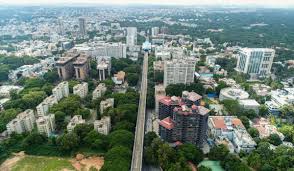
A debate unfolding on social media has thrown fresh light on Bengaluru’s housing paradox: buyers are paying upwards of Rs 2 crore for homes in the city’s eastern IT corridors even as water insecurity becomes a routine part of daily life. The discussion, triggered by a homebuyer’s post online, reflects growing unease about whether lifestyle-driven residential choices are overshadowing basic urban necessities, particularly water access, in fast-expanding neighbourhoods such as Whitefield and Sarjapur.
Industry observers say the issue is not new but is gaining urgency as premium housing continues to proliferate in areas that remain outside the reach of reliable municipal water supply. While more than half of Bengaluru receives piped Cauvery water, large residential developments in the eastern and southeastern corridors largely depend on borewells and tanker supply. During dry months, residents often contribute several thousand rupees each month towards tanker water, adding to already high maintenance costs. Urban planners note that Bengaluru’s water stress is uneven. Older, planned neighbourhoods benefit from established infrastructure and relatively stable groundwater levels, while newer growth zones face structural gaps. “The city’s expansion has outpaced its utility networks,” said an urban water expert, pointing out that many areas incorporated into the municipal limits nearly two decades ago still await full integration into the piped water grid. Despite this, demand in these corridors remains strong, driven by proximity to employment hubs, large-format developments, and amenity-rich projects. Developers market expansive clubhouses, wellness facilities, and branded living experiences that appeal to aspirational buyers, particularly first-generation homeowners working in technology and services sectors.
Critics argue that this focus has diluted attention from long-term liveability. “Amenities are visible and aspirational, water security is not,” said a real estate analyst. “That imbalance is shaping buyer decisions.” The tanker economy has quietly become embedded in Bengaluru’s residential ecosystem. While some projects report relatively stable groundwater levels, experts warn that aquifers are under increasing pressure. Residents, they say, are effectively financing a parallel water system that is neither sustainable nor predictable. Calls are growing for buyers to demand documented clarity on water sources, approvals, and timelines, rather than relying on informal assurances. Civic authorities acknowledge the challenge. Officials from the city’s apex planning body say ward-level climate action plans are being prepared to address water scarcity, flooding, and infrastructure resilience. However, implementation will take time, particularly in dense, rapidly built-up zones.
For Bengaluru, the debate goes beyond real estate pricing. It raises fundamental questions about how cities grow, what homebuyers prioritise, and whether urban development can remain inclusive and resilient without securing essential resources first. As climate variability intensifies, experts say water may soon become the most decisive factor shaping housing choices in India’s technology capital.
Also Read: Mumbai Central Debuts Indias First Dedicated Co Working Space Within Railway Station
Bengaluru Tech Corridor Buyers Raise Water Concerns As Apartment Prices Hit Rs 2 Crore
