


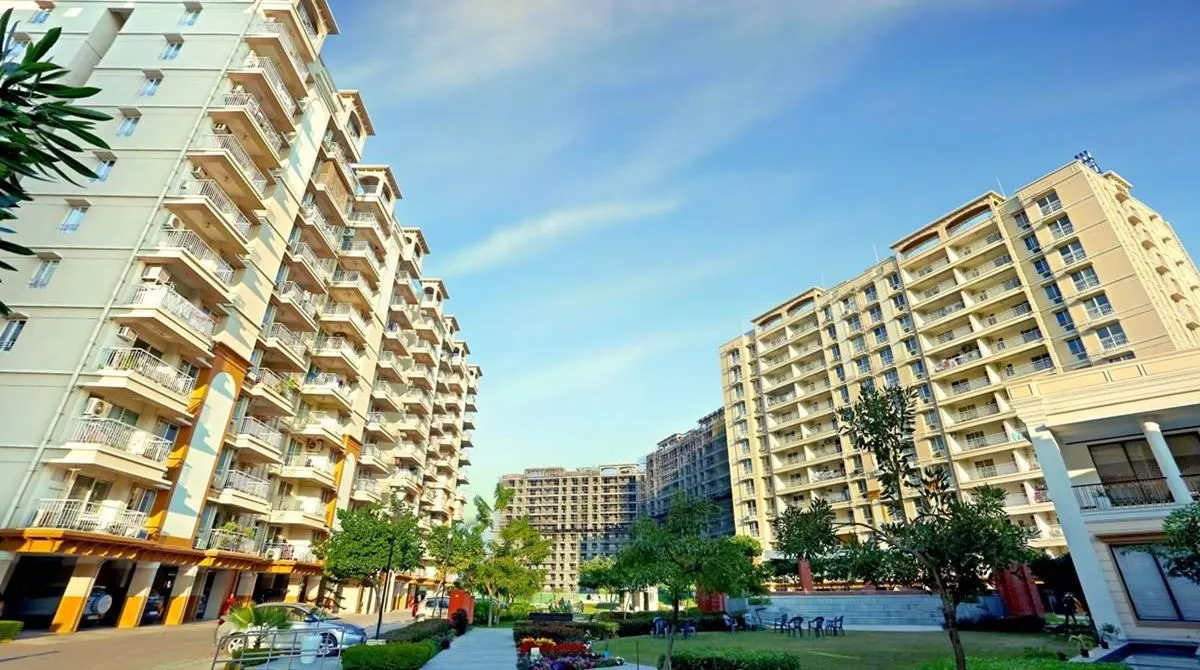
India’s residential real estate market has delivered a strong double-digit return over the past year, reinforcing its position as a competitive long-term asset class amid rapid urban expansion. A new nationwide housing study indicates that residential property generated a total return of around 15% year-on-year, supported largely by infrastructure-led development across major metropolitan regions.
According to a housing benchmark compiled by a domestic financial research firm, the residential total return index rose sharply between September 2024 and September 2025, reflecting both price appreciation and steady rental income. Unlike headline price indices, the benchmark tracks verified transactions from regulated residential projects, offering a clearer picture of how housing performs as an investment across cities. Industry analysts say the results highlight a structural shift underway in Indian cities. “Residential real estate is no longer driven only by scarcity in core locations,” an industry expert noted. “It is increasingly shaped by connectivity, employment access and public infrastructure that expands liveable urban boundaries.” Sales momentum remained firm during the third quarter of 2025, with housing transactions by value crossing Rs 1.5 lakh crore across leading markets. Greater Mumbai continued to command the highest ticket sizes, reflecting its dense employment base and limited land availability. Pune, however, showed signs of inventory build-up, suggesting that supply is outpacing absorption in certain micro-markets even as end-user demand remains intact.
Southern cities presented a contrasting picture. Hyderabad recorded double-digit annual price growth, aided by large-scale road infrastructure such as the upcoming regional ring road, which is opening new residential corridors beyond the city’s traditional IT hubs. In Bengaluru, metro expansion along technology corridors has improved daily commute times, driving stronger price growth in peripheral zones that were earlier considered distant suburbs. Delhi NCR’s housing market, meanwhile, continues to undergo a reset. A large share of unsold stock is concentrated in older projects, while buyers increasingly favour newer developments offering better construction standards, energy-efficient design, and proximity to transport infrastructure. The study points to infrastructure as the single most influential driver of residential returns today. New metro lines, arterial roads and transit-oriented development are reducing the gap between workplaces and homes, making outer-city neighbourhoods viable for long-term living. Urban planners argue that this shift, if managed well, can support more balanced city growth and reduce pressure on congested urban cores.
Despite rising unsold inventory across the top cities, analysts remain cautiously optimistic. Improved connectivity and phased infrastructure delivery are expected to gradually absorb supply, particularly in well-planned peripheral areas. As Indian cities invest in resilient transport networks and inclusive urban planning, housing is increasingly emerging as a stable, inflation-hedging asset aligned with sustainable city growth.
Also Read: Kolkata Metro Imposes Fines After Passengers Block Automatic Doors Disrupting Services
India Housing Market Shines With Residential Real Estate Generating 15 Percent Returns
