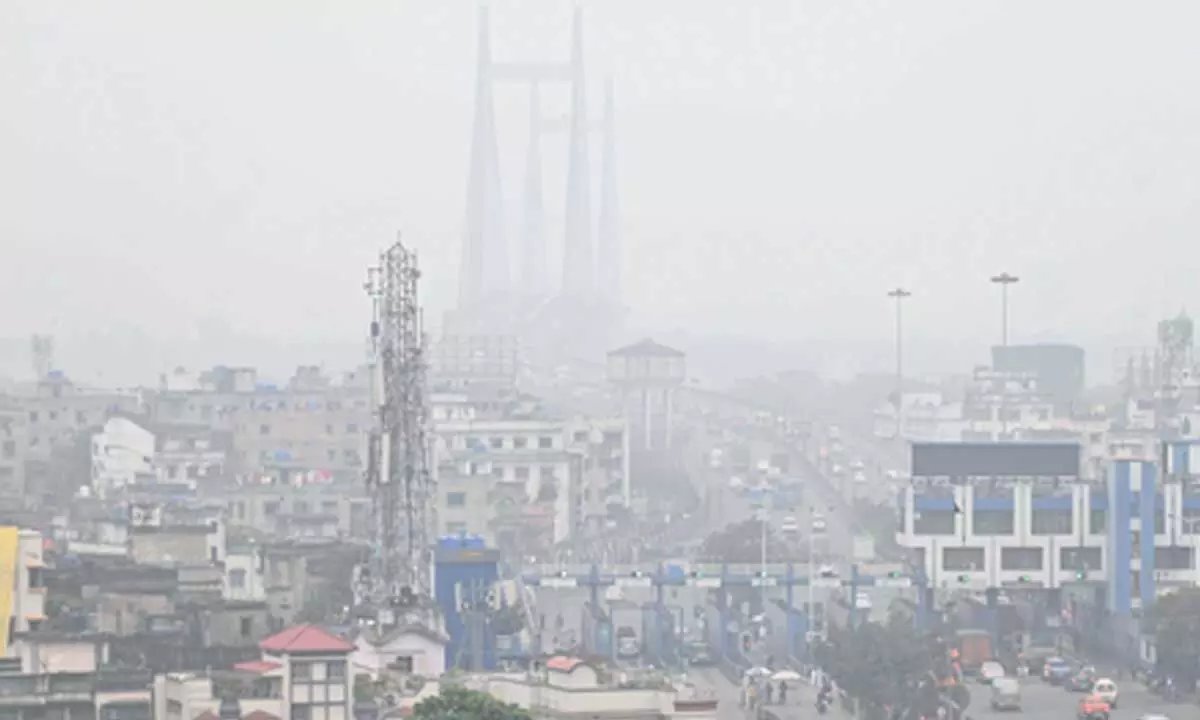
Kolkata recorded significantly poorer air quality than Delhi for nearly a week, drawing renewed attention to the city’s pollution monitoring infrastructure and public health preparedness. Environmental experts and civic groups are now urging authorities to expand real-time air quality monitoring into densely populated and high-traffic neighbourhoods, warning that existing data may understate the true scale of exposure faced by residents.
Between early and mid-December, Kolkata’s air quality indices consistently crossed severe and hazardous thresholds, at times exceeding readings from the national capital. On one evening, the city’s index surged into extreme territory, reflecting dangerously high concentrations of particulate matter. Analysts say the spike highlights structural weaknesses in how air pollution is measured and managed across the metropolitan region. A senior environmental technologist noted that Kolkata operates with fewer than half the automatic monitoring stations required for a city of its size and density. More critically, many existing stations are located in greener or less congested zones, offering limited insight into pollution levels in crowded residential and commercial areas. “Without real-time monitoring in traffic-heavy localities, policymakers are working with incomplete information,” the expert said, adding that at least 20 well-distributed stations are needed for reliable urban-scale assessment.
Data from the period shows particulate matter levels far exceeding national safety standards. Fine particles, which pose the greatest risk to respiratory and cardiovascular health, remained elevated for prolonged hours, particularly at night. Urban health specialists warn that sustained exposure at these levels can disproportionately affect children, the elderly, outdoor workers and people with pre-existing conditions. Civil society organisations have called on state authorities to respond with urgency. A science-based public advocacy group urged the pollution control regulator and health departments to issue clear public advisories and coordinated response measures. Recommendations include guidelines for outdoor work, school safety protocols and targeted healthcare readiness during severe pollution episodes.
Public health professionals stress that air quality emergencies should be treated as systemic urban risks rather than seasonal anomalies. “Cities need integrated action plans linking transport policy, construction regulation, waste management and healthcare preparedness,” said an urban policy expert. Without such coordination, pollution spikes risk overwhelming public health systems, particularly in lower-income neighbourhoods where access to care is limited. From an urban planning perspective, experts argue that Kolkata’s pollution challenge underscores the need for long-term structural reforms. Expanding clean public transport, reducing dependence on private vehicles, enforcing construction dust norms and strengthening green buffers are seen as essential to improving air quality. Equally important is transparent, neighbourhood-level data that allows residents to understand risks and hold institutions accountable. As Indian cities grapple with climate stress and rapid urbanisation, Kolkata’s recent air quality episode serves as a reminder that sustainable urban futures depend on accurate data, inclusive governance and health-first planning. Strengthening monitoring networks may be a technical step, but it is central to building safer, more equitable and resilient cities.
Kolkata Air Worse Than Delhi For Week Experts Seek More Monitoring Stations